
What Are The Winds In A Category 1 Hurricane

Hey there, weather enthusiasts! Ever wondered what makes a hurricane tick? I mean, we all know they’re powerful storms, but let's dive into the nitty-gritty of a Category 1 hurricane and focus on one crucial aspect: its wind! Trust me, understanding this can be surprisingly fascinating – and who knows, maybe you'll impress your friends at your next barbecue with your weather wisdom! 😉
Category 1: The “Baby” Hurricane?
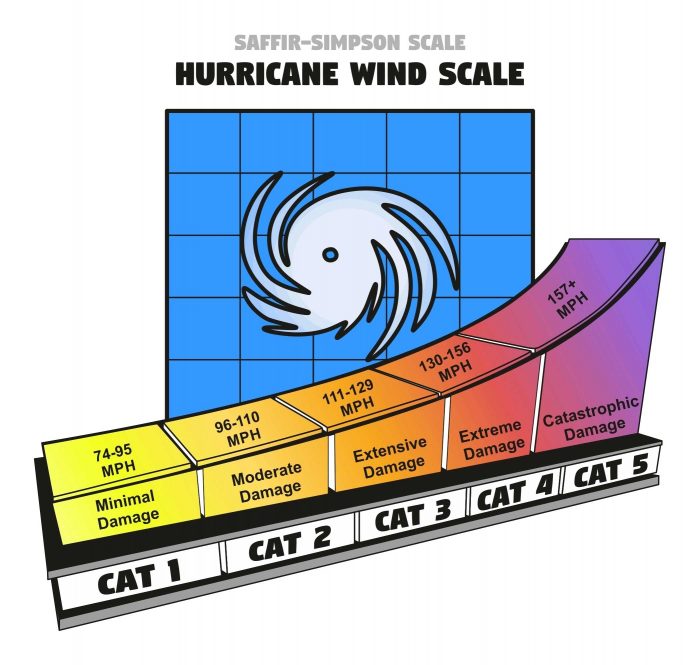
So, what exactly is a Category 1 hurricane? Well, think of it as the entry-level storm on the Saffir-Simpson Hurricane Wind Scale. (Say that five times fast!). This scale categorizes hurricanes based on their sustained wind speeds. A Category 1 isn't the strongest, but don't let that fool you; it's still a force to be reckoned with!
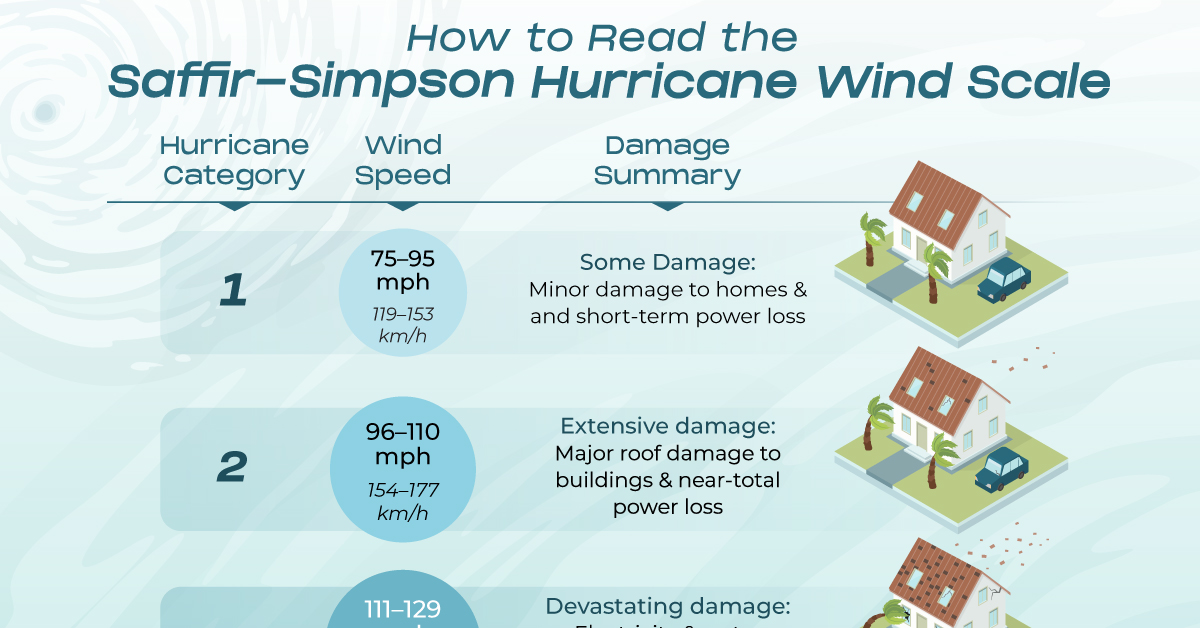
Here's the deal: a Category 1 hurricane has sustained winds ranging from 74 to 95 miles per hour (119 to 153 kilometers per hour). That's pretty darn fast! Imagine trying to drive a car that fast... while it's raining sideways! Okay, maybe don't actually imagine that. Point is, these winds are significant.
Must Read
You might be thinking, "Okay, 74-95 mph winds...so what?" Well, let's put that into perspective. These winds are strong enough to cause some serious damage. We're talking about:
- Damaging unsecured mobile homes (always a bad day for those!)
- Snapping tree branches (watch out below!)
- Toppling shallow-rooted trees (nature's dominoes!)
- Minor damage to roofs, shingles, and gutters (ouch!)
- Power outages (cue the board games!)
See? Even at the lowest hurricane category, the wind is still a powerful force. And trust me, you don't want to be outside trying to fly a kite in those conditions! (Please don't. Seriously.)
![Hurricane Categories [+ Free Prep Checklist] - AlertMedia](https://www.alertmedia.com/wp-content/uploads/2020/05/Blog-HurricaneCategories-inline-Cat1-963x1024.png)
The Anatomy of Hurricane Winds
Now, let's get a little more technical (but don't worry, I'll keep it simple!). Hurricane winds don't just blow randomly. They rotate around a central point called the eye. The eye itself is usually relatively calm, a pocket of peace in the midst of the storm.
But surrounding the eye is the eyewall, the most intense part of the hurricane. This is where you'll find the strongest winds and the heaviest rainfall. In a Category 1 hurricane, the eyewall is where those 74-95 mph winds are concentrated. You definitely want to avoid this area at all costs!
As you move further away from the eyewall, the wind speeds gradually decrease. However, even the outer bands of a Category 1 hurricane can pack a punch. These bands can bring gusts of wind strong enough to cause localized damage and make it dangerous to be outside.
Why This Matters (And Why It’s Cool!)
Okay, so why should you care about the wind speeds in a Category 1 hurricane? Well, first and foremost, understanding the risks can help you stay safe! Knowing the potential for damage allows you to prepare your home, evacuate if necessary, and take precautions to protect yourself and your loved ones.

Plus, knowing about these things just makes you a more interesting person! Think about it: you can casually drop hurricane facts into conversations and impress everyone with your scientific knowledge. "Oh, this breeze? It's nothing compared to the winds in a Category 1 hurricane eyewall!" (Okay, maybe don't say exactly that. But you get the idea!).
Seriously though, understanding the power of nature and the science behind it is incredibly empowering. It allows you to appreciate the forces that shape our world and to make informed decisions about your safety and well-being.
Beyond Category 1: The Journey Continues!
So, you've conquered Category 1 hurricanes! Now what? Well, the weather world is vast and fascinating! You could delve deeper into meteorology, learn about other types of storms, or even explore the complexities of climate change.
The important thing is to keep learning and stay curious. Weather affects all of us, and the more we understand it, the better prepared we can be. Plus, knowledge is power, and understanding the science behind hurricanes can make you feel more connected to the world around you.
So go forth and explore! The world of weather awaits. You might just surprise yourself with how much you enjoy it! And remember, stay safe out there and keep an eye on the sky! 😉