
What Are The Wind Speeds Of A Tropical Storm
Okay, so you wanna know about tropical storm wind speeds, huh? Awesome! Let's dive in. Imagine we're sipping lattes (or maybe something stronger, no judgment!) and chatting about the wild world of weather. Specifically, those swirling dervishes we call tropical storms.
First things first, what even is a tropical storm? Well, it's basically a beefed-up tropical depression. Think of it as the awkward teenager going through a growth spurt of wind. Seriously. We're talking about a organized system of thunderstorms with a defined surface circulation. Okay, but how fast does the wind have to blow before we call it a storm?
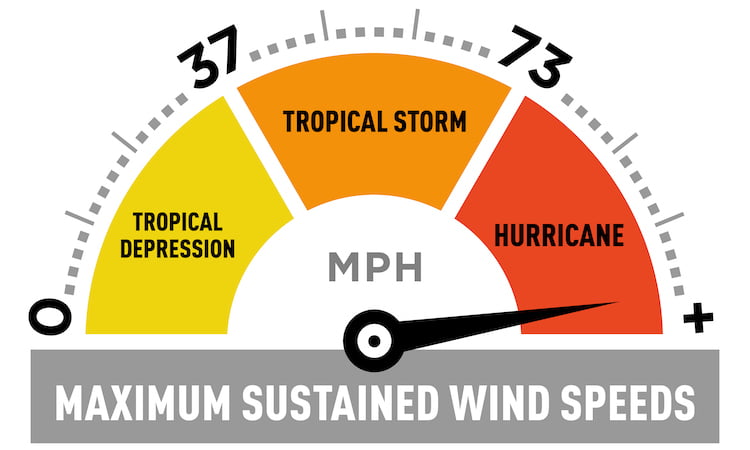
Here's the magic number: 39 mph (63 km/h). Yep, that's the threshold. Once sustained winds (that's wind speed that’s consistent, not just a random gust) reach 39 mph, boom! Tropical storm status achieved. Cue the dramatic music! And most importantly... a NAME!.
Must Read
But wait, there's more! You see, these storms are named alphabetically. So we go from Arlene, Bret, Cindy... all the way to Whitney. (Assuming we don't run out of letters, because then... well, I don't actually know what happens then! Maybe they start using numbers? The possibilities are terrifying!) It’s like the weather channel’s version of naming your firstborn child, but with potentially disastrous consequences.
So, 39-73 mph (63-117 km/h) is the range for a tropical storm. Imagine a constant, sustained force of a very powerful fan. One of those industrial-strength ones. Still not quite a hurricane, but enough to definitely ruin your beach day.

What about feeling the wind? At 39 mph, small trees start swaying pretty aggressively. Loose items like garbage cans are definitely taking flight. Think Mary Poppins, but with less grace and more… well, garbage. At the upper end, near 73 mph, you're looking at snapped branches and potential power outages. Time to stock up on candles and board games, folks!
Now, a little aside. Remember that 39 mph number? It's not an exact science. There's some wiggle room (the atmosphere is chaotic, after all!). Meterologists are using all kinds of technology, including sophisticated weather models, radar and satellite imagery to make these assessments. Imagine trying to perfectly predict the actions of a toddler hopped up on sugar. That’s basically weather forecasting.

When Does a Tropical Storm Become a Hurricane?
Excellent question! It's all about the wind speed, naturally. Once sustained winds reach 74 mph (119 km/h), you've got yourself a hurricane. Dun dun DUUUN! It's like the tropical storm finally leveled up and gained some serious muscle. Get ready for those iconic hurricane names and the dreaded Saffir-Simpson scale.
Think of it like this: Tropical Depression is your awkward pre-teen, Tropical Storm is the angsty teen who just discovered a new band, and Hurricane is the terrifyingly strong adult you really don’t want to mess with. And all this comes from the water’s heat. Crazy right?
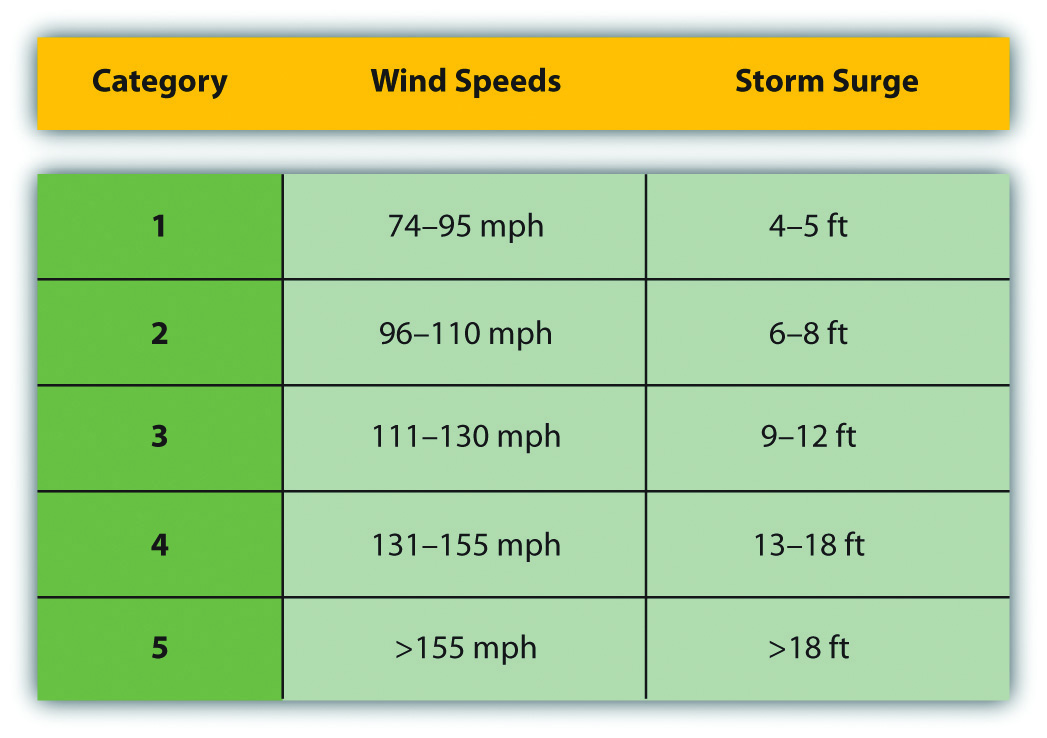
And the difference between a strong tropical storm and a weak hurricane is often subtle! It’s a gradient, not a hard line. The important thing is to be aware of the potential dangers at any of these levels. Even a "weak" tropical storm can bring heavy rain, flooding, and dangerous conditions.
Why Should You Care About Wind Speeds?

Because understanding wind speeds helps you assess risk and prepare! Knowing a storm is packing 60 mph winds versus 40 mph winds tells you a lot about potential damage. The stronger the wind, the greater the risk of downed trees, power outages, structural damage, and flooding (often caused by storm surge, which is pushed by high winds).
So, next time you hear about a tropical storm brewing, pay attention to those wind speeds! It's not just meteorological jargon; it's a key indicator of what to expect. Plus, now you can impress your friends with your newfound weather knowledge. “Oh, that? Just a little tropical storm with 65 mph winds. No biggie… for anyone who’s not standing under a tree.” (Don't actually say that. Be safe!)
Basically, when it comes to tropical storms and hurricanes, knowledge is power. And a good weather app is your friend. Now, about that refill…?