
What Are The Various Types Of Water Pollution
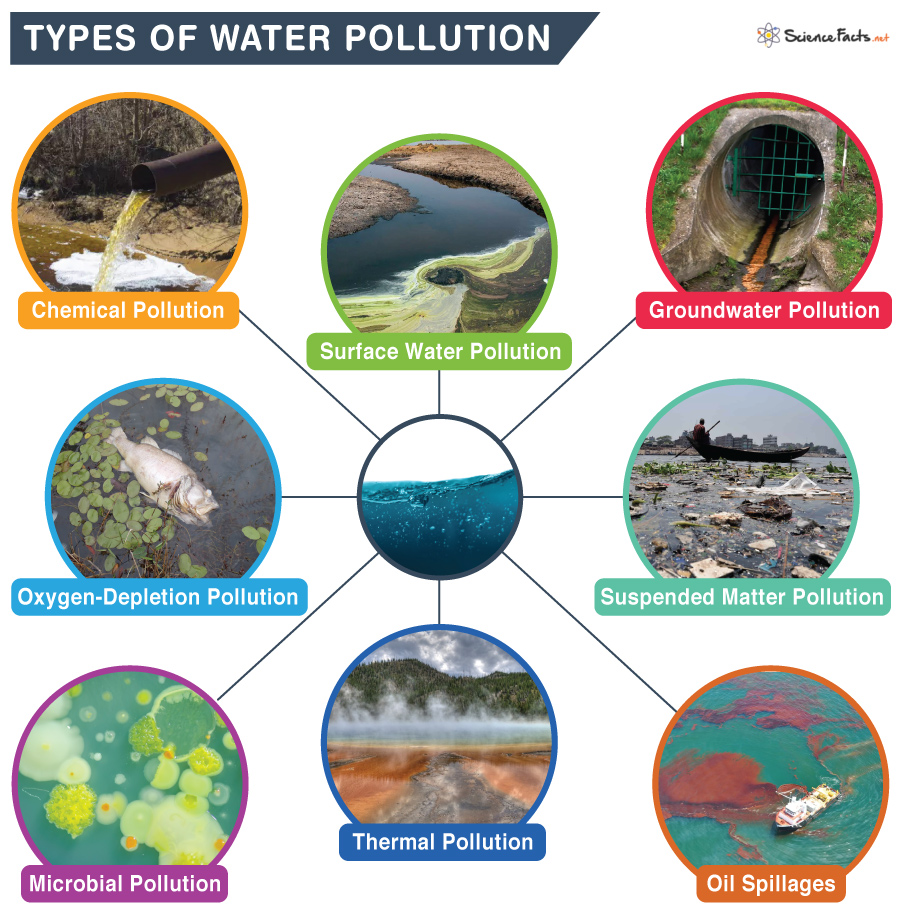
Hey there, water enthusiast! Ever wonder what weird stuff ends up in our H2O? Let's dive into the wacky world of water pollution. It’s not all doom and gloom, promise! Think of it as a watery detective story. What's lurking beneath the surface?
Point Source Pollution: The Obvious Offenders
First up: Point source pollution. Imagine a factory with a giant pipe. Boom! Pollutants directly enter the water. Obvious, right? Think sewage plants, industrial discharge… stuff like that. It’s like a villain with a clearly marked getaway car. Easy to spot, relatively speaking!
Did you know some factories used to dump all sorts of crazy stuff directly into rivers? Yikes! Now there are regulations. Thank goodness for environmental superheroes!
Must Read
Non-Point Source Pollution: The Sneaky Culprits
Now for the sneaky stuff! Non-point source pollution is like the mystery villain. It’s everywhere and nowhere at once. Rain washes pollutants from farms, cities, and even your backyard into waterways. Think fertilizers, pesticides, oil… the whole shebang.
Ever seen that slightly oily sheen on puddles after a rainstorm? That’s non-point source pollution in action! It's a collective problem. We’re all a little bit responsible!
Nutrient Pollution: Too Much of a Good Thing?
Nutrient pollution is a weird one. Nutrients like nitrogen and phosphorus are good for plants. But too much is a disaster! It causes algae blooms. Imagine a lake turning into a giant, green smoothie. Not exactly refreshing, is it?

These blooms suck up all the oxygen in the water. Fish? Gone! Aquatic life? Suffocating! It’s called eutrophication. Sounds fancy, right? Just remember: too many nutrients = green goo.
Chemical Pollution: The Toxic Cocktail
Brace yourselves for the scary stuff: chemical pollution. We’re talking pesticides, industrial chemicals, pharmaceuticals… a toxic cocktail of nastiness. These can come from factories, agriculture, and even our own medicine cabinets.
Ever flushed old pills down the toilet? Bad idea! They can end up in our water supply. Some studies have even found traces of medications in fish. Imagine a fish with a headache! Crazy, huh?

Sediment Pollution: Muddy Waters
Sediment pollution might seem harmless. It’s just dirt, right? Wrong! Excessive soil erosion from construction, agriculture, and deforestation can cloud waterways. This blocks sunlight, harming aquatic plants. Plus, it can clog fish gills. Nobody wants that! Muddy waters aren't just aesthetically unpleasing, they're ecologically damaging.
Think of sediment as the ultimate photobomber, ruining everyone’s underwater selfies. Except the "selfies" are essential for plant survival.
Thermal Pollution: Hot Stuff!
Thermal pollution? Basically, it's when water temperature changes dramatically. Power plants often use water to cool down. Then, they release the heated water back into rivers or lakes. Hot water holds less oxygen. Fish get stressed. It's like jumping from a freezing pool into a hot tub...then back again. Not fun!

Some aquatic species are super sensitive to temperature changes. Imagine trying to live in a constantly fluctuating sauna. No thanks!
Microplastic Pollution: The Tiny Terror
Microplastics. Tiny pieces of plastic, less than 5mm in size. They come from everything: plastic bags, clothing, cosmetics... They're everywhere. Fish eat them. Birds eat them. We might even be eating them. Eek!
Scientists are still figuring out the long-term effects of microplastic pollution. It's like a silent, plastic invasion! Time to cut down on single-use plastics, folks!

Radioactive Pollution: The Supervillain of Water
Okay, this one's a bit more serious. Radioactive pollution comes from nuclear power plants, mining, and even natural sources. It can contaminate water sources and pose serious health risks. This is definitely not the kind of glow-up anyone wants.
Thankfully, this type of pollution is closely monitored and regulated (in most places) because... well, it's radioactive! No need to create real-life superheroes just yet.
So, what can you do?
Don't panic! There are things you can do to help. Reduce your plastic consumption. Be mindful of what you flush down the toilet. Support sustainable agriculture. Educate yourself and others. Every little bit helps!
Water pollution is a complex issue, but understanding the different types is the first step to becoming a water-saving warrior! Go forth and spread the word! Let's keep our water clean and our ecosystems thriving. Cheers to clean water!