What Are The Pros And Cons Of Nuclear Power
Let's talk about something that often sparks debate, ignites curiosity, and, quite literally, powers a lot of our lives: Nuclear Power! Now, I know what you might be thinking – it's complex, maybe a little scary, and definitely not something you'd bring up at a dinner party (unless you really want to liven things up!). But stick with me, because understanding the pros and cons of nuclear energy is more important than ever in our search for clean and reliable energy sources.
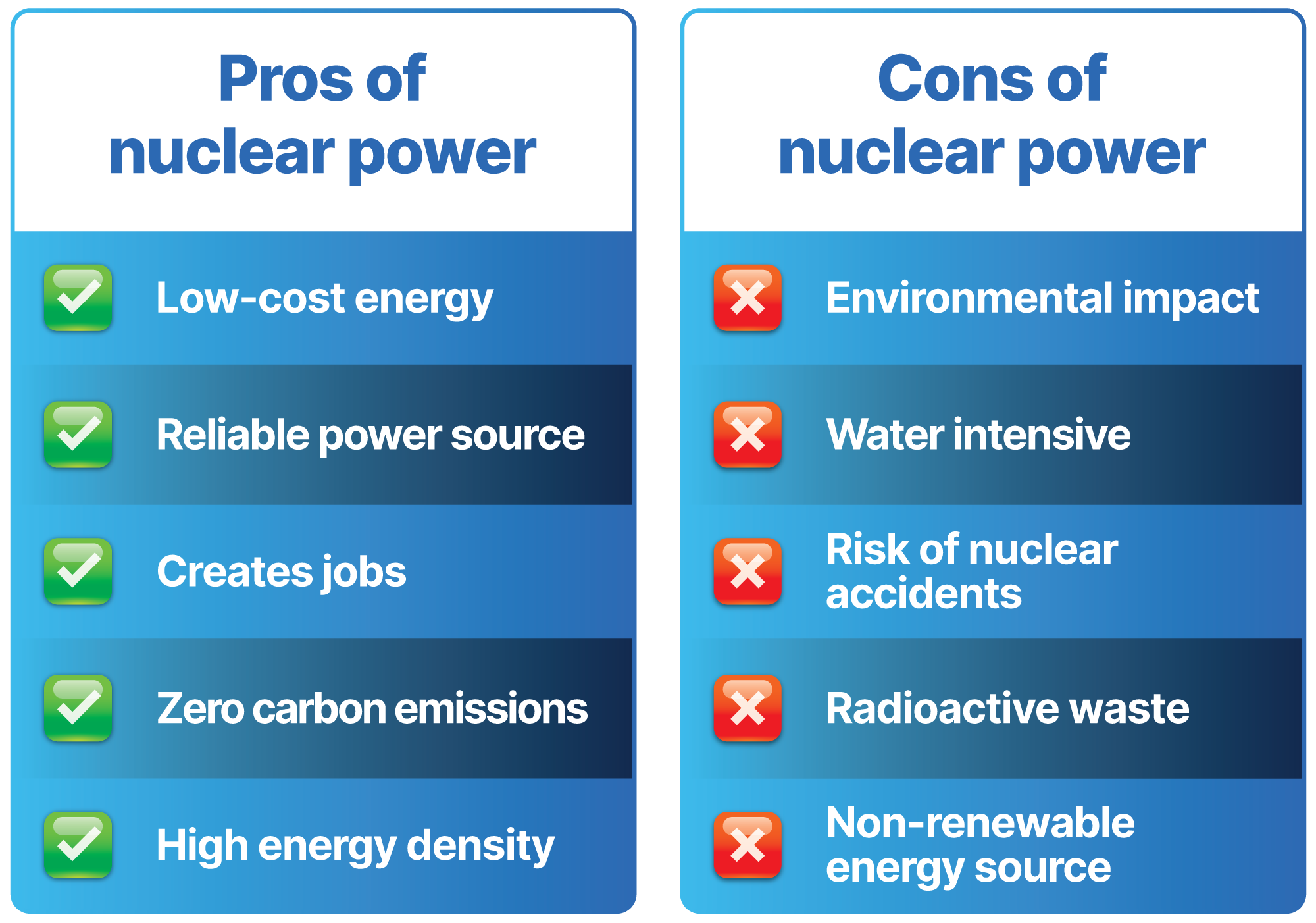
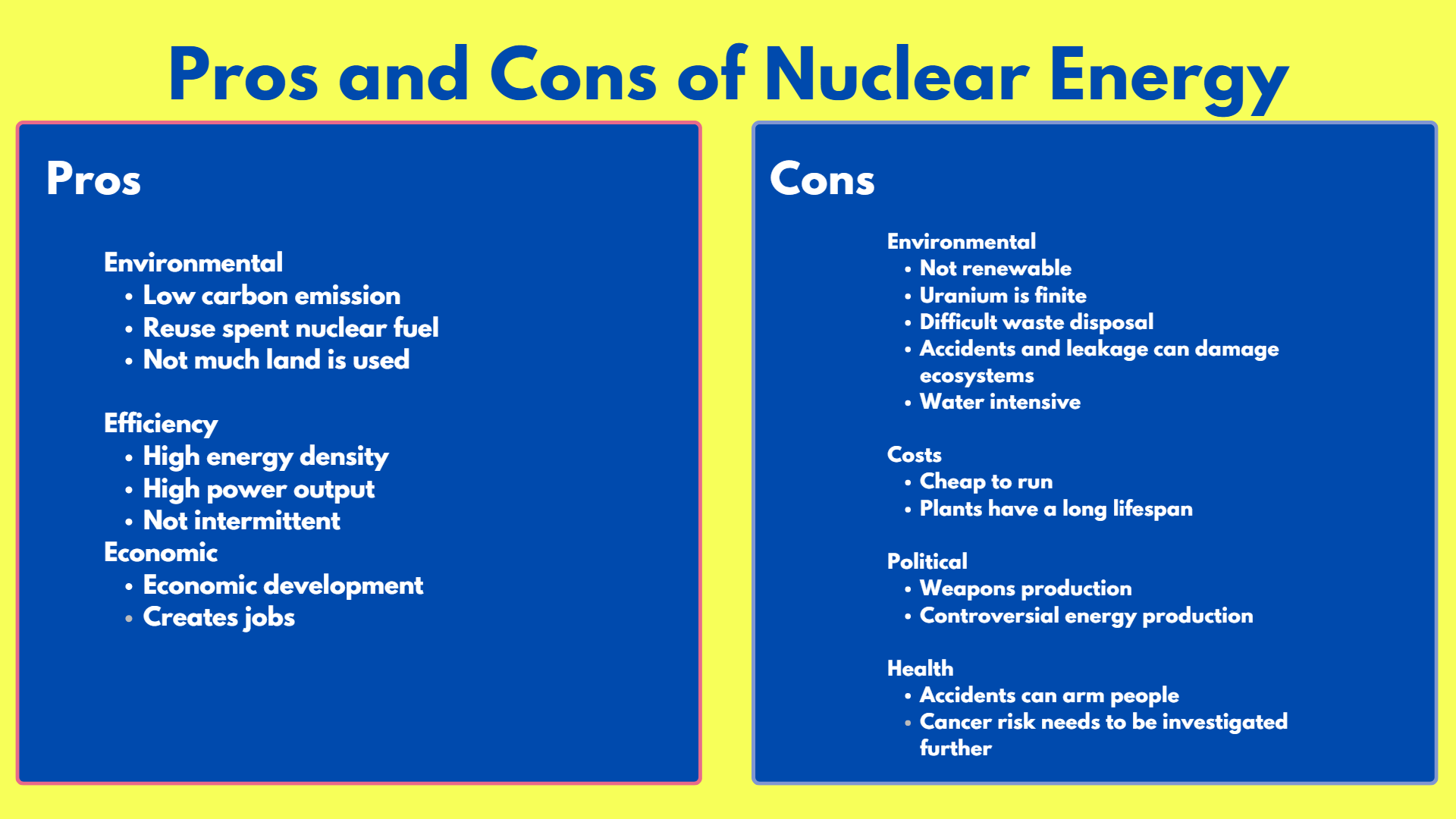
So, why should you care? Well, think about flipping a light switch. Charging your phone. Watching TV. A good chunk of the electricity powering these everyday activities comes from power plants, and nuclear power is a major player in that game. It offers a way to generate massive amounts of electricity, often with lower greenhouse gas emissions compared to fossil fuels like coal and natural gas. That's a big deal when we're talking about tackling climate change.
Think of France, for example. They rely heavily on nuclear power and have one of the lowest carbon footprints per capita in the developed world. Or consider the large nuclear power plants scattered across the United States, silently and efficiently churning out energy that keeps our cities running. Nuclear energy also helps with energy independence, allowing countries to rely less on foreign sources of fuel – a critical factor for national security.
Must Read
But before we get too carried away with the glowing benefits, let's address the elephant in the reactor room: the downsides. The biggest concern, and rightly so, is the risk of accidents. The names Chernobyl and Fukushima are forever etched in our memories as reminders of the potential devastation that can occur when things go wrong. These disasters highlight the crucial need for rigorous safety standards and constant vigilance in the operation of nuclear power plants.

Then there's the issue of nuclear waste. What do we do with the used fuel rods that remain radioactive for thousands of years? Currently, much of it is stored on-site at nuclear power plants, but finding a safe and permanent disposal solution is a global challenge. The cost of building and maintaining nuclear power plants is also incredibly high, requiring massive upfront investments and skilled labor. Finally, the potential for nuclear materials to be diverted for weapons purposes is a constant concern, requiring international cooperation and safeguards.
So, how can we, as informed citizens, approach this topic more effectively? Firstly, educate yourself! Go beyond the headlines and delve into the science and the policies surrounding nuclear energy. Understand the different types of reactors, the safety measures in place, and the efforts being made to improve waste disposal. Secondly, engage in informed discussions with your friends, family, and elected officials. Share what you've learned and listen to different perspectives. The future of nuclear power will depend on having open and honest conversations about its risks and rewards. Finally, support research and development of new technologies, such as advanced reactors that are safer, more efficient, and produce less waste. The quest for cleaner and more reliable energy is a journey, not a destination, and nuclear power will likely play a significant role in that journey for years to come.