What Are The Properties Of Alkaline Earth Metals
Ever heard of the Alkaline Earth Metals? Sounds like something out of a sci-fi movie, right? Or maybe the name of a particularly funky band. But trust me, these elements are anything but alien or musical (unless you're really into periodic table-themed synth). They're actually all around you, and they're surprisingly… well, earthy!
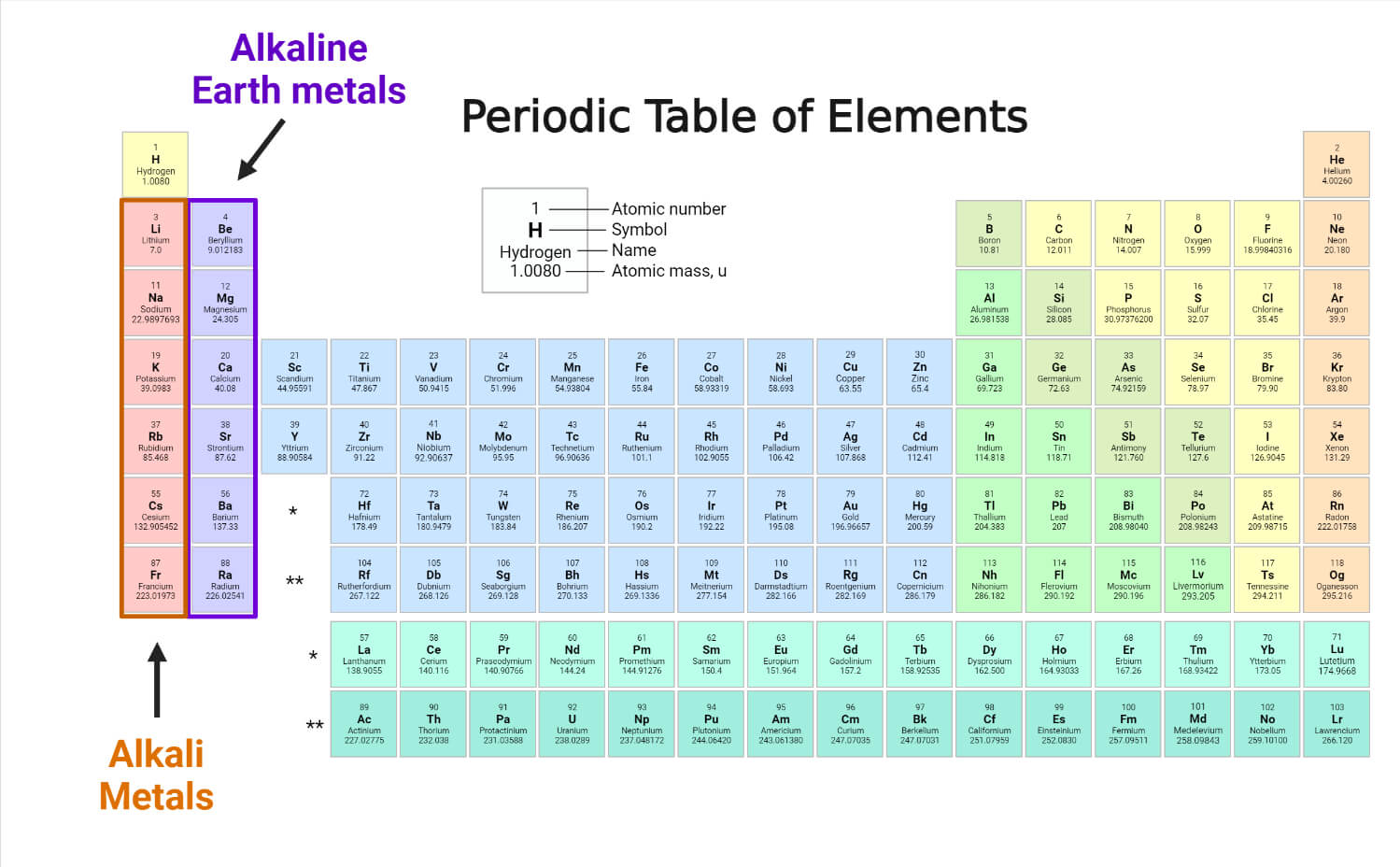
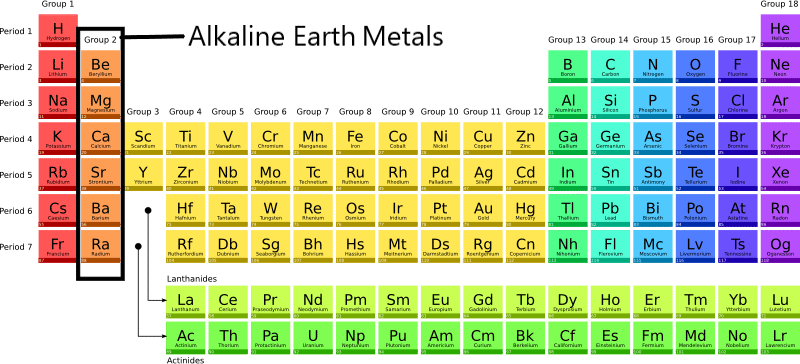
We're talking about a group of six elements huddled together on the periodic table, like a family reunion gone slightly radioactive. They are: Beryllium (Be), Magnesium (Mg), Calcium (Ca), Strontium (Sr), Barium (Ba), and Radium (Ra). Don't worry, we won't make you memorize them. Just know that they share some quirky family traits that make them unique.
They're Reactive...But Not That Reactive
First off, they're all metals, which means they're shiny (at least when you first cut them open – more on that later) and good conductors of electricity. Think of them as the metalheads of the element world. Now, they're called "alkaline earth metals" because they react with water to form alkaline solutions. "Alkaline" is just a fancy word for "basic," which is the opposite of acidic.
Must Read
Think of it like this: if acid is lemon juice, alkaline is soap. And the 'earth' part? That just refers to the fact that they were first discovered in minerals found in the earth. It's all very down-to-earth, really.
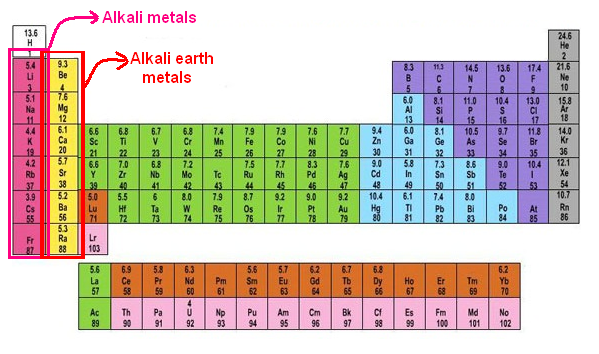
However, they aren't quite as wild as their neighbors, the Alkali Metals (like sodium and potassium), who practically explode when they touch water. The alkaline earth metals are a bit more… reserved. They react, but not in a "hold my beer and watch this!" kind of way. More like a "politely bubbling while forming a hydroxide" kind of way. Though, some like Calcium react quite vigorously with water!
Hardness and Density: The Goldilocks Zone
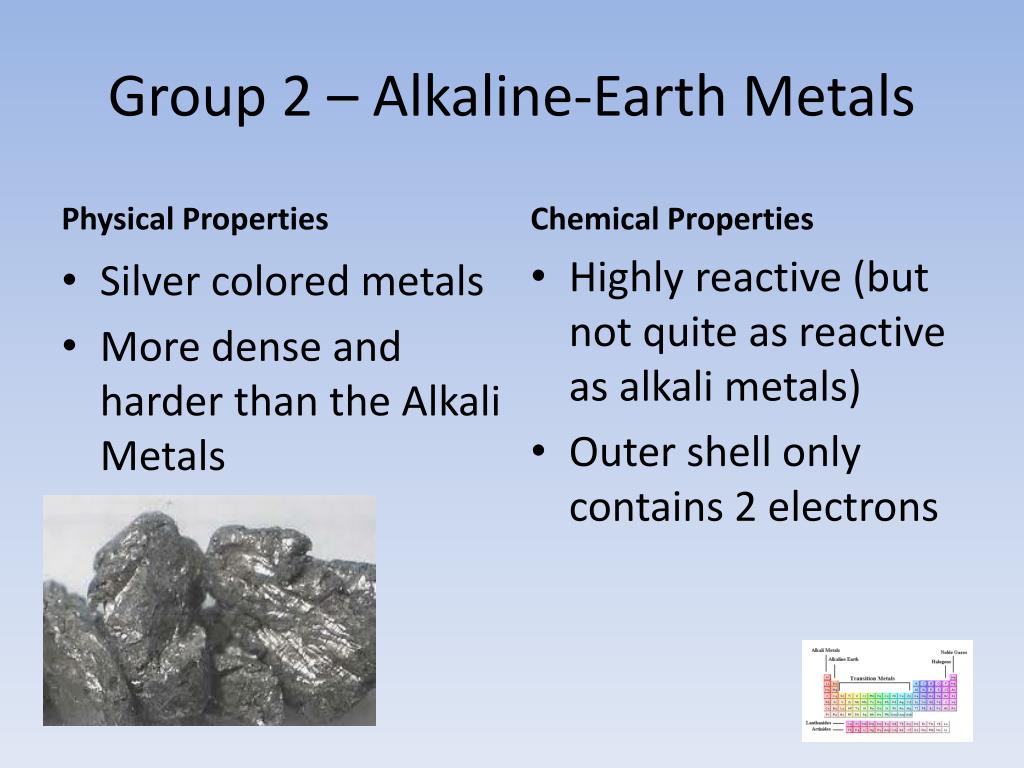
They're also harder and denser than the alkali metals. If alkali metals are like butter (easily spreadable), the alkaline earth metals are more like… cheddar. Not rock-solid, but definitely holding their own. This makes them useful for all sorts of things.
The Colorful Flame Test: A Metal's Runway Show
One of the coolest things about alkaline earth metals is the way they react when heated. Remember those science class demonstrations where you got to hold a metal over a flame and it burst into a crazy color? That's the alkaline earth metals showing off! Strontium, for example, burns with a vibrant red flame. That's why it's used in fireworks! Barium burns green, and Calcium a brick red color. It’s like a metal runway show, each element strutting its stuff with its own signature hue.
Everyday Superstars: From Bones to Batteries
But beyond the cool colors and mildly explosive reactions, alkaline earth metals are incredibly important to our daily lives. Calcium, as we all know, is essential for strong bones and teeth. Milk commercials weren't lying! Magnesium is vital for muscle function and energy production. In fact, you probably have some magnesium in your medicine cabinet as an antacid!
"To see the world in a grain of sand, and to see heaven in a wild flower, hold infinity in the palm of your hands, and eternity in an hour.” - William Blake (Replace with alkaline earth metals related saying if any available)

Even lesser-known members like Beryllium have their uses. It's incredibly lightweight and strong, which is why it's used in some high-performance aircraft and even in X-ray machines. Barium, while toxic in its elemental form, is used in barium sulfate, which is given to patients before X-rays to help visualize the digestive tract. Radium, famous for its radioactivity (thanks, Marie Curie!), was once used in cancer treatment, though safer alternatives are used today.
So, the next time you think about the periodic table, don't just see a bunch of squares with weird abbreviations. Think about the alkaline earth metals – the slightly reactive, colorful, and essential elements that are surprisingly down-to-earth. They might not be the life of the party, but they're definitely the reliable friends you can always count on… and maybe, just maybe, they can put on a pretty impressive fireworks display for you.