Ever feel like life is a tangled mess of to-do lists, wasted time, and things that just don't quite work? What if I told you there's a secret superpower, a way of thinking that helps you untangle the knots, smooth out the bumps, and make everything from making breakfast to building a rocket feel a little bit easier and a whole lot more efficient? Enter the glorious world of Lean!
Now, don't let the name fool you. "Lean" isn't about dieting or deprivation. It's about getting rid of the junk, the fluff, the stuff nobody actually wants or needs, so you can focus on what truly brings value. Think of it like decluttering your closet, but for processes, projects, and even your daily routine. It’s all about working smarter, not harder, and making everyone involved (especially you!) happier along the way.
Ready to unlock some serious organizational superpowers? Let's dive into the five core principles that make Lean so incredibly powerful, yet delightfully simple!
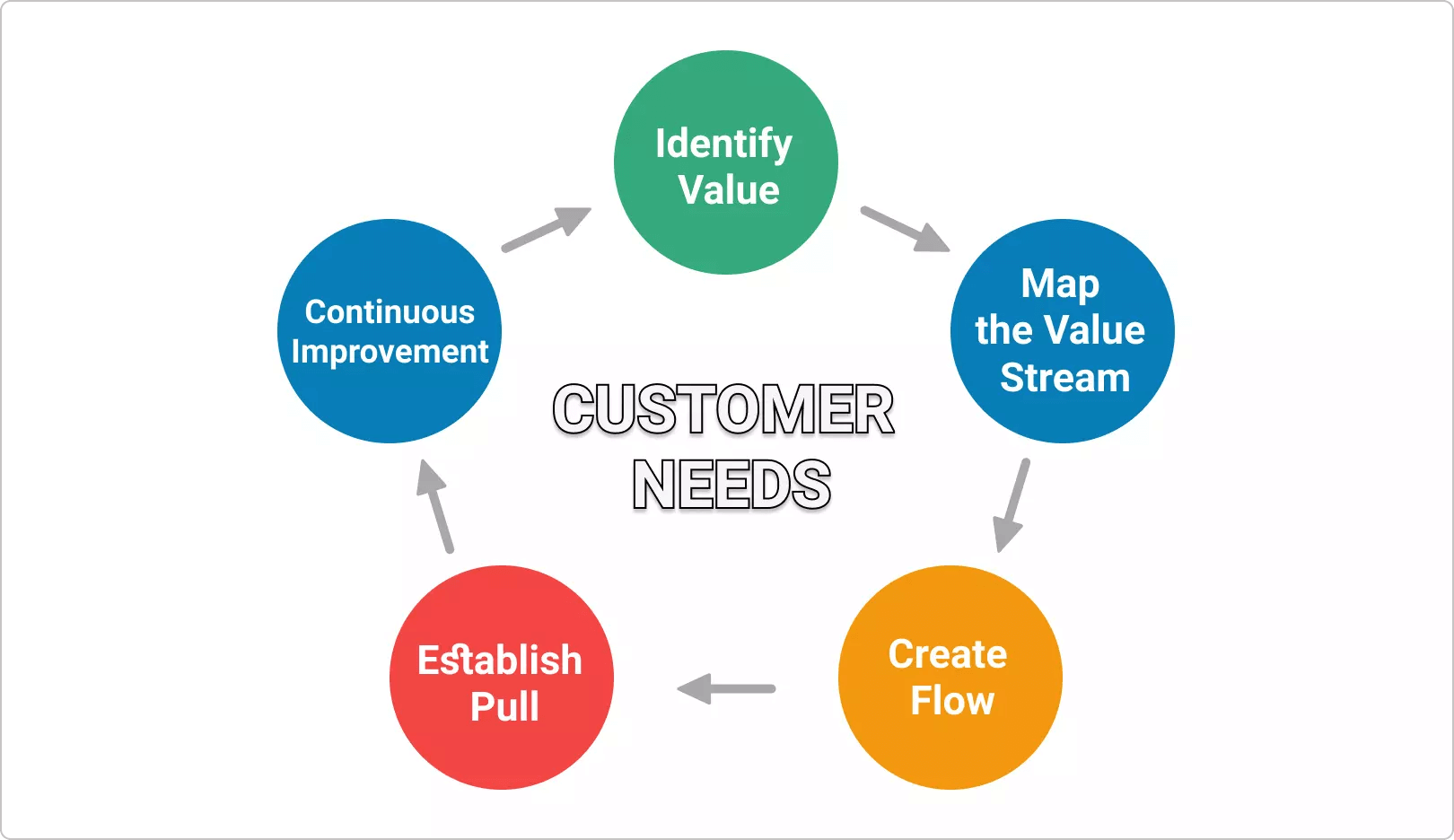
1. Focus on Value (The "What Does the Customer REALLY Want?" Principle)
This is where it all begins! Lean asks a deceptively simple question: "What is the customer willing to pay for?" And by "customer," we mean anyone who receives the output of your effort – whether it's a paying client, your family enjoying dinner, or even your future self benefitting from a tidy desk. Imagine you're buying a drill. Are you really paying for the drill itself? Or are you paying for the hole in the wall that lets you hang that fabulous new painting? Exactly!
Lean's Mantra: Stop making things nobody cares about! Find the true North Star of what's desired and pour your energy into that. Everything else is just... noise.
The 5 Lean Principles Explained
We often get caught up in adding features or steps that we think are important, but if the customer doesn't see the value, it's just extra work for nothing. It's like baking a cake with gold sprinkles when all your guests really want is delicious chocolate. Focus on the chocolate!
2. Map the Value Stream (The "Let's Trace That Spaghetti!" Principle)
Once you know what's valuable, the next step is to literally draw out every single step it takes to deliver that value. From the very beginning to the very end. This is your value stream map. Think of it like a detective meticulously charting every twist and turn of a complicated journey. You're trying to find all the secret detours, the long waits, the unnecessary hand-offs, and the moments when things just... sit there doing nothing.
Maybe it takes three different emails and a carrier pigeon to get a simple approval. Or perhaps your morning routine involves 10 minutes searching for matching socks. By mapping it out, you suddenly see all the sneaky spots where time, effort, and resources are being gobbled up without adding an ounce of that precious value. It's an eye-opening exercise, often revealing hilarious (and sometimes horrifying) inefficiencies!
Lean Principles Course | Janets
3. Create Flow (The "Smooth Sailing, No Traffic Jams!" Principle)
Now that you've got your map and spotted the bottlenecks, it's time to make things move like a dream! This principle is all about ensuring that work glides smoothly and continuously through your process, with as few interruptions, delays, and stops as possible. Imagine a perfectly choreographed dance, or a river that never gets blocked by beaver dams or forgotten rubber ducks. That's flow!
When you have good flow, things get done faster, with less effort, and often with higher quality. It reduces frustration because you're not constantly waiting for the next step or having to restart tasks. It's about designing your process so that each step seamlessly hands off to the next, like a perfectly executed relay race. No more standing around, tapping your foot!
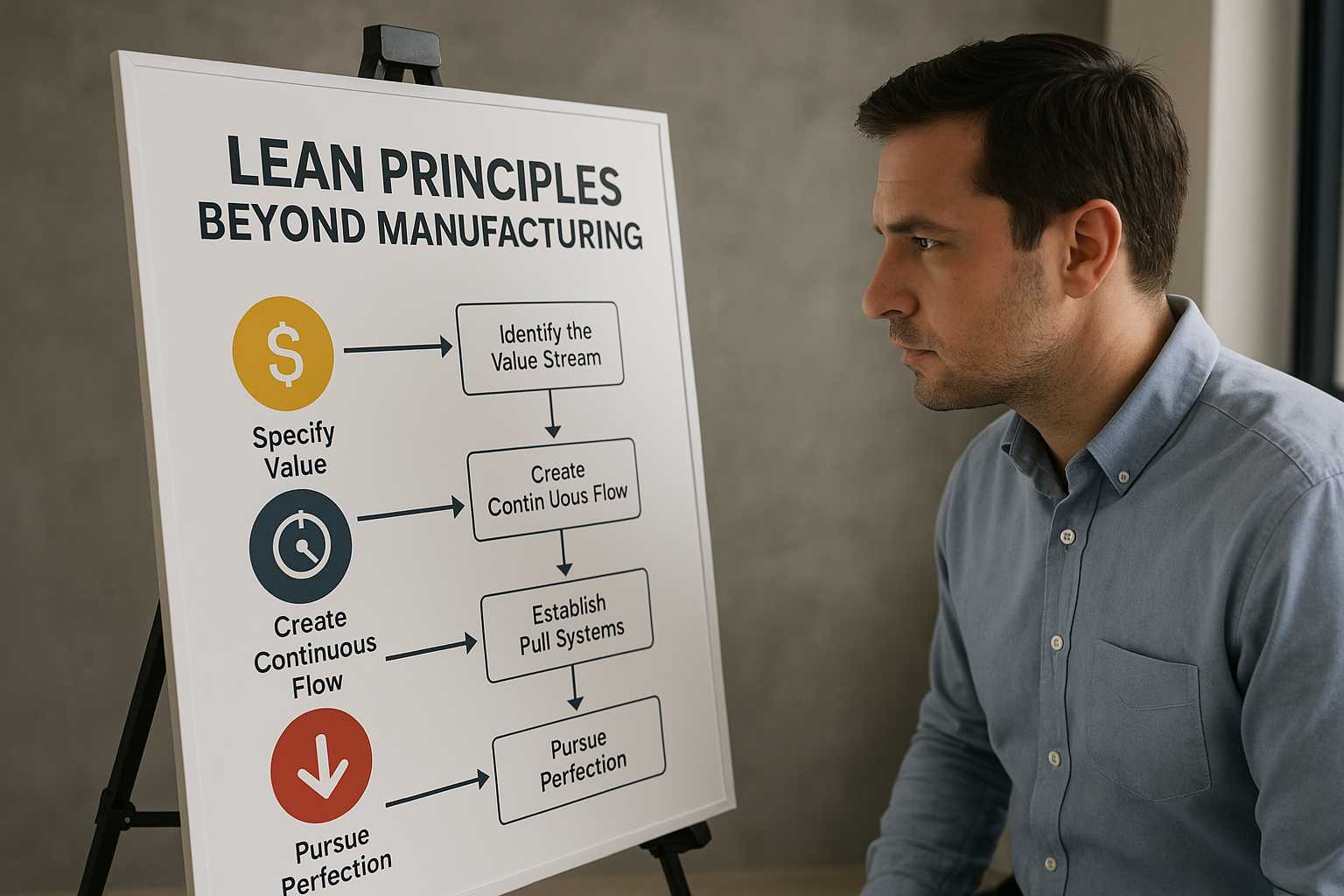
Lean Principles Beyond Manufacturing
4. Establish Pull (The "Don't Make It Until They Ask For It!" Principle)
This principle is revolutionary! Instead of pushing things through a system (like a factory making 100 widgets "just in case"), Lean advocates for a pull system. This means that work is only started when there's an actual demand for it, when the customer (internal or external) "pulls" it from the previous step. It’s like a restaurant only cooking your meal after you order it, rather than having a mountain of cooked steaks sitting under a heat lamp hoping someone wants one.
Pull systems dramatically reduce waste because you're not overproducing, over-preparing, or doing work that might not even be needed. You only do what's requested, just in time. This saves materials, storage space, time, and prevents that dreaded feeling of having done a ton of work only to find out it's obsolete or unnecessary. It's efficient magic!
5. Seek Perfection (The "Always Be Getting Better!" Principle)
This isn't about reaching an impossible ideal and then stopping. Oh no, Lean believes in continuous improvement, a never-ending quest to be better than yesterday. Once you've defined value, mapped your stream, created flow, and established pull, guess what? You do it all again! You look for even smaller wastes, even smoother flows, and even better ways to meet customer demand.
Lean Principles Quotes. QuotesGram
This principle is where the true joy of Lean lives: the mindset that there's always room for a little tweak, a little polish, a little more awesome. It’s about cultivating a curious, problem-solving spirit, constantly asking, "How can we make this even better?"
It's like an athlete who just won gold but immediately starts thinking about how to shave another millisecond off their time. Or a chef who's perfected a dish but experiments with one tiny new herb to make it sing even more. The journey of improvement never truly ends, and that's the exciting part!
So there you have it! These five principles are your secret weapon against chaos and inefficiency. Start looking at your world through Lean-colored glasses, and you'll be amazed at how much smoother, happier, and more productive life can become. Go forth and get Lean!