
What Are The Major Components Of Natural Gas
Ever wonder what fuels your cozy nights in? We're talking about natural gas! It's not just some magical puff of energy.
It's a blend of stuff! Let's peek inside this underground cocktail.
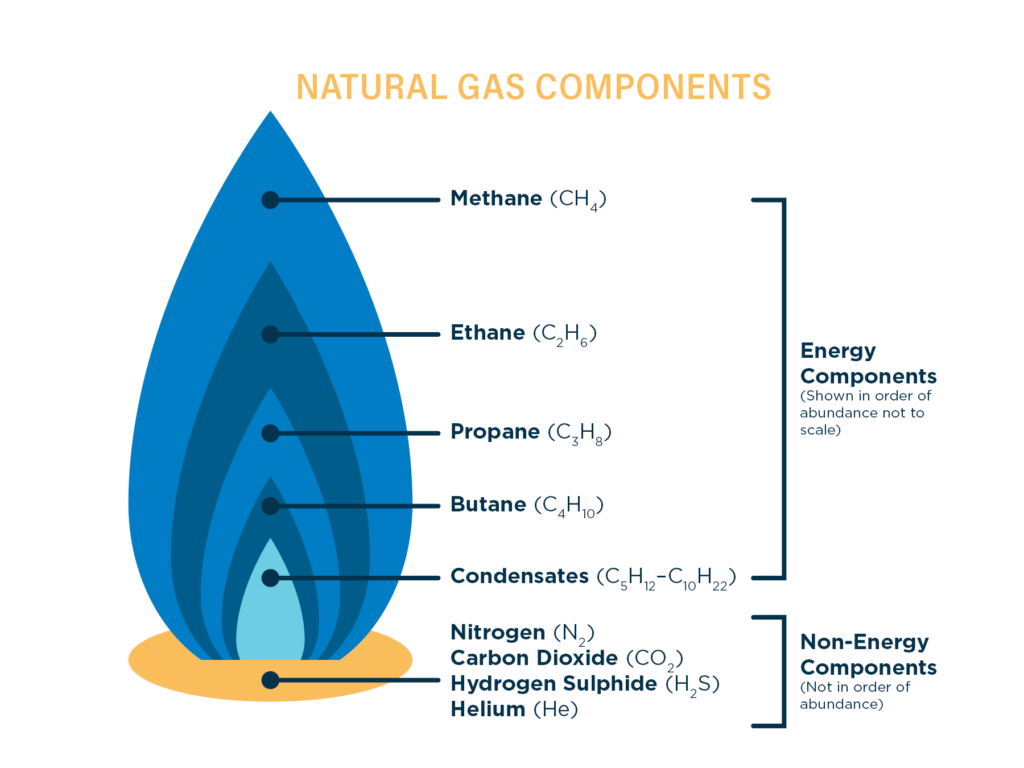
The Star of the Show: Methane (CH4)
Okay, everyone knows methane. It's the main character in this whole natural gas drama.
Must Read
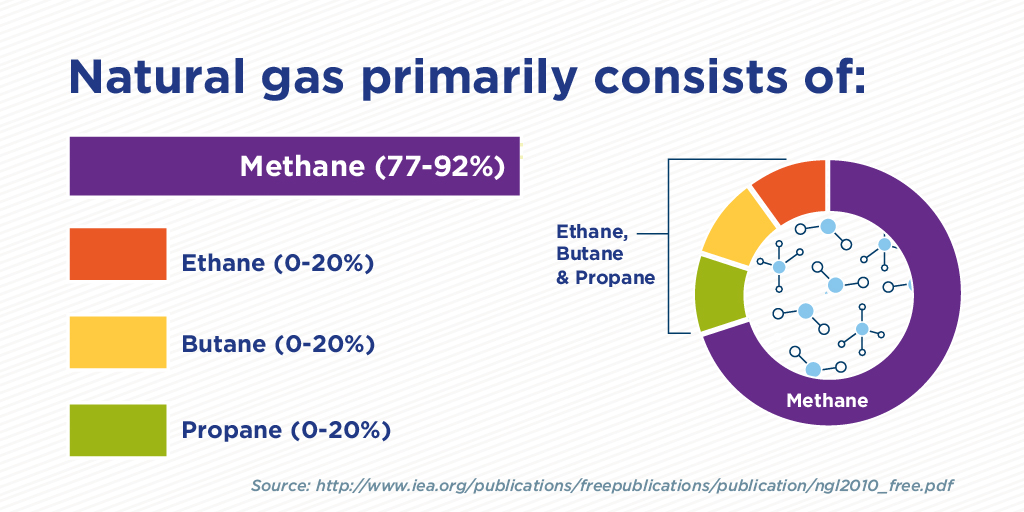
Think of it as the lead singer in a band. Usually takes center stage, right? About 70-90% of natural gas is this very flammable dude!
It's just one carbon atom hanging out with four hydrogen atoms. Simple, yet powerful!
The Supporting Cast: Other Hydrocarbons
Methane can't carry a whole show alone. It needs its backup singers!
These are other hydrocarbons like ethane, propane, and butane.
They’re like the slightly less famous siblings of methane, adding their own flavor to the mix.
Ethane (C2H6): The Sweetener
Ethane is like that friend who always brings the good snacks. It's used to make...plastics!
Who knew your gas stove was connected to your plastic flamingo collection? Mind. Blown.
It provides a little extra "oomph" to the BTU count too.
Propane (C3H8): The Portable Powerhouse
Propane is the independent one. You often find it in your BBQ grill. It is also used for heating homes in rural areas.
It's the perfect fuel for when you want heat on the go! Ever see those propane tanks outside restaurants?
Now you know what's cooking! Literally.
Butane (C4H10): The Lighter Fluid Legend
Butane is smaller than propane. But it's still useful!
Think lighters and camping stoves. This guy is all about convenient flames.
It's also used as a propellant in aerosols. So next time you spray something, remember butane!
The Unwanted Guests: Impurities
Every party has that one uninvited guest, right? Natural gas is no different.
These "impurities" aren't exactly welcome. They need to be removed before the gas can be used safely and efficiently.
Let's meet these party crashers.
Carbon Dioxide (CO2): The Greenhouse Gas Grump
Yep, carbon dioxide is there. We all know it as the villain of climate change.
It's a natural part of the gas, but we try to remove as much as possible. Nobody wants extra CO2!
Imagine inviting a raincloud to your picnic. It's that unwelcome.
Nitrogen (N2): The Inert Intruder
Nitrogen is mostly harmless, it just takes up space.
It doesn't burn or contribute to the energy content. It is the ultimate buzzkill.
It's like having that guest who stands in the corner and doesn't talk to anyone.
Hydrogen Sulfide (H2S): The Rotten Egg Rebel
Hydrogen sulfide is the worst. It smells like rotten eggs.

Plus, it's corrosive and toxic. Think of it like a tiny, stinky ninja!
Luckily, it's usually removed before the gas reaches your home. Phew!
Water Vapor (H2O): The Moisture Miserable
Water vapor can cause problems too. It can lead to corrosion and blockages in pipelines.
Imagine having a leaky faucet in your gas line. Nobody wants that!
Dehydration is good for us, but not for natural gas.
Processing: Kicking Out the Unwanted Guests
Before natural gas can heat your home or power your appliances, it needs to be cleaned up.
This process is called, cleverly enough, "processing." Think of it as a spa day for natural gas!
This stage removes all those pesky impurities we talked about earlier. Time for a deep clean!

My Unpopular Opinion: Natural Gas is Underrated!
Okay, here's where I might lose some of you. But I think natural gas gets a bad rap!
Yes, it's a fossil fuel, and we need to transition to cleaner energy sources. But it's currently abundant and relatively clean-burning compared to other fossil fuels.
It's a crucial part of our energy mix right now, and we should acknowledge its importance. Don't hate the player, hate the game... or something like that.
In Conclusion: Natural Gas, a Complex Brew
So, there you have it! Natural gas isn't just one thing.
It's a mixture of methane, other hydrocarbons, and a few unwanted guests.
Next time you flip on your stove, remember the fascinating chemistry happening behind the scenes!
Now you know a little more than before!
Go forth and impress your friends with your newfound natural gas knowledge!
Maybe even casually drop "methane" into a conversation. You'll sound super smart.