
What Are The Environmental Impacts Of Biomass

Biomass! Sounds earthy, right? Like hugging a tree, or maybe chewing on a particularly stubborn piece of celery. It's basically organic stuff, burned (or otherwise transformed) for energy. But is it the eco-friendly hero we've been led to believe?
Let's be honest: I have some... unpopular opinions. Prepare yourselves.
The Burning Question (Literally!)
So, what happens when we set all that lovely, natural biomass on fire? Well, smoke happens. And that smoke, my friends, isn't always filled with rainbows and unicorn farts. Sorry.
Must Read
Think about your last bonfire. Did it smell purely of daisies? Probably not. Burning biomass releases pollutants like particulate matter. These particles can cause respiratory problems.
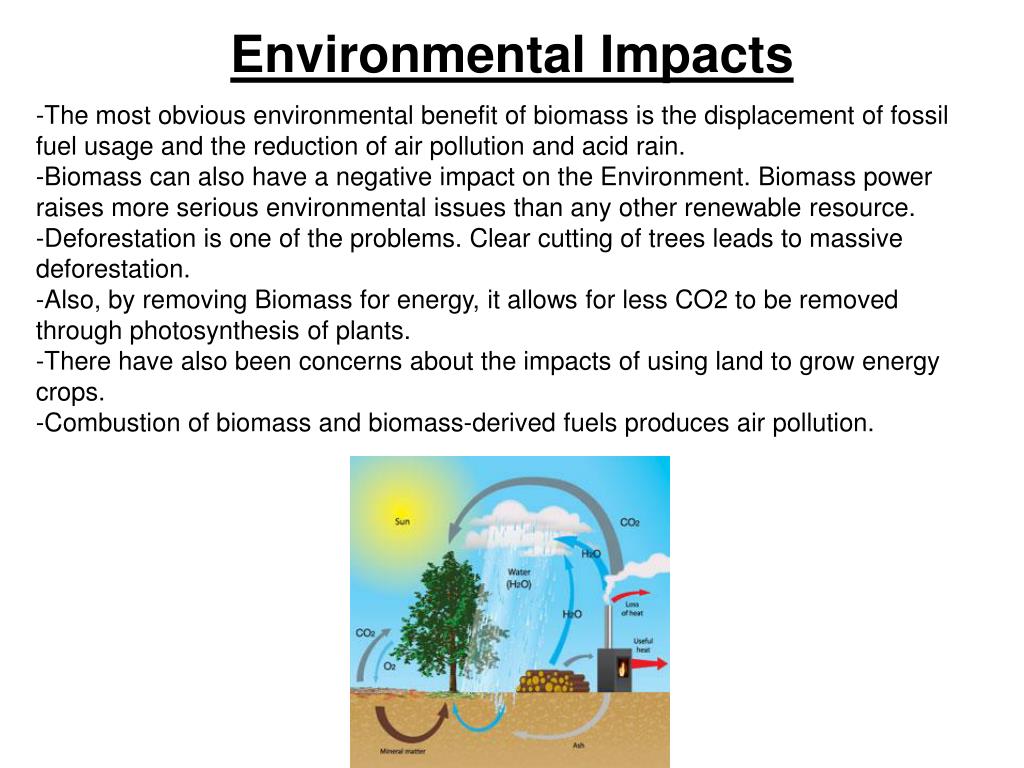
It also releases greenhouse gases. Yes, greenhouse gases. The very things we're trying to avoid! So, is biomass really carbon neutral? Hmm…
The "Carbon Neutral" Conundrum
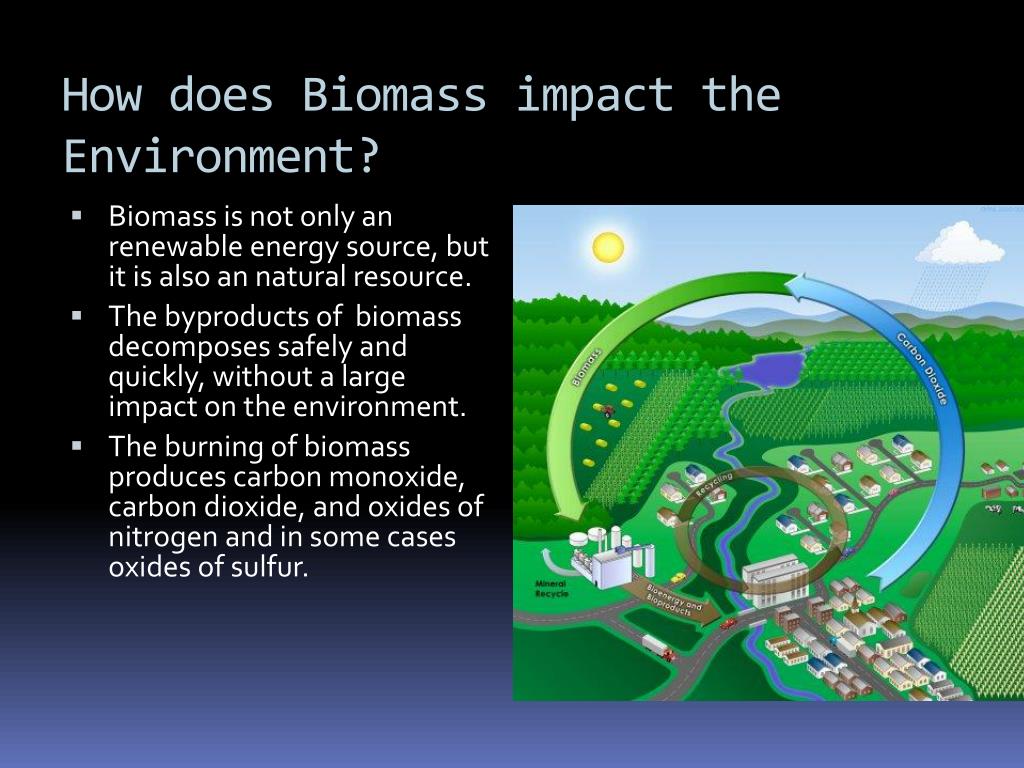
Here's the argument: trees absorb carbon dioxide as they grow. When we burn them, we release that carbon back into the atmosphere. Then, new trees grow and absorb the carbon again. It's a cycle!
Sounds neat, right? Like some kind of perfectly balanced eco-equation. But the problem is the timescale.
Burning biomass releases carbon now. Regrowing trees to absorb that carbon takes… well, time. Decades, even centuries, for some tree species. We need solutions NOW, not in the distant future.
Forest Follies
Where does all this biomass come from, anyway? It's not like we're all carefully pruning our hedges for the greater good (though that would be lovely).
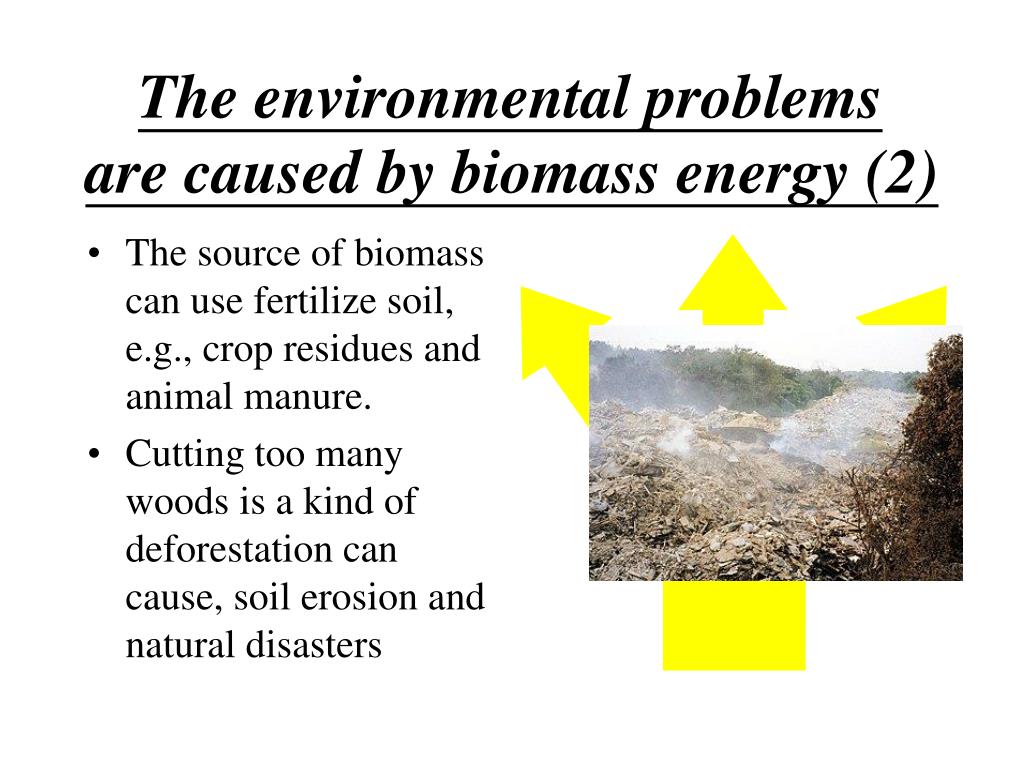
Often, it comes from forests. And sometimes, it involves cutting down a whole lot of trees. Deforestation is a major issue, and biomass demand can contribute to it.
Losing forests has serious consequences. Loss of biodiversity, habitat destruction, and increased soil erosion are just a few of the problems. Not so eco-friendly now, is it?
The Soil Situation
Harvesting biomass can also deplete soil nutrients. When we remove trees and other organic matter, we're taking away valuable resources that keep the soil healthy.
This can lead to soil degradation. Less fertile soil means less plant growth. Less plant growth means less carbon absorption. See the vicious cycle?
And don't even get me started on the potential for increased fertilizer use to compensate. Fertilizer runoff? Nope, not good.
Transportation Troubles
Okay, so we've harvested our biomass. Now we need to get it to the power plant. Guess what that means? Trucks! Trains! Maybe even barges!
All of these forms of transportation require energy. And that energy often comes from fossil fuels. More emissions! It’s like a never-ending eco-domino effect.
The further the biomass has to travel, the bigger the environmental impact. Suddenly, that "local" biomass isn't looking so local anymore.
Alternative Biomass Sources?
Of course, not all biomass comes from forests. We can also use agricultural residues, like corn stalks and wheat straw. Sounds better, right?
Well, it depends. Removing too much crop residue can also deplete soil nutrients and increase erosion. Plus, those residues could be used for other things, like animal feed or soil amendments.

It's all about balance. And sometimes, that balance is hard to find.
Is Biomass All Bad?
Hold on! Don't go throwing out your wood-burning stove just yet. Biomass isn't inherently evil. It's all about how we use it.
Sustainably harvested biomass, from well-managed forests or agricultural operations, can be a part of the solution. Especially when it displaces fossil fuels.
But we need to be realistic about its limitations. And we need to prioritize truly renewable energy sources like solar and wind. Let's be honest, the sun is much better at its job.
The Unpopular Opinion Deepens
Here's where my unpopular opinion gets even more controversial: I think we need to be very skeptical of large-scale biomass energy projects. The potential for unintended consequences is just too high.
Focusing on efficiency and conservation is often a better approach. Using less energy in the first place is always the greenest option.
And let's not forget the potential of other, truly renewable energy sources. Solar power, wind power, geothermal energy... These are the technologies that will truly help us transition to a sustainable future.
The Bottom Line (and a Plea for Common Sense)
Biomass can be a tricky topic. It's not as simple as "good" or "bad." It's a complex issue with a lot of nuances. We need to have a realistic conversation on biomass sustainability.
But let's not get so caught up in the hype that we ignore the potential downsides. We need to think critically, ask tough questions, and demand transparency. Let's do our homework!
Ultimately, the best approach is a diversified one. A mix of renewable energy sources, coupled with energy efficiency and conservation. And maybe, just maybe, a little less reliance on burning things. What do you think?
And if you disagree with my unpopular opinions? That's okay! Let's talk about it. But please, be nice. And maybe bring cookies.
Remember, sustainability is a journey, not a destination. Let's keep learning, keep questioning, and keep striving for a better future. Even if that future doesn't involve burning quite so many trees.