What Are The Disadvantages Of Nuclear Energy
Okay, let's talk nuclear energy. It's been touted as a clean alternative to fossil fuels, and in many ways, it is. But like that shiny new car that always seems to have a "check engine" light on, it's got its downsides. We're not talking about sci-fi movie meltdown scenarios here (though those are definitely a concern!), but more like the everyday headaches that come with dealing with something so…powerful.
The Price Tag: Ouch!
Think of building a nuclear power plant like buying a mansion. Not just any mansion, but one with a moat filled with genetically modified alligators and a panic room stocked with enough gourmet ramen to last through the apocalypse. In other words, it's expensive. REALLY expensive.
We're talking billions of dollars. These are massive, complex projects that take years, sometimes decades, to complete. That's a lot of investment before you even start generating a single kilowatt of power. And who ends up footing the bill? Well, eventually, you and me, through our electricity rates. So, cheaper energy isn’t always the case!
Must Read
The Waste Problem: A Never-Ending Garage Sale
Now, here’s the kicker. Nuclear reactors create radioactive waste. And this isn't your average garbage you can toss in the bin. This stuff stays radioactive for thousands of years. Imagine your kids inheriting your attic, only instead of finding old photo albums and dusty furniture, they find glowing green barrels that need to be babysat for, like, a million years.
Currently, much of this waste is stored on-site at the power plants themselves. It's like having a permanent garage sale, except nobody wants to buy what you're selling. There are discussions about long-term storage facilities, but finding a location that's geologically stable, politically acceptable, and doesn't upset any local cryptid populations? That's a tough sell.
Safety Concerns: More Than Just a Paper Cut
Accidents happen. We've seen it with Chernobyl and Fukushima. While these are extreme examples, they highlight the potential for catastrophic failures. It’s like knowing your microwave could explode, but hoping it doesn’t happen when you're just trying to heat up some leftovers. Nuclear power plants have multiple safety systems in place, but even the best systems can fail, especially in the face of natural disasters, human error, or, you know, a rogue squirrel chewing through a vital cable.
Let's be real, even with all the precautions, there's still a perception of risk. People worry about radiation leaks, even if the chances are slim. It's that "better safe than sorry" mentality, which, honestly, isn't a bad thing when dealing with potentially hazardous materials.
Security Risks: Not Your Average Home Invasion
Nuclear facilities are prime targets for terrorism. Protecting them is a massive undertaking, requiring constant vigilance and sophisticated security measures. It's like trying to defend your house against a horde of zombie ninjas – you need a lot of locks, motion sensors, and maybe a flamethrower or two.
The thought of nuclear materials falling into the wrong hands is a chilling one, and it's something that governments and security agencies take extremely seriously. It adds another layer of complexity and cost to the whole nuclear energy equation.

Proliferation Concerns: The Genie in the Bottle
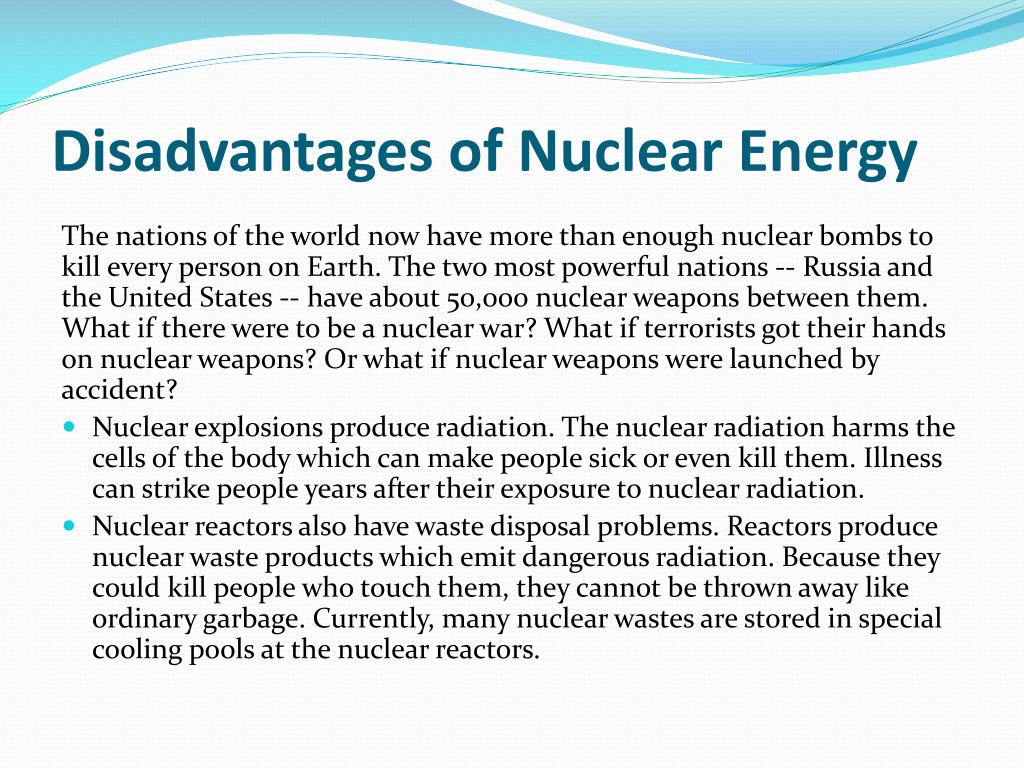
The same technology used to generate electricity can also be used to create nuclear weapons. It's a bit like having a kitchen appliance that can bake cookies or be used to build a miniature doomsday device. Nuclear technology is tricky like that.
The more countries that have nuclear power plants, the greater the risk of nuclear proliferation. International safeguards are in place to prevent this, but ensuring that everyone plays by the rules is an ongoing challenge. It's like trying to referee a game of Monopoly with a group of toddlers - things can get messy, and fast!
So, is nuclear energy all doom and gloom? Absolutely not. It's a powerful source of energy that can play a significant role in reducing our reliance on fossil fuels. But, like anything powerful, it comes with its own set of challenges and disadvantages. Understanding those challenges is crucial for making informed decisions about our energy future. Let's just hope we don't end up with a real-life Simpsons nuclear power plant situation anytime soon.