
What Are The Disadvantages Of Geothermal Energy
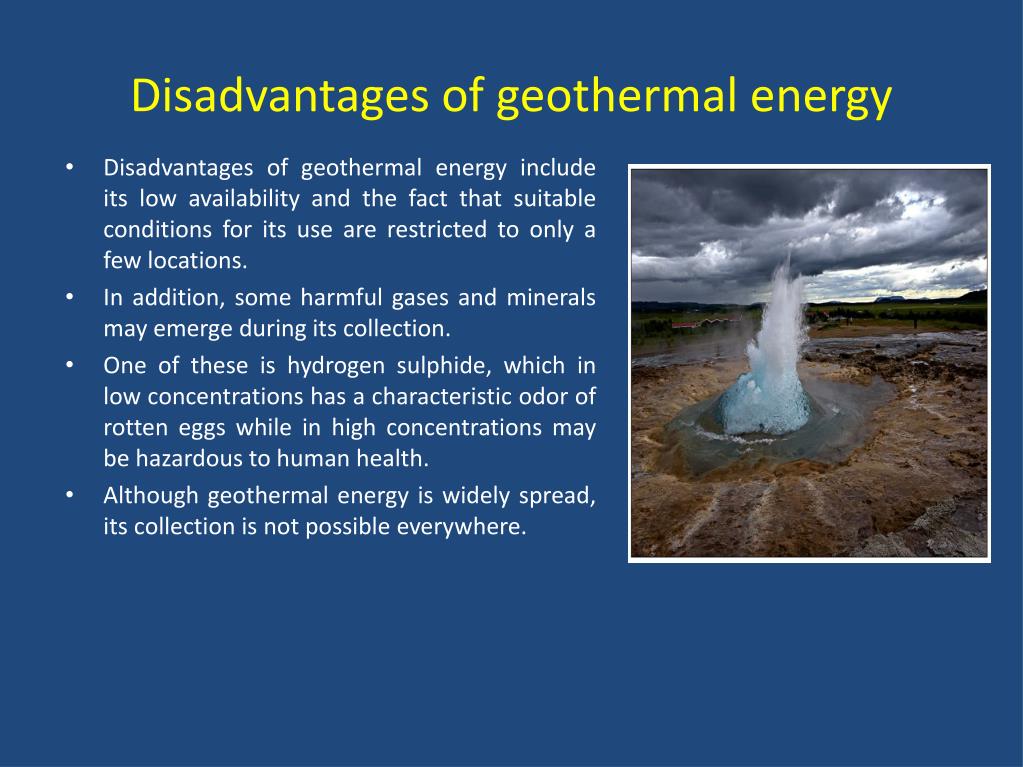
Ah, geothermal energy! The very thought conjures images of Iceland's Blue Lagoon, naturally heated spas in Japan, and the promise of clean, sustainable power bubbling up from the earth. Who wouldn't want to harness the planet's own internal furnace to keep us warm, power our homes, and reduce our reliance on fossil fuels? It's a fantastic idea, and in many ways, geothermal energy is a real game-changer. It offers a relatively consistent and reliable source of energy, unlike solar or wind power which are dependent on weather conditions. It also boasts a smaller land footprint compared to other renewable energy sources like massive solar farms. We often see it applied directly in heating systems, especially in regions with high geothermal activity, and it's increasingly used in electricity generation through geothermal power plants. These plants tap into underground reservoirs of steam or hot water to spin turbines and generate electricity.
But like any seemingly perfect solution, geothermal energy isn't without its drawbacks. Let's dive into some of the less talked-about downsides, presented in a way that's easy to digest (and hopefully, won't completely deflate your enthusiasm for this amazing resource).
One major constraint is location, location, location! Geothermal energy isn't universally accessible. You need specific geological conditions – areas with naturally occurring underground reservoirs of hot water or steam relatively close to the surface. This limits the potential for geothermal development to certain regions. Imagine wanting a geothermal heating system in your home, only to discover you live in a place where the earth's crust is stubbornly cool.
Must Read
Another disadvantage is the high initial cost. Building a geothermal power plant or installing a large-scale geothermal heating system requires significant upfront investment. Drilling deep wells, constructing the necessary infrastructure, and managing the environmental impact all contribute to a hefty price tag. This can make geothermal projects less attractive compared to cheaper, albeit less environmentally friendly, alternatives.

Then there's the potential for environmental impact. While geothermal energy is generally considered clean, it can still have some negative consequences. Geothermal plants can release small amounts of greenhouse gases, such as carbon dioxide and hydrogen sulfide, which are trapped underground. Additionally, drilling and extraction activities can potentially destabilize the ground, leading to seismic activity, although this is generally minimal and localized. There is also the risk of polluting groundwater if geothermal fluids are not properly managed.
Furthermore, geothermal resources can be depleted if extraction rates exceed the rate of natural replenishment. This is particularly true in areas where geothermal reservoirs are not properly managed. Sustainable practices are crucial to ensure the long-term viability of geothermal energy projects.

Finally, let’s not forget the possibility of subsidence. The extraction of large volumes of geothermal fluids can sometimes cause the land above to sink or subside. Careful monitoring and management are necessary to mitigate this risk.
Despite these disadvantages, geothermal energy remains a promising renewable energy source. By understanding the challenges, we can work towards developing more sustainable and efficient geothermal technologies. Continued research and development are key to unlocking the full potential of this powerful resource while minimizing its negative impacts.

