What Are The Different Hurricane Categories

Hurricanes. Just the word itself can send shivers down your spine, but understanding them doesn't have to be scary! In fact, decoding the hurricane categories is like unlocking a secret code to understanding nature's fury. It’s incredibly useful knowledge, especially if you live in a coastal area or plan to visit one. Plus, it's just plain fascinating to learn how scientists measure and categorize these powerful storms.
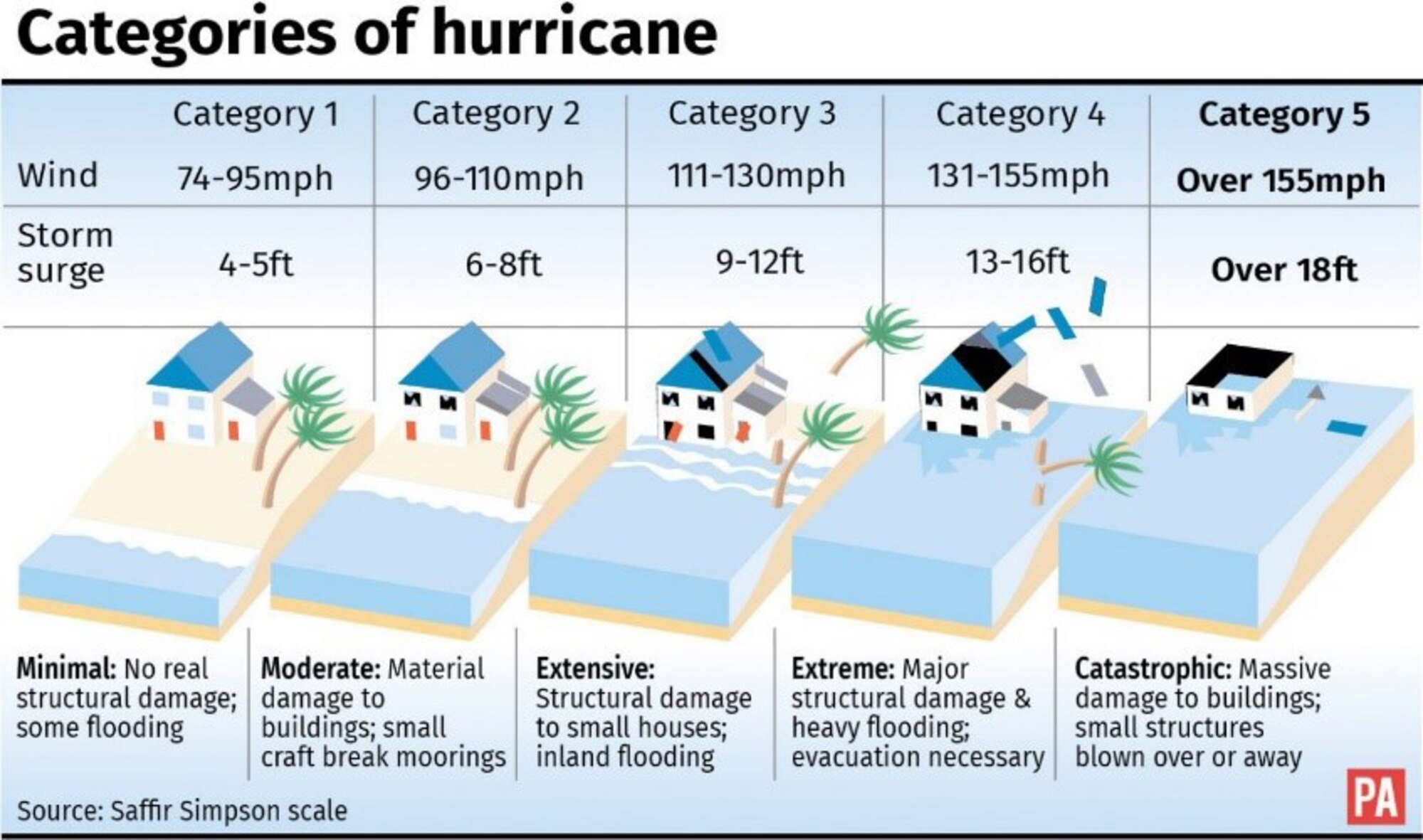
So, what are these magical categories, and why should you care? The Saffir-Simpson Hurricane Wind Scale is what we use to classify hurricanes, based on their sustained wind speeds. It ranges from Category 1 to Category 5, with each level representing an increasing level of potential damage. For beginners, knowing these categories helps you quickly assess the severity of a hurricane threat. Instead of feeling overwhelmed by technical jargon, you can understand at a glance if it's something to take very seriously.
For families, understanding the categories is crucial for making informed decisions about safety. Category 1 might mean stocking up on supplies and securing outdoor furniture. Category 3 or higher? That likely means evacuating. Knowing the difference can literally save lives. It also allows you to have a calmer, more informed conversation with your kids, easing their anxieties by explaining what's happening and what precautions you're taking.
Must Read
And for weather hobbyists, diving deeper into the categories allows you to analyze historical hurricane data, track storm patterns, and understand the complexities of atmospheric science. It's a great way to expand your knowledge and impress your friends with your hurricane expertise!
Let's break down the categories:
![Understanding Hurricane Categories [+ Preparation List]](https://www.alertmedia.com/wp-content/uploads/2019/05/hurricane-categories.jpg)
- Category 1: Winds 74-95 mph. Expect damage to trees, power lines, and unsecured objects. Coastal flooding is possible. Example: A fallen tree branch blocking your driveway.
- Category 2: Winds 96-110 mph. Considerable damage. Expect roof and siding damage, and power outages. Example: Having to replace some shingles after the storm.
- Category 3: Winds 111-129 mph. Extensive damage. Expect structural damage to small residences and utility buildings. Example: Your neighbor's shed getting blown away. This is where evacuation becomes highly recommended.
- Category 4: Winds 130-156 mph. Extreme damage. Expect significant roof damage and major erosion. Example: Power outages lasting weeks, and potentially needing to relocate temporarily.
- Category 5: Winds 157 mph or higher. Catastrophic damage. Expect complete roof failure and widespread power outages. Homes may be leveled. Example: Devastation on a massive scale, requiring extensive rebuilding.
Getting started is simple! Just pay attention to weather reports during hurricane season. Many news outlets clearly state the category of any approaching storm. Look up the Saffir-Simpson scale online and familiarize yourself with the wind speeds and potential damages. Don't rely solely on the category, though. Remember to also pay attention to projected storm surge, rainfall, and the storm's overall path.
Ultimately, understanding hurricane categories isn't about becoming a meteorologist. It's about empowering yourself with knowledge to protect yourself, your family, and your community. It's about appreciating the power of nature while also respecting the importance of preparation and safety. So go ahead, embrace the fascinating world of hurricane categories and stay safe out there!