
What Are The Different Categories Of Hurricanes

Alright, gather 'round, folks! Let's talk about hurricanes. You know, those swirling, watery temper tantrums Mother Nature throws when she’s had a really bad day? We all know they're bad news, but did you know they’re not all created equal? They're like spicy wings: some are mild, some are "burn your face off" hot, and some are just... well, tragically bland. We’re here to decipher the hurricane spice rack!
Enter the Saffir-Simpson Hurricane Wind Scale. Sounds fancy, right? Don't worry, it's less intimidating than a cat in a cucumber patch. Basically, it's a 1-to-5 rating system based solely on a hurricane's sustained wind speed. That’s right, it only considers the wind, and not things like storm surge or rainfall – those are judged separately. Think of it as rating a boxer purely on their punch, ignoring their footwork or ability to take a hit.
Category 1: The "Okay, That's a Bit Windy" Hurricane
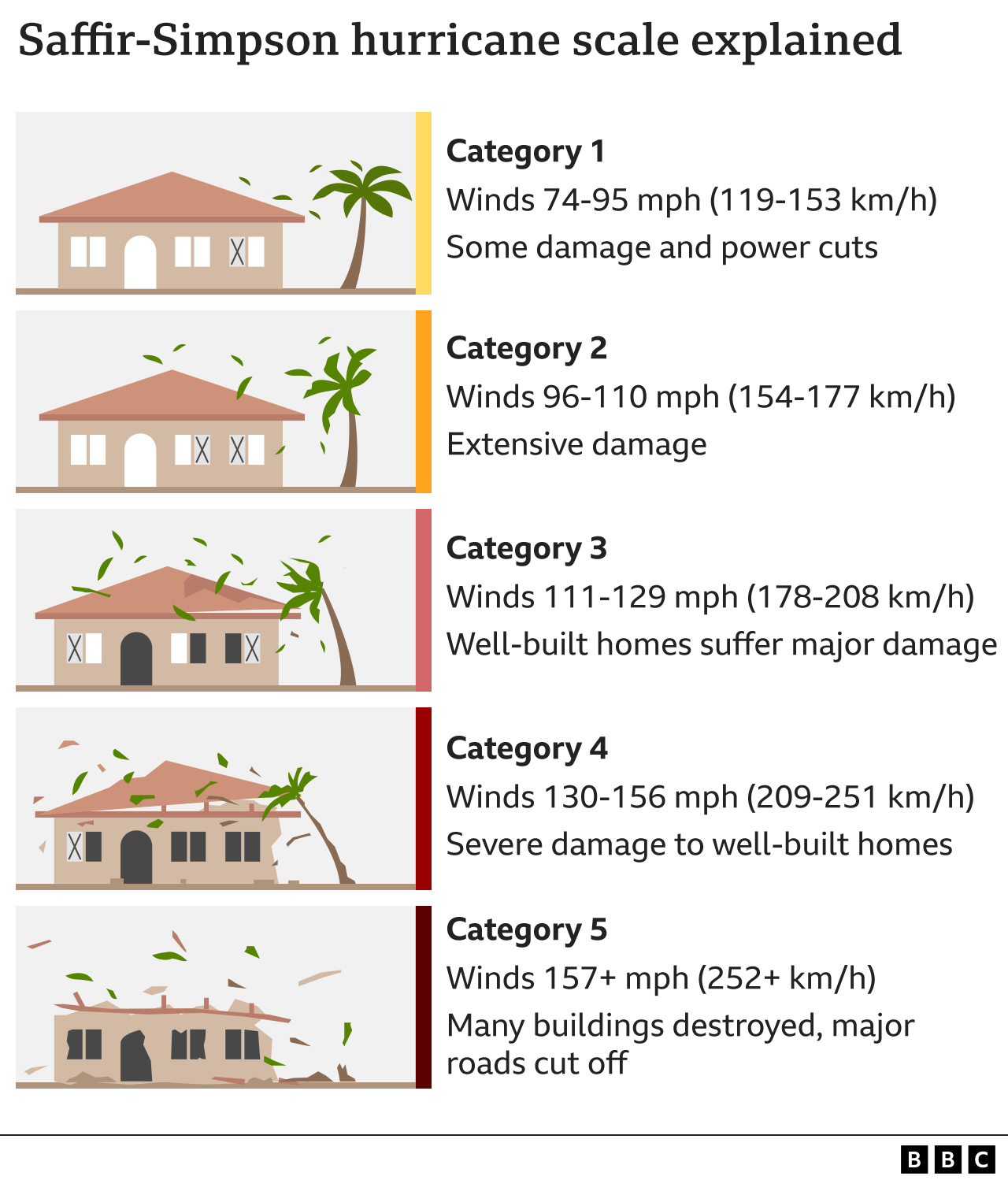
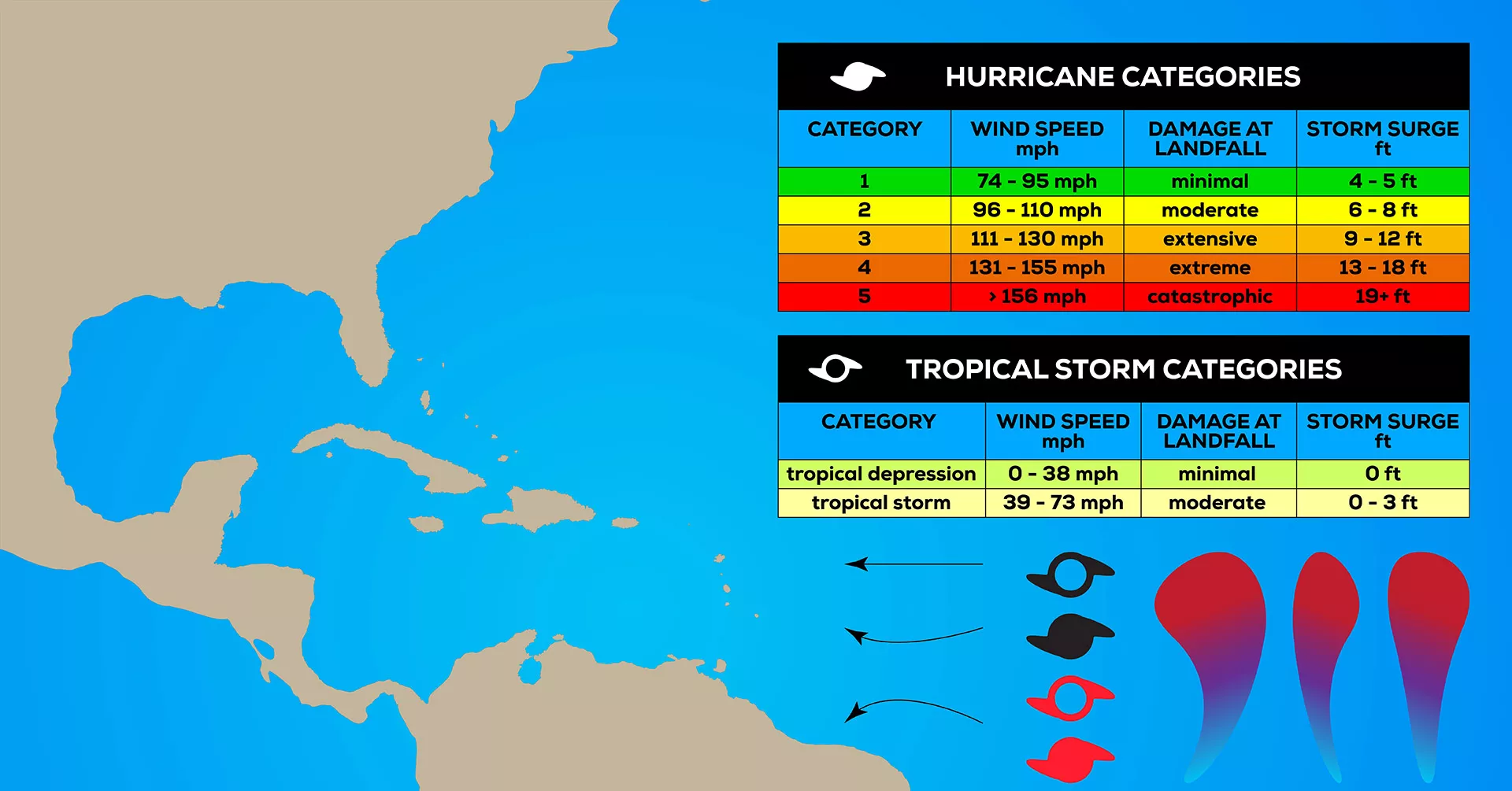
Picture this: you’re at the beach, and a strong gust of wind sends your umbrella tumbling down the shore. That's kinda like a Category 1 hurricane, but amplified. Sustained winds are between 74-95 mph. Expect some downed power lines, snapped tree branches, and minor damage to roofs and siding. Nothing a little duct tape and a strong cup of coffee can't fix… probably. I am kidding. Maybe. Still, these storms are a serious threat. Don't underestimate them!
Must Read
A fun fact? Category 1 winds are strong enough to blow over poorly built sheds and send unsecured objects flying. So, that inflatable T-Rex you have in your yard? Yeah, wave goodbye. It's going on an adventure! That also applies to trash cans, lawn furniture, and anything else that isn't bolted down.
Category 2: The "Now We're Getting Somewhere" Hurricane
Category 2 storms pack winds of 96-110 mph. Think of it as a Category 1, but angrier. More extensive damage is on the menu, with considerable roof and siding damage, many snapped trees, and widespread power outages. Things get a bit more serious here.
Coastal areas are at risk of significant flooding, and evacuation might be recommended (or even mandatory!). The good news? At least you have a valid excuse to skip work. The bad news? Your vacation probably won’t be relaxing. Also, if you are thinking about surfing the big waves, just don't. Please?
Category 3: "Major" Hurricane Territory (Uh Oh!)
Now we're playing with the big boys. Category 3 hurricanes, with winds of 111-129 mph, are the first to be classified as "major" hurricanes. And, honestly, they deserve the title. This is where things start getting truly scary.
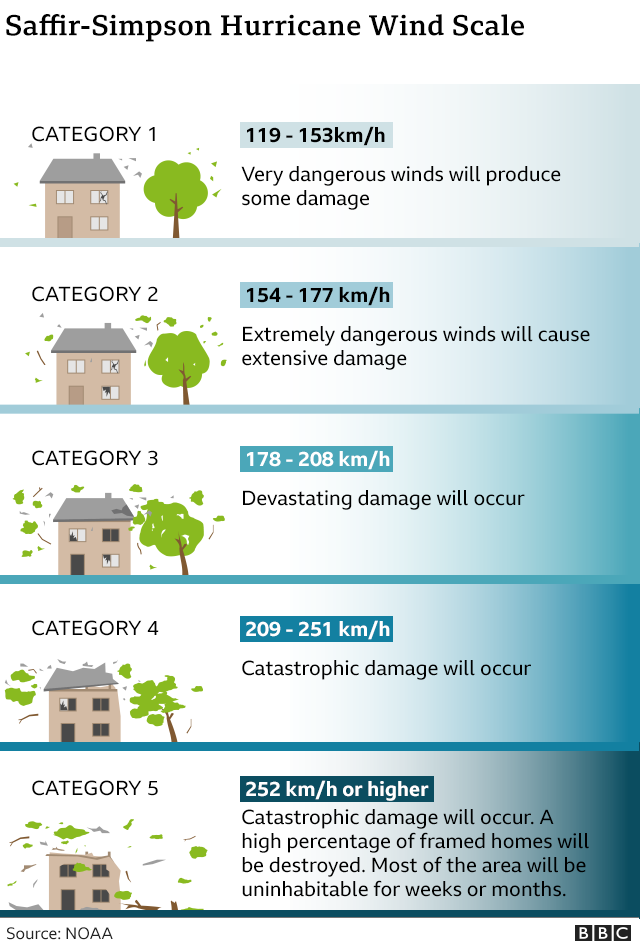
Expect devastating damage. Well-built framed homes can incur major damage or removal of roof decking and gable ends. Many trees will be snapped or uprooted, blocking roadways. Electricity and water will be unavailable for days to weeks.
Fun fact: These storms are strong enough to blow the doors off weaker buildings. So, if your house sounds like a haunted house on Halloween even on a calm day, you really should get out of there. Evacuation is highly recommended (and often mandatory!). Seriously, don’t be a hero. Your stubbornness won't stop a hurricane, but it might endanger rescue workers.
Category 4: "The House Might Be Gone" Hurricane
Brace yourself. Category 4 hurricanes (130-156 mph) are devastating. Think "major damage" from Category 3, but add a healthy dose of "completely demolished." Homes can sustain severe damage with loss of most of the roof structure and/or some exterior walls. Most trees will be snapped or uprooted and power poles downed.

Areas will be uninhabitable for weeks or months. Storm surge (that's the wall of water pushed inland by the hurricane) becomes a major threat, capable of inundating coastal areas. And trust me, you don't want to be swimming with debris in rapidly rising, contaminated floodwaters.
Evacuation is absolutely, positively, without a doubt MANDATORY. At this point, you're not just risking your life; you're risking the lives of the people who might have to rescue you. Just go. Please.
Category 5: "We're Not in Kansas Anymore" Hurricane
Okay, folks, buckle up. Category 5 hurricanes (157 mph or higher) are the stuff of nightmares. These are the apocalyptic hurricanes that can reshape entire coastlines. A high percentage of framed homes will be destroyed, with total roof failure and wall collapse. Widespread power outages are inevitable. Areas will be uninhabitable for weeks or months.
Think complete and utter devastation. Storm surge can be catastrophic, wiping out entire communities. If a Category 5 hurricane is headed your way, follow evacuation orders IMMEDIATELY. There is no negotiation here. This isn't a "maybe." This is a "RUN!"
Category 5 storms are rare, but when they hit, they leave an unforgettable mark. They are the apex predators of the weather world. They are the… well, you get the picture. They're bad. Really bad. And they should be respected (from a very safe distance!).
So, there you have it: your crash course in hurricane categories! Now you're armed with the knowledge to better understand the potential threat posed by these watery whirlwinds. And remember, while this is all a bit of fun, hurricane preparedness is no joke. Stay informed, heed warnings, and stay safe out there! Now, who wants another cup of coffee?