What Are The Different Categories For Hurricanes
Ever wondered how meteorologists predict the intensity of those swirling storms they show on the news? Understanding hurricane categories is like unlocking a secret code – it helps us understand the potential impact of these powerful weather events, and that's pretty cool! Whether you're planning a vacation, trying to protect your home, or just curious about the world around you, knowing the basics of hurricane categories is incredibly useful.
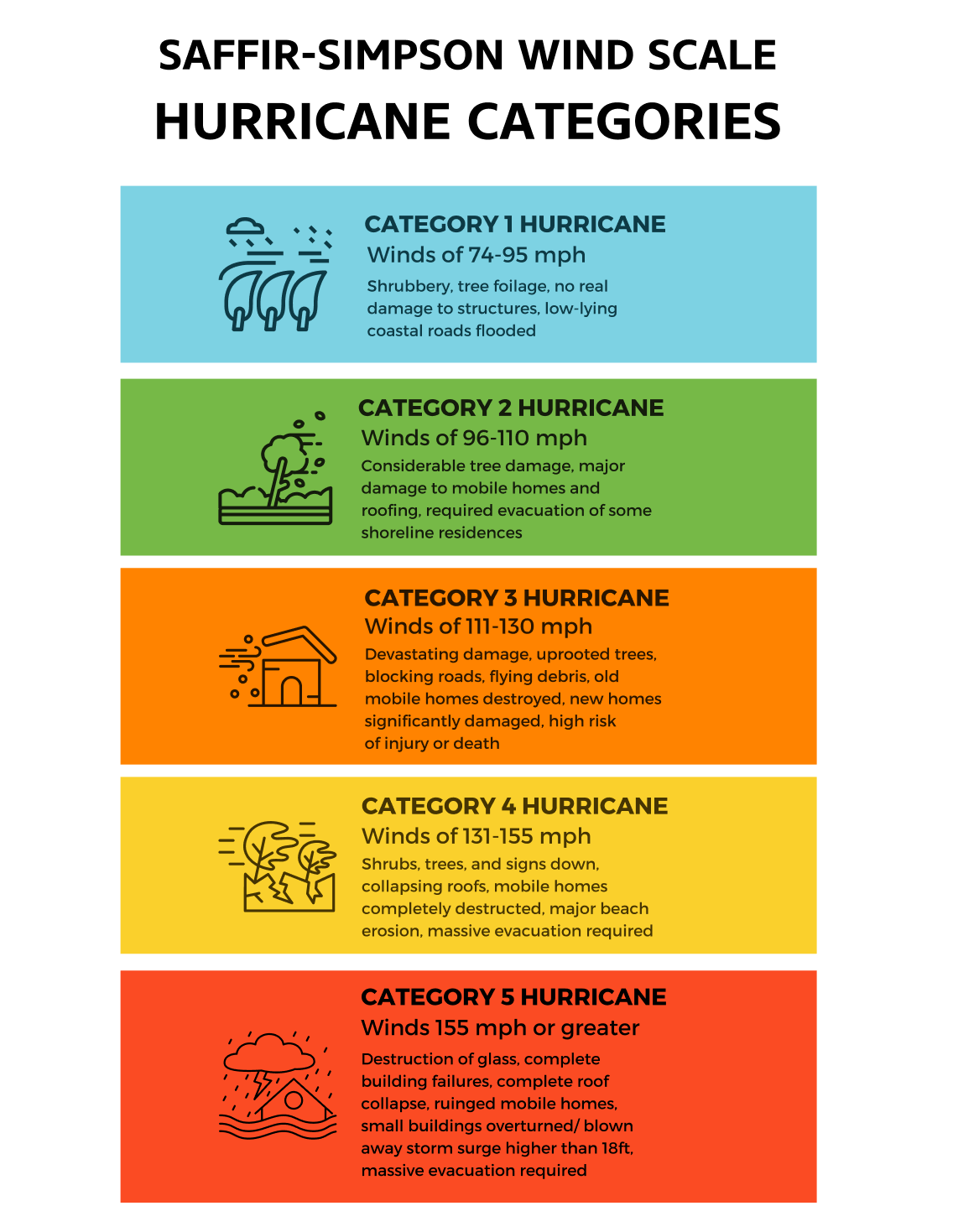
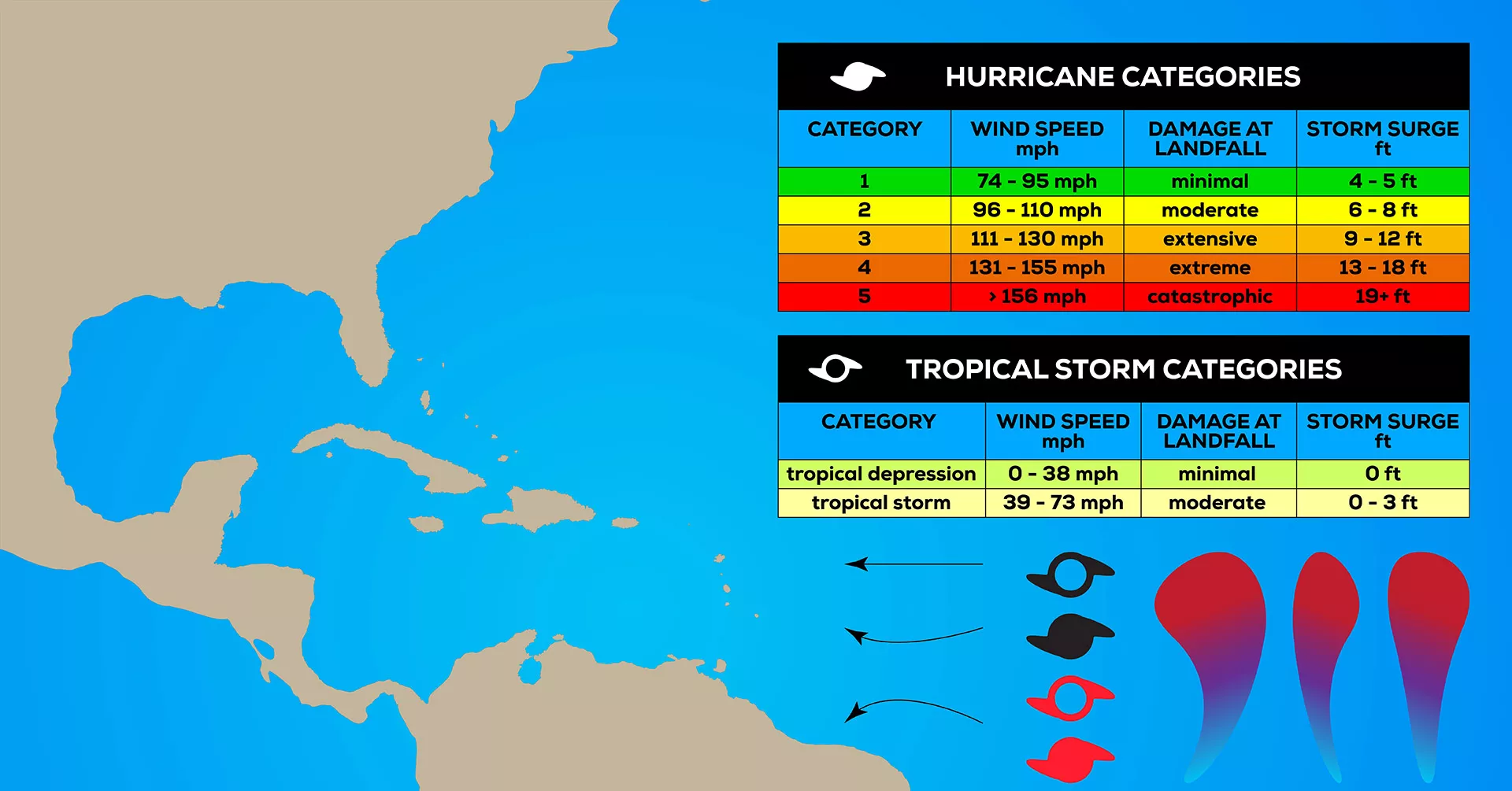
The system we use to categorize hurricanes is called the Saffir-Simpson Hurricane Wind Scale. It focuses primarily on the storm's sustained wind speed, which is the average wind speed over a one-minute period. The scale then classifies hurricanes into five categories, from Category 1 (relatively weak) to Category 5 (catastrophic). The purpose? To give people a quick and easy way to gauge the potential damage a hurricane might cause.
For beginners, understanding the categories can make weather reports less intimidating. Knowing that a Category 1 hurricane is different from a Category 4 can help you process warnings more effectively. For families, knowing the category helps you make informed decisions about whether to evacuate or take other protective measures. For weather hobbyists, delving deeper into the specifics of each category, including the potential storm surge, rainfall amounts, and types of structural damage, can be fascinating.
Must Read
Let's break it down:
- Category 1: Winds 74-95 mph. Expect some damage to trees, shrubs, and unsecured objects. Power outages are possible. An example might be a storm that knocks down a few tree limbs and causes minor flooding near the coast.
- Category 2: Winds 96-110 mph. Expect more significant damage, with tree uprooting, roof and siding damage, and near-total power loss. Think of a scenario where you see broken windows and street signs.
- Category 3: Winds 111-129 mph. This is where things get serious. Expect major damage, with potential for structural damage to smaller buildings, widespread flooding, and power outages lasting for days or weeks. Homes might experience roof failure.
- Category 4: Winds 130-156 mph. Expect catastrophic damage. Homes can sustain severe structural damage, and trees and power poles will be downed. Evacuation is highly recommended.
- Category 5: Winds 157 mph or higher. This is the most devastating category. Expect complete roof failure and collapse of many frame structures. Widespread and prolonged power outages are inevitable. Coastal areas will be uninhabitable.
It's important to remember that the wind speed isn't the only factor. Storm surge (the abnormal rise of water levels during a storm) and rainfall amounts can also significantly contribute to the overall damage. A weaker hurricane with slow movement can cause devastating flooding, even if the winds aren't as high.

Practical Tips for Getting Started:
- Bookmark the National Hurricane Center website (nhc.noaa.gov) for the latest information.
- Familiarize yourself with the evacuation routes in your area.
- Create a hurricane preparedness kit with essential supplies like water, food, and medications.
- Discuss a family emergency plan with your loved ones.
Learning about hurricane categories doesn't have to be a chore. It's about understanding the power of nature and preparing yourself and your family for potential challenges. It’s empowering to have a grasp of these concepts, turning what might seem like complicated weather jargon into actionable knowledge that helps keep you safe and informed. So, go ahead, explore the world of hurricane categories - you might just find it surprisingly fascinating!