
What Are Some Disadvantages Of Nuclear Energy
Okay, so we all secretly (or not-so-secretly) love nuclear energy. It's like the superhero of power sources: clean, efficient, and capable of keeping our Netflix binge sessions going strong. But even superheroes have their kryptonite, right?
The Tricky Trash Talk: Nuclear Waste
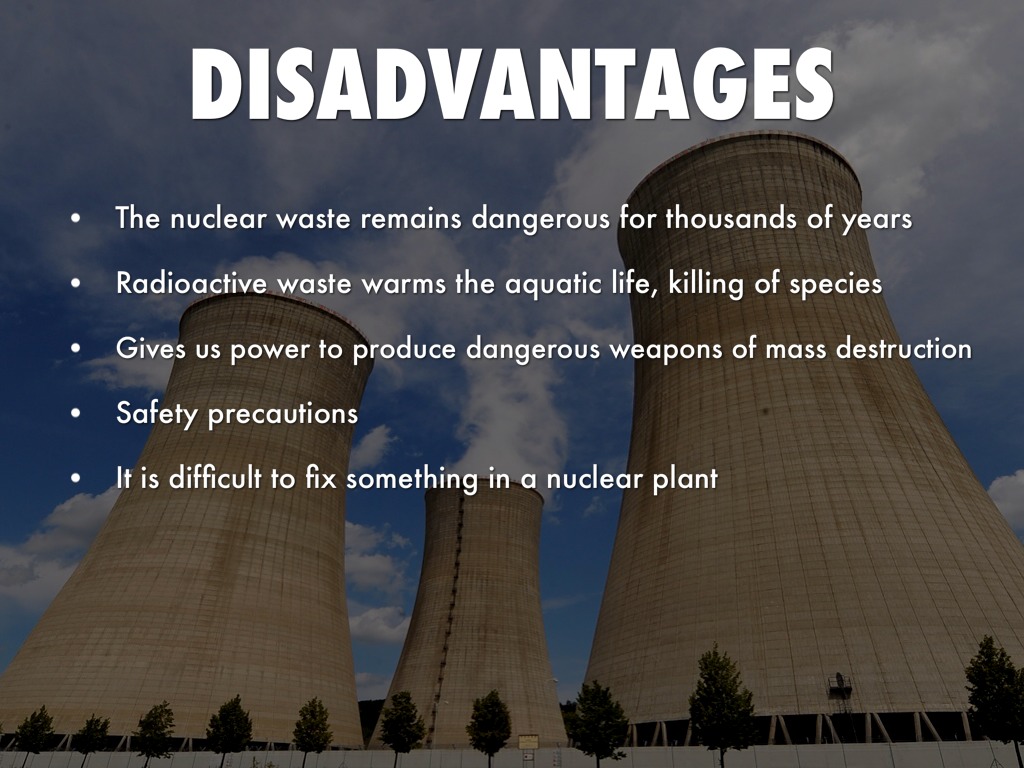
Let's talk trash. Nuclear waste, to be exact. Unlike your banana peel or that questionable leftovers from last week, this stuff sticks around. Like, for thousands of years!
Imagine having a house guest who refuses to leave… for millennia. Finding a safe place to store it is a real head-scratcher. Think geological time scales, folks.
Must Read
We're talking about burying it deep underground, encasing it in super-tough materials, and hoping future generations don't accidentally dig it up and say, "Hey, what's this glowing green thing?" It's a long-term commitment, to say the least.
The Not-So-Fun Fission Fashion
Okay, I made that title up. But seriously, dealing with nuclear waste is a bit like trying to re-gift a fruitcake nobody wants. It's a persistent problem with a lot of creative (and expensive) solutions.
Accidents Happen (Hopefully Not!)
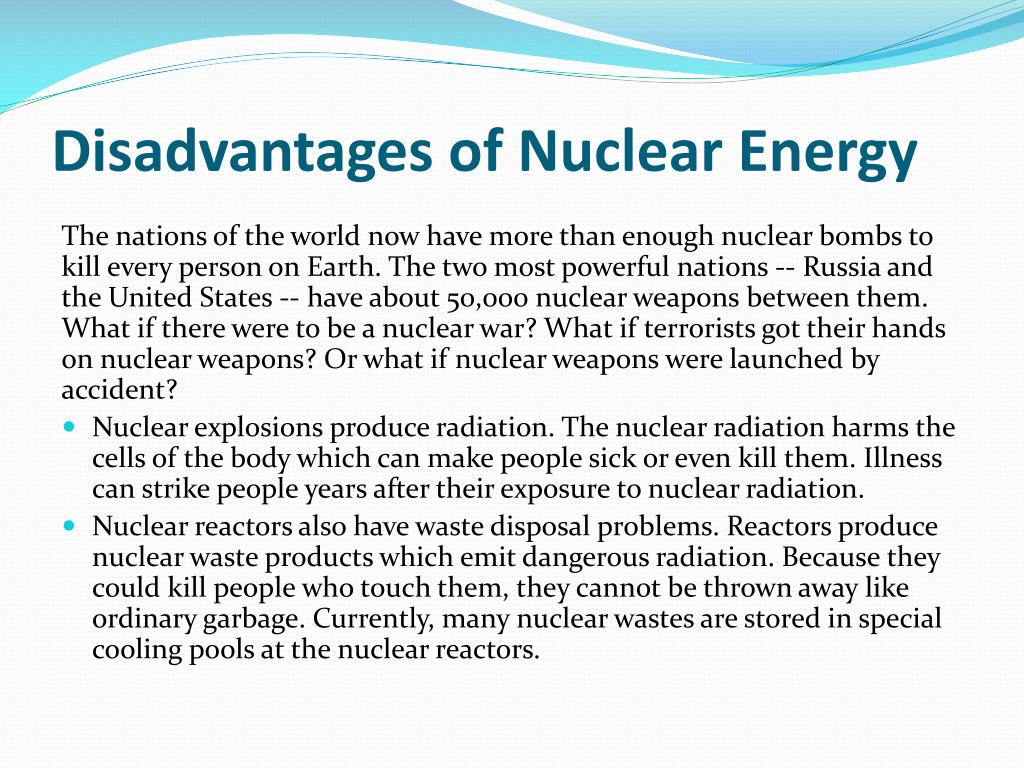
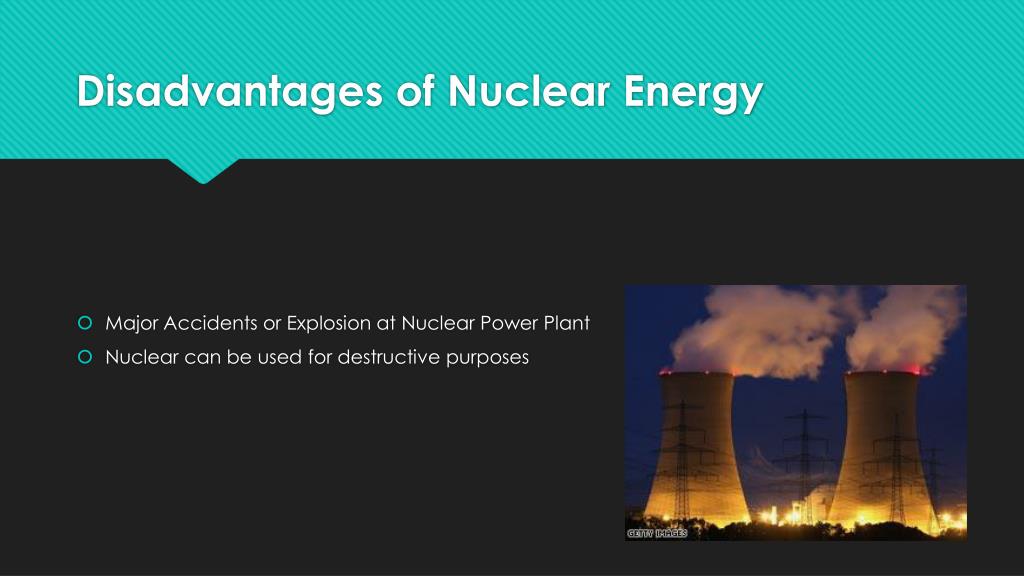
Nobody plans on a nuclear accident. But let's face it, history has shown us that things can go wrong. Think Chernobyl or Fukushima. Not exactly vacation destinations.
When accidents happen, they can be… well, catastrophic. Radiation can spread, forcing evacuations and causing long-term health problems. Nobody wants to be told they need to move because their neighborhood is now glowing.
The image of scientists scrambling, alarms blaring, and everyone wearing those slightly awkward hazmat suits isn't exactly comforting. It's the stuff of nightmares, or at least really bad sci-fi movies.
The High-Stakes Game
Operating a nuclear power plant is a bit like playing high-stakes Jenga. One wrong move and… boom (hopefully not a literal boom!). That's why safety regulations are so incredibly strict.
The Price Tag: Ouch!
Building a nuclear power plant is NOT cheap. We're talking billions of dollars. Enough to make even Scrooge McDuck wince. It's a massive upfront investment.
Think about it: specialized materials, highly trained personnel, and incredibly complex engineering. It's like building a spaceship, but instead of going to Mars, it just boils water to make electricity.
And that high price tag can trickle down to your electricity bill. Nobody wants to pay extra just because their power plant is fancier than the Taj Mahal.
The Financial Fission
The cost can be a real deterrent. It's like deciding whether to buy a sensible sedan or a rocket-powered roller skate. Both get you places, but one costs considerably more (and is probably less practical).
Security Concerns: Keeping the Bad Guys Out
Nuclear power plants are pretty sensitive spots. They're not exactly the kind of place you want just anyone wandering around. Security is a major concern.
Keeping potential terrorists or other ne'er-do-wells away from nuclear materials is a top priority. Imagine the chaos if someone got their hands on the wrong stuff. It's a plotline straight out of a James Bond movie.
So, expect lots of fences, cameras, armed guards, and background checks. It's a high-security operation, which adds to the cost and complexity.
The Fort Knox Factor
Nuclear power plants basically have to be Fort Knox-level secure. Because, let's be honest, the stakes are pretty high.
Proliferation Worries: Nuclear Weapons, Yikes!
Here's the thing: the technology used to create nuclear energy can also be used to create nuclear weapons. That's a bit of a downer, isn't it?
It raises concerns about nuclear proliferation – the spread of nuclear weapons to more countries. Nobody wants to see more nukes in the world, trust me. It's like adding fuel to an already burning fire.
That's why international organizations like the International Atomic Energy Agency (IAEA) are constantly monitoring nuclear facilities and trying to prevent the diversion of nuclear materials for military purposes. It's a global balancing act.

The Slippery Slope Scenario
It's a delicate balancing act between using nuclear technology for peaceful purposes and preventing it from being used for destruction. The line can sometimes be blurry.
Public Perception: The "Glow-in-the-Dark" Factor
Let's be honest, nuclear energy has an image problem. Thanks to movies, TV shows, and a few unfortunate accidents, a lot of people are scared of it. They think everything will glow in the dark and sprout extra limbs.
Overcoming this fear and misinformation is a challenge. It requires education, transparency, and a whole lot of myth-busting. It's not easy to convince people that something that sounds scary is actually safe and beneficial.
Think about it: even the word "nuclear" sounds intimidating. It conjures up images of mushroom clouds and Geiger counters. It needs a serious PR makeover!
The Image Issue
Perception is reality, as they say. And when it comes to nuclear energy, the perception is often one of fear and danger. Changing that perception requires a concerted effort.
The Siting Problem: NIMBY-ism at its Finest
Nobody wants a nuclear power plant in their backyard. It's the classic "Not In My Backyard" (NIMBY) phenomenon. People are happy to use the electricity, but they don't want the potential risks nearby.
Finding suitable locations for nuclear power plants is a constant battle. You need to consider geological stability, proximity to water sources, and, of course, public opinion. It's a political minefield.
Imagine trying to convince your neighbors that a giant, complex industrial facility is a great addition to the neighborhood. It's not exactly a recipe for popularity.
The Location, Location, Location Dilemma
Finding the right spot is crucial. It's not just about the science; it's about the politics and the people.
The Bottom Line: Weighing the Pros and Cons
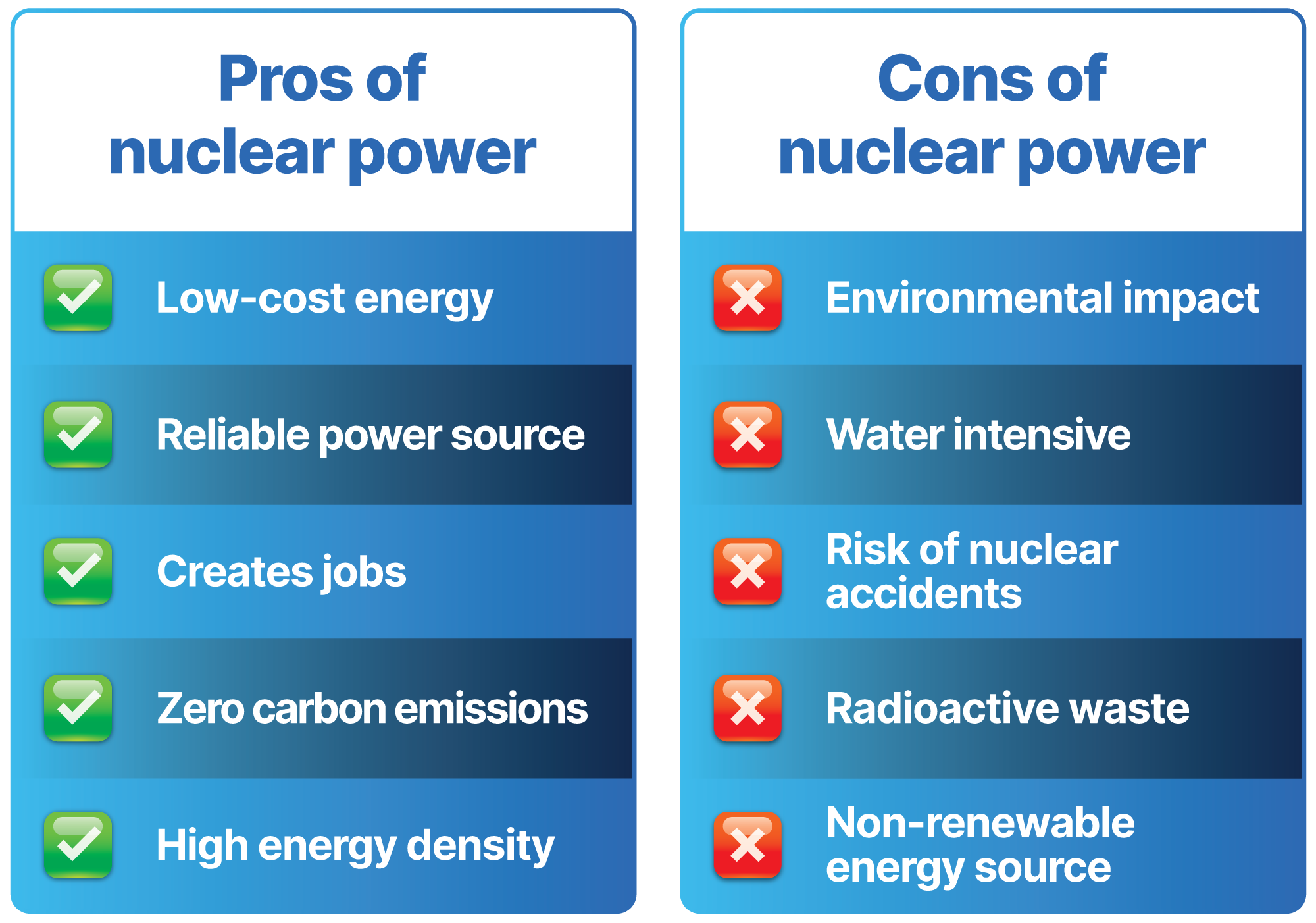
So, there you have it. A slightly irreverent, but hopefully informative, look at some of the disadvantages of nuclear energy. It's not a perfect solution, but it's a powerful one.
Ultimately, the decision of whether or not to embrace nuclear energy is a complex one. It requires weighing the risks and benefits, considering the alternatives, and engaging in a thoughtful public debate.
Maybe someday we'll find a way to harness the power of the sun or the wind with the same reliability and efficiency as nuclear energy. But until then, it remains a key part of our energy future, warts and all.