
What Are Renewable And Nonrenewable Resources
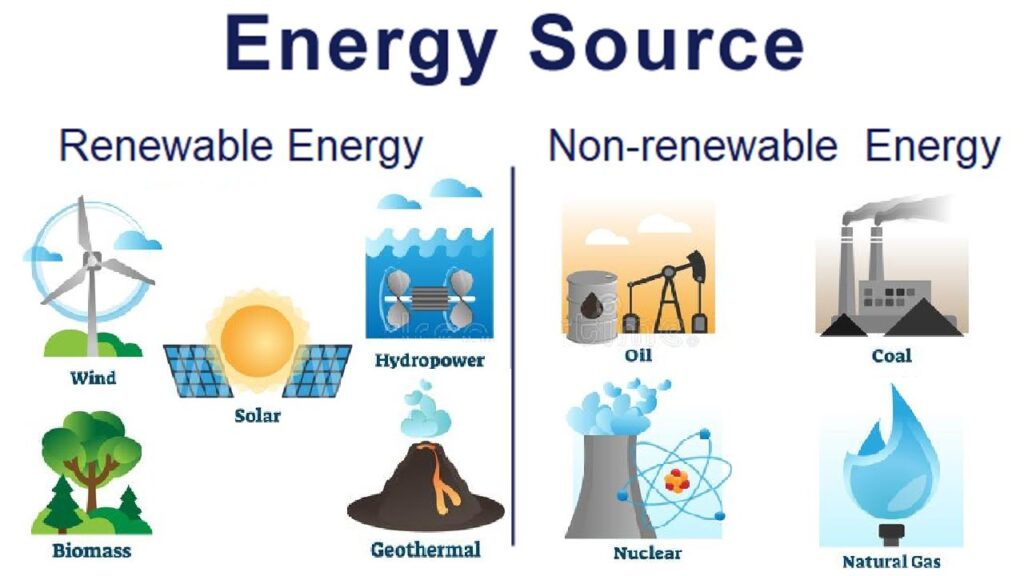
Hey there! Ever wondered where the stuff we use every single day comes from? I'm talking about the electricity that powers your phone, the gasoline in your car, and even the materials that make your favorite t-shirt. Well, it all boils down to resources, and these resources fall into two main categories: renewable and nonrenewable. Let's dive in, shall we?
Renewable Resources: The Earth's Helpers
Imagine you have a magical cookie jar that refills itself automatically. Every time you take a cookie, another one magically appears! That's kind of like renewable resources. These are things that naturally replenish themselves over a relatively short period. Think of it as the Earth's way of being generous and sustainable.
Solar power is a fantastic example. The sun shines (almost) every day, and we can capture that sunlight with solar panels to generate electricity. It's like a never-ending source of energy! I remember seeing solar panels popping up all over my neighborhood a few years ago. At first, I thought it was just a fad. Now, I think "Wow, these folks are harnessing the power of the sun".
Must Read
Then there's wind power. Have you ever seen those giant windmills, gracefully spinning in the breeze? They're converting the wind's energy into electricity. Think of it as nature's free air conditioning, except instead of cooling you down, it's powering your lights! Wind power is clean, efficient, and doesn't contribute to pollution.
Water power, also known as hydropower, is another renewable superstar. Dams use the force of flowing water to turn turbines and generate electricity. Remember that time you built a little dam in a creek as a kid? It's the same principle, just on a much grander scale! But like other power sources, it also has drawbacks to the area as well.
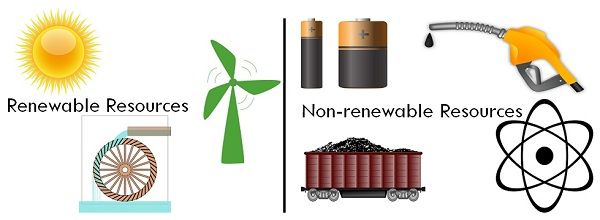
Geothermal energy taps into the Earth's internal heat. It's like having a built-in radiator! This heat can be used to generate electricity or to directly heat homes and buildings. Imagine having naturally warm floors all winter long - now that's cozy!
And let's not forget biomass! This includes things like wood, crops, and even agricultural waste. We can burn biomass to generate heat or electricity. It's like turning leftovers into something useful!

Nonrenewable Resources: The Finite Treasures
Now, picture that cookie jar again, but this time, it doesn't refill itself. Once you eat all the cookies, they're gone. That's what nonrenewable resources are like. These are resources that exist in a finite amount, and once we use them up, they're gone for good (or at least for millions of years!).
Fossil fuels are the biggest players in this category. These include coal, oil, and natural gas. They were formed from the remains of ancient plants and animals over millions of years. We burn these fuels to generate electricity, power our cars, and heat our homes. I remember my grandfather telling me about how coal was the king of energy back in his day. Now, we see the negative effects.
Think about driving your car. Every gallon of gasoline you burn comes from oil, a nonrenewable resource. It's like taking cookies out of that finite cookie jar. Eventually, the jar will be empty!

Nuclear energy is a bit of a tricky one. It uses uranium, a nonrenewable resource, as fuel. While nuclear power doesn't produce greenhouse gases, it does generate radioactive waste that needs to be safely stored for a very long time. It's like having a really complicated recipe with a potentially messy cleanup!
Why Should We Care? The Big Picture
So, why should we care about all this renewable vs. nonrenewable stuff? Well, it all boils down to sustainability. Nonrenewable resources are finite, meaning they will eventually run out. And burning fossil fuels releases greenhouse gases into the atmosphere, contributing to climate change.

Using renewable resources, on the other hand, is like choosing to eat from the magical cookie jar that always refills itself. It's a more sustainable way to meet our energy needs without depleting the planet's resources or harming the environment.
Plus, imagine the possibilities! Cleaner air, a healthier planet, and a future where our kids and grandkids can enjoy the same resources we do. It's not just about being "green"; it's about ensuring a better future for everyone.
So, the next time you flip on a light switch, fill up your car, or even just enjoy a sunny day, take a moment to think about where that energy comes from. Every little bit helps, and by making informed choices, we can all contribute to a more sustainable and brighter future!