What Are Metals And Nonmetals And Metalloids
Ever wondered what makes your phone shine, or why your jewelry doesn't just crumble into dust? The answer lies in understanding the building blocks of everything around us: metals, nonmetals, and metalloids! It might sound like a dry science lesson, but trust me, it's like unlocking a secret code to understanding the world. Knowing the difference is surprisingly fun and super practical, whether you're a curious kid, a crafting enthusiast, or just someone who likes to know how things work.
Why should you care? Well, for beginners, understanding these basic categories is the foundation for grasping chemistry and how materials behave. For families, it's a fantastic way to engage kids in science at home. Show them how different kitchen items, like a metal spoon and a plastic bowl, have completely different properties. Talk about why pots are made of metal to conduct heat, while oven mitts are made of nonmetals to protect your hands. For hobbyists, whether you're into electronics, jewelry making, or even cooking, knowing the properties of these elements can make you a more informed and skilled creator.
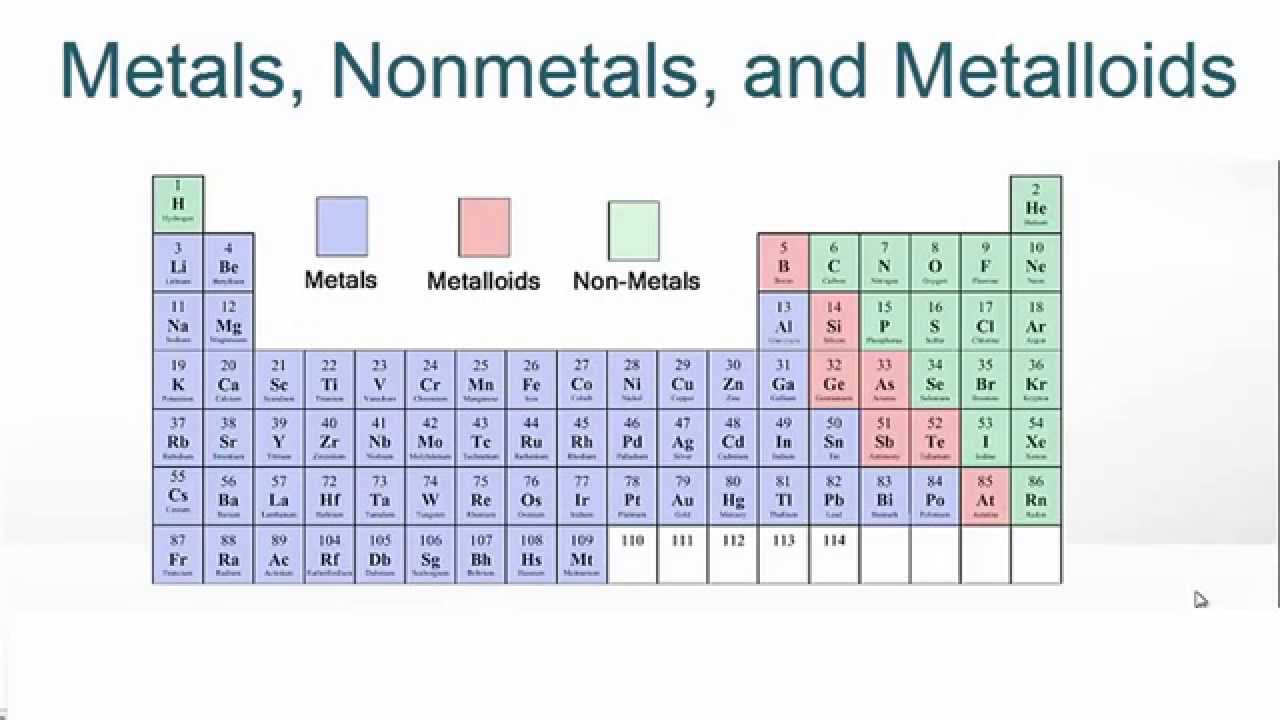
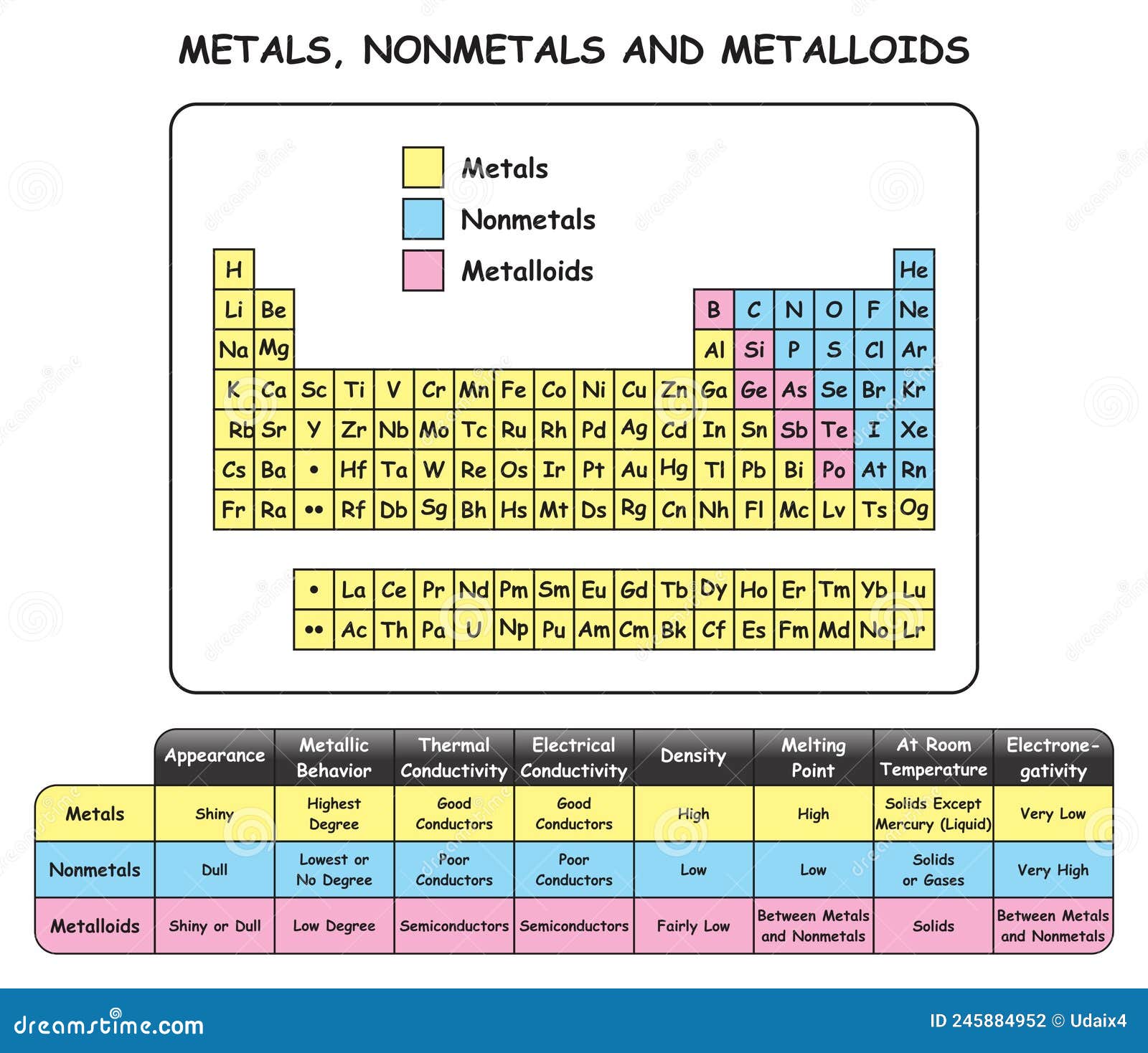
So, what exactly are they? Metals are generally shiny, good conductors of heat and electricity, and can be hammered into shapes (malleable) and drawn into wires (ductile). Think of gold (Au), silver (Ag), copper (Cu), and iron (Fe). Your pots and pans, electrical wiring, and even the frame of your bike are likely made of metal or metal alloys. Nonmetals, on the other hand, are generally dull, poor conductors of heat and electricity, and brittle. Examples include oxygen (O), nitrogen (N), carbon (C), and sulfur (S). They make up things like the air we breathe, the plastic in our toys, and the fuel that powers our cars.
Must Read
Now for the tricksters: Metalloids, also known as semi-metals, have properties that are somewhere in between metals and nonmetals. They're like the "in-betweeners" of the element world! They can sometimes conduct electricity, depending on the conditions, making them crucial for semiconductors in electronics. Silicon (Si) and germanium (Ge) are classic examples, found in your computer chips and solar panels. They're the reason your phone can do so much! The coolness of metalloids lies in their versatility; they can be tailored for different purposes depending on how they are treated.
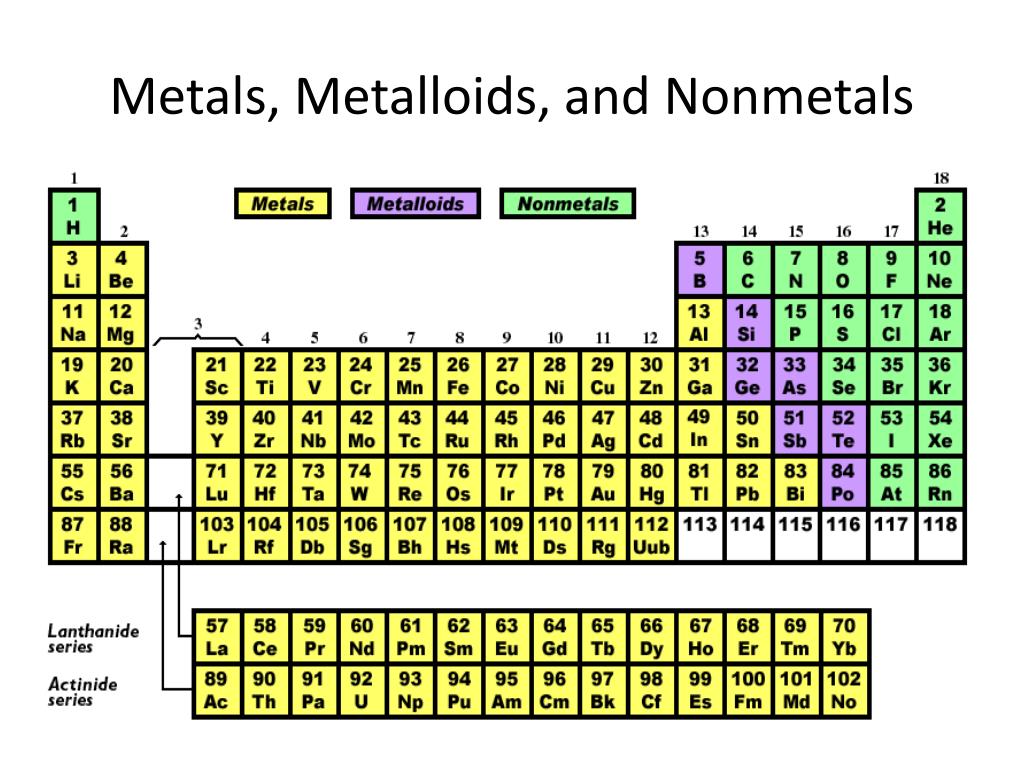
Want to get started exploring? Here are a few practical tips: First, do a scavenger hunt around your house. Identify items made of metal, nonmetal, and try to spot items containing semiconductors. Second, look up the periodic table online. You'll often find metals, nonmetals, and metalloids color-coded. Third, try a simple experiment! Gently tap a metal spoon and a wooden spoon against a table. Notice the difference in sound? That’s due to their different densities and structures.
Understanding metals, nonmetals, and metalloids isn’t just about memorizing facts. It’s about appreciating the incredible diversity of materials around us and how their unique properties shape our world. So go ahead, dive in, and discover the awesome chemistry all around you! It's a journey of discovery that can spark curiosity and lead to a deeper appreciation for the science that makes our everyday lives possible. Have fun exploring!