
What Are Environmental Impacts Of Hydropower
Okay, let's talk hydropower. You know, those big dams that generate electricity using the power of flowing water?
We're always told it's "clean energy." Sounds great, right?
But... is it really all sunshine and hydroelectric rainbows?
Must Read
The Dam Truth (Pun Intended!)
Let's be honest, building a massive concrete wall across a river does something. It can't just be all good, like a puppy playing fetch.
Spoiler alert: there are environmental impacts.
My unpopular opinion? We sometimes gloss over them a bit too much.
Underwater Real Estate Problems
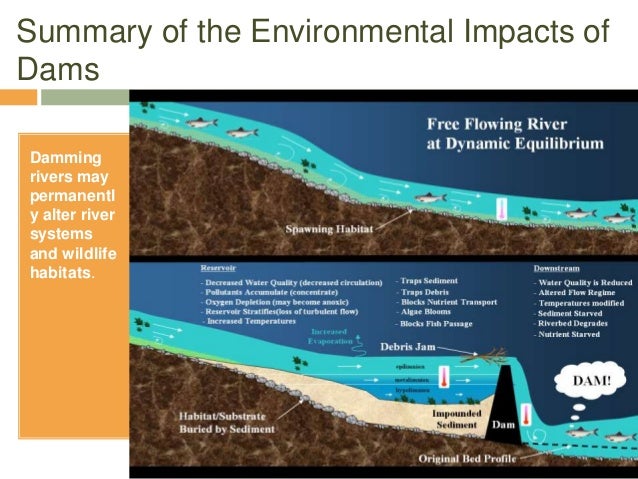
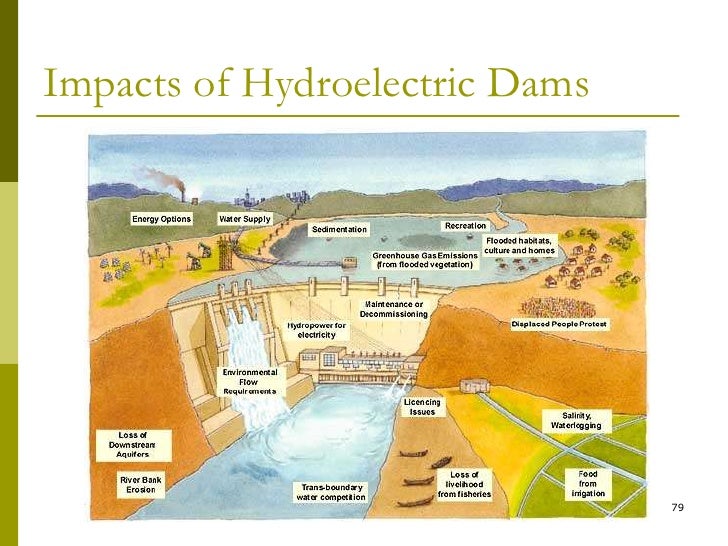
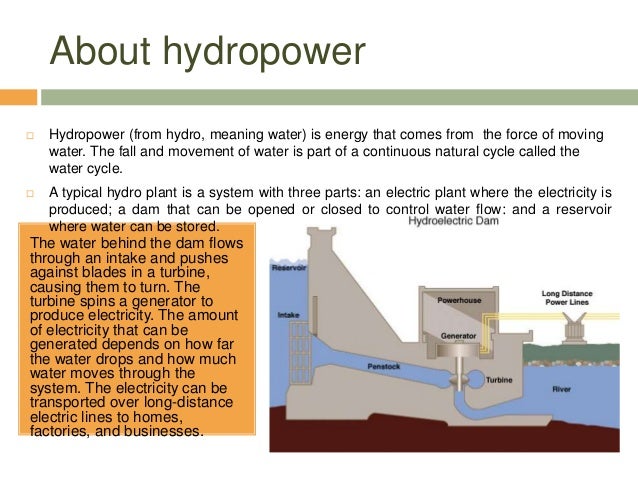
Think about it: where does all that water go when you build a dam? It forms a reservoir, a big artificial lake.
And what was there before the lake? Usually land. Land that was home to plants, animals, and, you know, entire ecosystems.
Suddenly, everything's underwater. Talk about a housing crisis!
This can lead to a loss of biodiversity. Plants drown, animals relocate (if they can), and habitats are destroyed. It's like a forced eviction, but for nature.
Imagine if someone flooded your entire neighborhood to build a giant swimming pool. Not cool, right?
Fishy Business
Now, about the fish. Rivers are like highways for fish, especially for those salmon who are stubbornly determined to swim upstream to spawn.
Dams are like massive roadblocks on those highways. Try telling a salmon it needs to take a detour.
Sometimes, fish ladders are built. These are like watery staircases to help fish bypass the dam. Bless their little fish hearts for even trying!
But fish ladders aren't perfect. Not all fish use them, and they can still be challenging.
And what about the fish swimming downstream? Well, turbines aren't known for their fish-friendly designs. Let's just say it's not always a smooth ride.
Sediment Stuff
Rivers carry sediment – sand, silt, and other little bits of stuff. Sediment is important! It fertilizes floodplains and keeps coastlines healthy.
Dams trap sediment. The water downstream is basically "sediment-starved." It erodes riverbanks and coastal areas. Think of it like cutting off the river's supply of essential nutrients.
It's like a dietary restriction, but for a whole ecosystem.
Methane Matters
This one's a bit less obvious. Reservoirs can release methane, a potent greenhouse gas.
Decomposing organic matter at the bottom of the reservoir produces methane. While it's not as much as from fossil fuels, it's still a factor.
Think of it as the swampy burp of a hydroelectric project.
Water Quality Woes
The water in reservoirs can also be different from the water in free-flowing rivers. The water can become stagnant.
This can lead to changes in temperature and oxygen levels. Which can affect the fish and other creatures that live there.
Nobody wants to live in a lukewarm, oxygen-deprived puddle, right?
Okay, Okay, I'm Not Saying Hydropower is Evil
Let's not get carried away. Hydropower does have advantages. It's a renewable energy source that doesn't produce air pollution like burning fossil fuels.
And dams can provide other benefits, like flood control and water storage.
So, it's not all doom and gloom. But the discussion needs to be had.
The Takeaway? It's Complicated.
My point is that everything has consequences. Even "clean" energy sources have environmental impacts.
We need to be honest about those impacts. We need to weigh the pros and cons carefully.
And we need to keep looking for ways to minimize the negative effects of hydropower.
Maybe we can develop more fish-friendly turbines. Or find ways to release sediment downstream.
Or explore alternative energy sources that have even smaller environmental footprints. Perhaps wind, or solar?
Let's strive for sustainability, not just greenwashing.
A Call to Action (Kind Of)
So, next time you hear someone talking about "clean" hydropower, remember this article.
Remember the flooded forests, the struggling fish, and the methane burps.
And maybe, just maybe, ask a few thoughtful questions. Be a little skeptical.
Let's be smart about how we get our energy. The environment will thank us for it.
In other words, let's dam... I mean, damn well be informed! (Sorry, couldn't resist one last pun.)
Because ultimately, nature is worth it! Be humble about thinking we have all the answers.
Let's not pretend that we're not changing the environment around us.
So, What can be done?
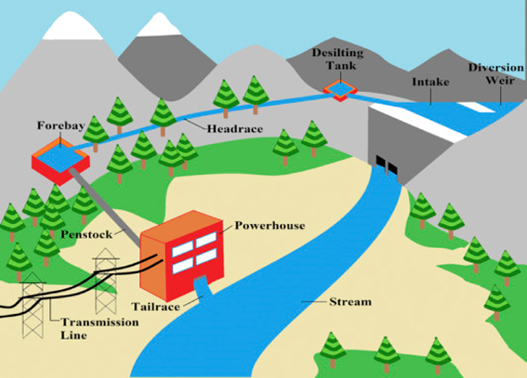
Well, for starters, consider that small-scale hydropower may be better than big ones. Its environmental impacts are much lower than the giant dams.
Think about ways to preserve fish passages, like effective fish ladders.
Use water more efficiently; it's not only about electricity.
And, very important, we need to think about decommissioning some older dams.
Dams have a life cycle, and we should recognize when a dam's harm to the ecosystem outweighs its benefits.
Removing dams can restore river ecosystems, allowing fish to migrate freely and sediment to flow naturally again. It's like giving the river a chance to heal.
Restoring rivers not only benefits wildlife but also improves water quality and reduces flood risks. It's a win-win for both nature and people.
It shows that sometimes, the best solution is not always to build something new, but to undo what has already been done. Nature has a way of healing itself, if we just give it the chance.
So, the next time you think about dams, remember that there's more to the story than just clean energy. It's about balancing our needs with the health of our planet.