
What Are Carbon Credits And How Do They Work

Hey, wanna talk about something kinda nerdy but also kinda… cool? Let’s dive into carbon credits!
Basically, they’re like permission slips for pollution. But wait, don't run away! It gets more interesting, I promise.
What ARE these Carbon Credit Things Anyway?
Think of carbon credits as little certificates. Each one represents a tonne of carbon dioxide (or its equivalent in other greenhouse gases) that's either been removed from the atmosphere or prevented from being emitted in the first place.
Must Read
It’s like a giant game of environmental whack-a-mole, except instead of whacking moles, we're whacking… carbon. With money! It's a weird analogy, I know.
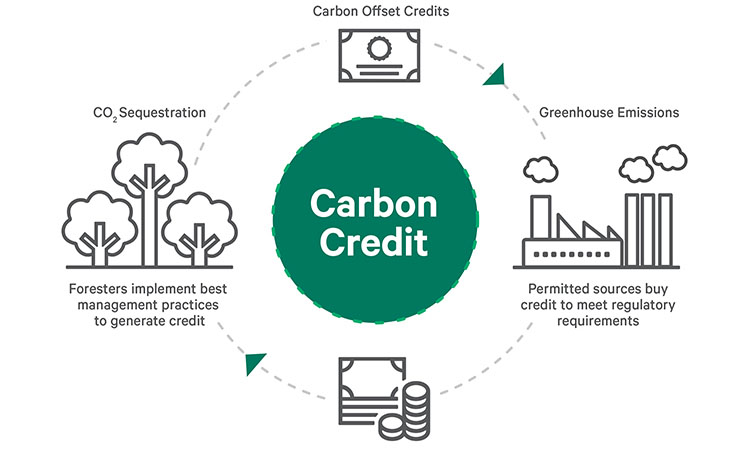
Imagine a company plants a whole bunch of trees. Those trees suck up CO2, right? They’re doing a good thing for the planet. They can then sell those carbon-sucking powers as credits.
Meanwhile, another company is, shall we say, less green. Maybe they run a factory that belches out a whole lot of pollution. To offset their emissions, they can buy those carbon credits from the tree-planting company.

It's a marketplace for environmental responsibility! Who knew saving the planet could involve so much… paperwork?
How Do These Credits Even Work? (The Slightly Less Fun Part)
Okay, buckle up for a tiny bit of science-y stuff. It’s not as scary as it sounds.
Carbon credits operate within a "cap-and-trade" system. Think of it like this: a government (or some other regulatory body) sets a cap on the total amount of emissions allowed in a certain sector or region.
They then distribute permits or allowances to companies, allowing them to emit a certain amount of greenhouse gases. These allowances are, you guessed it, the carbon credits!

If a company emits less than their allowance, they can sell their extra credits to companies that exceed their limit. This creates a financial incentive for companies to reduce their emissions.
So, the companies that reduce their emissions are rewarded. And the companies that pollute more? They have to pay up!
Why Are They So Controversial? (The Spicy Bit)
Not everyone is a fan of carbon credits. Some argue that they're just a way for companies to greenwash their image without actually making significant changes to their operations.
It’s like paying someone else to eat your vegetables. You feel virtuous, but you're still not getting any vitamins!
There are also concerns about the quality of carbon credits. How do we know that the trees actually get planted? Or that the emissions reductions are real and lasting?
Imagine buying a carbon credit, thinking you’re helping save the rainforest, only to find out the trees were never planted and it’s all a big scam! Yikes!
Plus, the whole system can be incredibly complex, with lots of different standards, verification processes, and trading platforms. It can be hard to know who to trust and what you're actually buying.
Fun (and Slightly Terrifying) Carbon Credit Facts!
- Did you know there's a whole "carbon offset industry"? It’s a multi-billion dollar market!
- Some airlines offer you the chance to buy carbon credits when you book your flight. Feel less guilty about that weekend trip to Paris!
- Some companies are even exploring carbon capture technology, which involves sucking CO2 directly out of the air and storing it underground. Like a giant, industrial-strength vacuum cleaner for the atmosphere!
- One potential downside: if the carbon price is too low, it's cheaper for companies to just buy credits than to actually reduce their emissions. This is known as carbon leakage!
So, Are Carbon Credits Good or Bad?
The jury's still out! Like many things, carbon credits have both potential benefits and potential drawbacks.

If implemented effectively and with strong oversight, they can be a valuable tool for reducing greenhouse gas emissions and incentivizing companies to invest in clean technologies.
But if they're poorly regulated or used as a loophole for companies to avoid taking real action, they could end up doing more harm than good.
Ultimately, the success of carbon credits depends on our ability to create a system that is transparent, accountable, and genuinely focused on reducing emissions. It's a complicated puzzle, but one worth trying to solve.
Now you're armed with enough knowledge to impress (or bore) your friends at your next dinner party! Enjoy!