What Are 3 Examples Of Non Renewable Resources
Alright folks, let's chat about something super important, but let's not make it feel like a boring science lecture. We're talking about non-renewable resources! Basically, the stuff we're using up faster than Mother Nature can replace it. Think of it like eating your favorite cookies – once they're gone, they're gone (unless you bake more, and in this case, Mother Nature ain't baking any more...well, not for millions of years anyway).
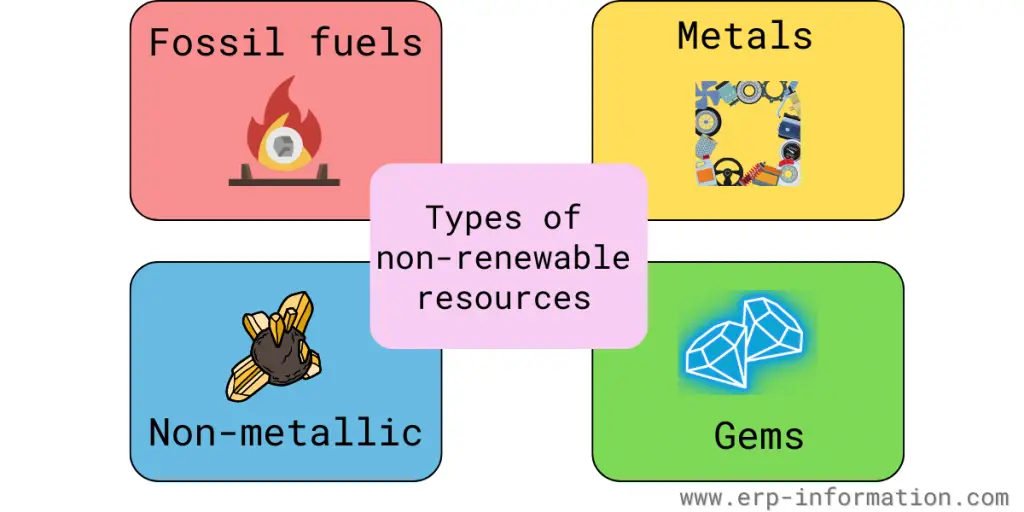
Fossil Fuels: The OG Non-Renewable Resource
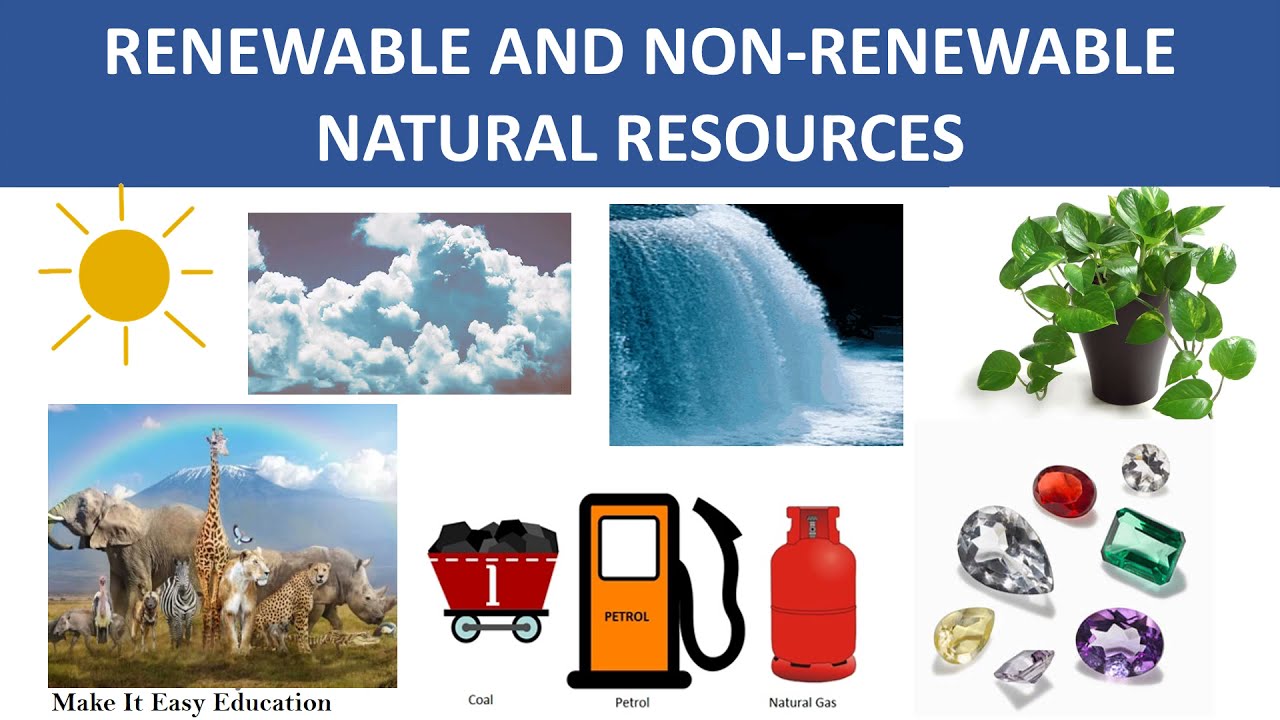
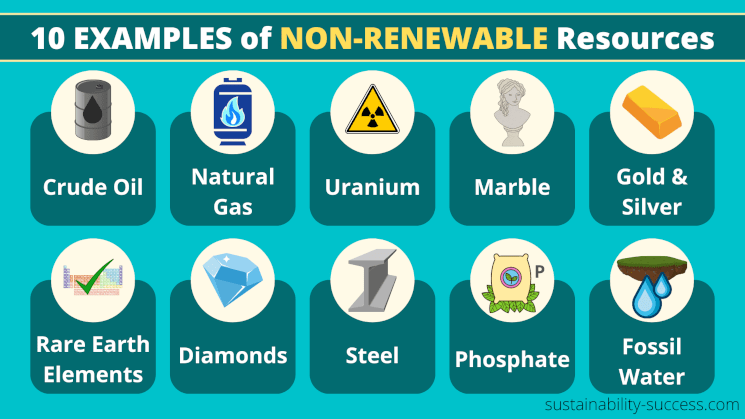
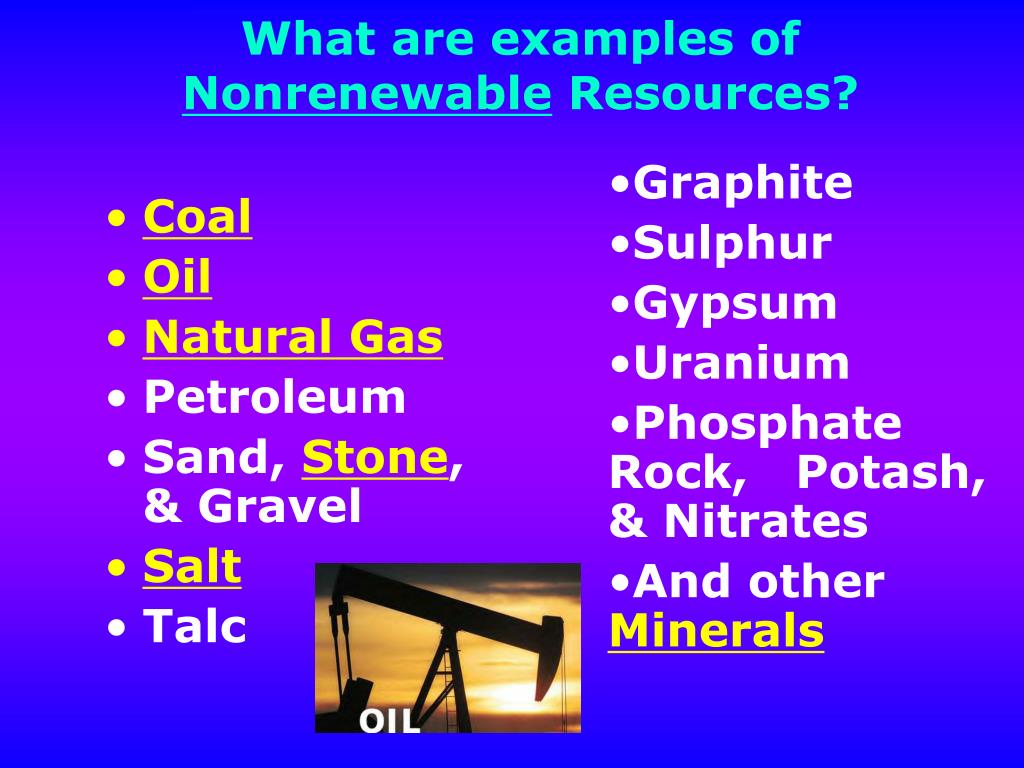
First up, we've got the head honcho, the big kahuna: fossil fuels. This includes coal, oil (aka petroleum), and natural gas. These bad boys are formed from the remains of ancient plants and animals that lived millions of years ago. Imagine, dinosaurs chilling, plants photosynthesizing, then poof – millions of years later, they're powering our cars and keeping our homes warm. It's kinda morbid when you think about it, like powering your life with dino-ghosts!
Coal is like that grumpy old grandpa of energy. It’s been around forever, and it’s reliable, but it's also kinda… dirty. Burning coal releases a lot of pollutants into the air. Think of it as the guy who always complains but still shows up to family gatherings. We appreciate the effort (energy), but maybe there are cleaner options out there, y'know?
Must Read
Oil, or petroleum, is basically liquid gold. We use it to make gasoline for our cars, plastics for practically everything, and a whole bunch of other stuff. Oil spills are like that time you spilled red wine on your white carpet – a complete disaster and a pain to clean up. Also, refining crude oil into useful products releases greenhouse gasses.
Natural gas is often touted as the "cleanest" of the fossil fuels, but it's still a fossil fuel! Leaks of natural gas contribute to greenhouse gasses as well. It's the relative good guy of the fossil fuel group but not really a sustainable solution in the long run.
We use fossil fuels all the time! Driving to work, turning on the lights, even wearing clothes made from synthetic materials – all thanks to these ancient organic remains. The problem? We're burning through them way faster than they can be replenished. It's like constantly withdrawing from your savings account without ever putting anything back in. Eventually, you're gonna be broke (or, in this case, out of fossil fuels).
Nuclear Energy: The Divisive Option
Next up, we have nuclear energy. Now, this one is a bit controversial. Some people swear by it as a cleaner alternative to fossil fuels, while others are terrified of nuclear meltdowns (understandably so). Nuclear energy relies on the element uranium, which is mined from the earth.
Uranium itself isn't renewable, meaning the supply on Earth is finite. While nuclear power plants don't produce the same kind of air pollution as coal plants, they do generate radioactive waste, which is a whole different kind of headache. Storing this waste safely for thousands of years is a serious challenge. It’s like having that one weird family heirloom that nobody knows what to do with, but you can't throw it away because it might be valuable someday... or radioactive.
The upside to nuclear energy is that it's incredibly powerful. A small amount of uranium can generate a ton of electricity. But the risks are real, and the waste issue is a major concern. Nuclear energy is like that super-smart but slightly unpredictable friend – you're impressed by their potential, but you also keep a watchful eye on them.
Metals and Minerals: More Than Just Jewelry
Finally, let’s talk about metals and minerals. We often think about gold and silver for jewelry, but these resources, along with things like iron, copper, aluminum, and all sorts of other minerals, are used in pretty much everything we build, from our phones to our houses.

These resources are finite. We dig them out of the ground, process them, and use them to make stuff. But once we've extracted them, they're gone. Recycling helps, but it's not a perfect solution. Plus, mining can have a significant impact on the environment, like tearing up landscapes and polluting water sources.
Imagine trying to build a giant Lego castle, but you only have a limited number of bricks. Once you've used them all, that's it! You can't magically create more bricks out of thin air. Metals and minerals are like those Lego bricks – we need to be smart about how we use them and try to recycle them as much as possible.
So, there you have it! Three examples of non-renewable resources that play a huge role in our lives. Hopefully, this wasn't too painful, and you even cracked a smile or two. Remember, being aware of where our energy and materials come from is the first step towards making more sustainable choices. And who knows, maybe we can even leave some "cookie dough" for future generations.