
What Air Conditioners Qualify For Tax Credit

Okay, so picture this: I’m sweating. Not like, "just finished a workout" sweating, but more like "stuck in a humid swamp with no escape" sweating. My ancient AC unit, bless its heart, is wheezing like a chain smoker running a marathon. I’m thinking, "New AC time!" Then the even scarier thought hits me: "How much is this gonna cost?" Luckily, I stumbled upon something that made me do a little happy dance – potential tax credits! Turns out, the government wants to help us stay cool (and save energy), and that means money back in our pockets. But figuring out which AC qualifies? That's a whole different level of confusing. Let's dive in, shall we?
The Inflation Reduction Act: Your New Best Friend?
This is where the magic happens. The Inflation Reduction Act (IRA) – catchy name, right? – provides some serious incentives for homeowners to upgrade to energy-efficient appliances, including air conditioners. Now, I know what you're thinking: "Government regulations? Ugh!" But trust me, this is the kind of regulation we can all get behind, especially when it comes to saving some serious cash. Disclaimer: I'm not a tax professional, so always consult one for personalized advice!
What Makes an AC Unit "Qualify"? (The Nitty-Gritty)
Here's the million-dollar question (or rather, the hundreds-of-dollars question, since that's roughly what you could get back). The qualifications depend on the type of AC you're looking at. Generally, it all boils down to energy efficiency ratings. We're talking SEER, EER, and HSPF. Sounds like alphabet soup, I know.
Must Read
SEER (Seasonal Energy Efficiency Ratio): Think of this as your AC's "miles per gallon." The higher the SEER rating, the more efficient it is, and the less energy it uses to cool your home. For central air conditioners to qualify for the tax credit, they generally need a SEER rating of 16 or higher.
EER (Energy Efficiency Ratio): EER measures the cooling efficiency of an AC at a specific outdoor temperature. Similar to SEER, a higher EER rating indicates better energy efficiency. Look for models with a high EER to maximize your savings. This is slightly less important than SEER for the credit, but good to keep an eye on. (Pro-tip: ask your HVAC technician to explain these ratings in detail. They're the experts!)
![Federal Tax Credits for Air Conditioners & Heat Pumps [2023]](https://kobiecomplete.com/wp-content/uploads/2023/01/federal-tax-credits-2023-graphic-white.png)
HSPF (Heating Seasonal Performance Factor): Okay, this one is mostly for heat pumps. If you're considering a heat pump (which can both heat and cool!), it'll need a certain HSPF rating to qualify. So, if you live in an area with mild winters, a heat pump could be a super efficient option! (Seriously, look into this. They're pretty awesome).
Okay, So How Much Money Are We Talking About?
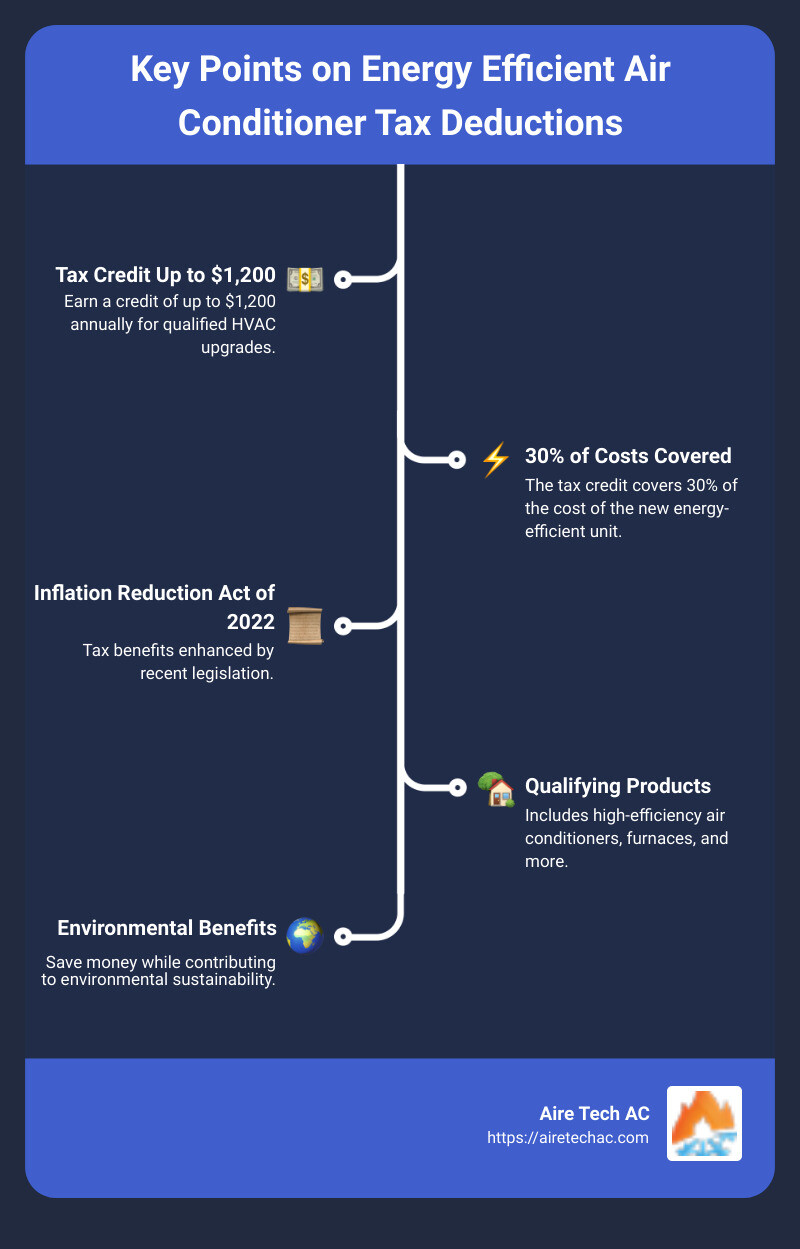
This is the fun part! The IRA offers a tax credit of up to 30% of the cost of qualified energy-efficient home improvements, including air conditioners, up to a certain limit. The 25C tax credit, in the case of HVAC appliances (including air conditioners), is capped at $2,000. So, theoretically, if you buy an AC for $7,000 that fits all the requirements, you can get up to $2,000 back. Not bad, right?
Important Things to Keep in Mind (Don't Skip This!)
Read the fine print: The devil is always in the details, right? Make sure to double-check the specific requirements and limitations of the tax credit with the IRS or a qualified tax professional. Don't just take my word for it! (I'm just a guy sweating in his house, remember?).
Get it in writing: When you purchase your new AC unit, make sure to get documentation from the manufacturer or installer that confirms it meets the energy efficiency standards required for the tax credit. This is crucial for claiming the credit when you file your taxes.

Timing is everything: There are specific dates and deadlines for claiming these tax credits, so make sure you're aware of them. The Inflation Reduction Act extended and expanded these credits for several years, but it's always good to double-check!
Think Long Term: Investing in an energy-efficient air conditioner is not just about getting a tax credit. It's about saving money on your energy bills for years to come. Plus, you'll be doing your part to reduce your carbon footprint. Win-win!
The Bottom Line
Upgrading to a qualifying energy-efficient air conditioner can be a smart move for your wallet and the planet. Do your research, talk to professionals, and take advantage of the tax credits available to you. And hey, maybe I'll finally be able to retire my wheezing old AC unit and join you in the land of cool comfort. Good luck, and stay cool (literally!)
