Wet Cell Batteries Are Commonly Referred To As

Let's face it, nobody wakes up in the morning thinking, "Oh boy, I can't wait to learn about wet cell batteries!" But stick with me for a moment, because understanding these unassuming powerhouses is actually surprisingly relevant to the smooth operation of your everyday life. We all appreciate the ability to jump in our cars and immediately have power, or to keep our emergency lights on during a power outage. That convenient zap of electricity? In many cases, you can thank a wet cell battery.
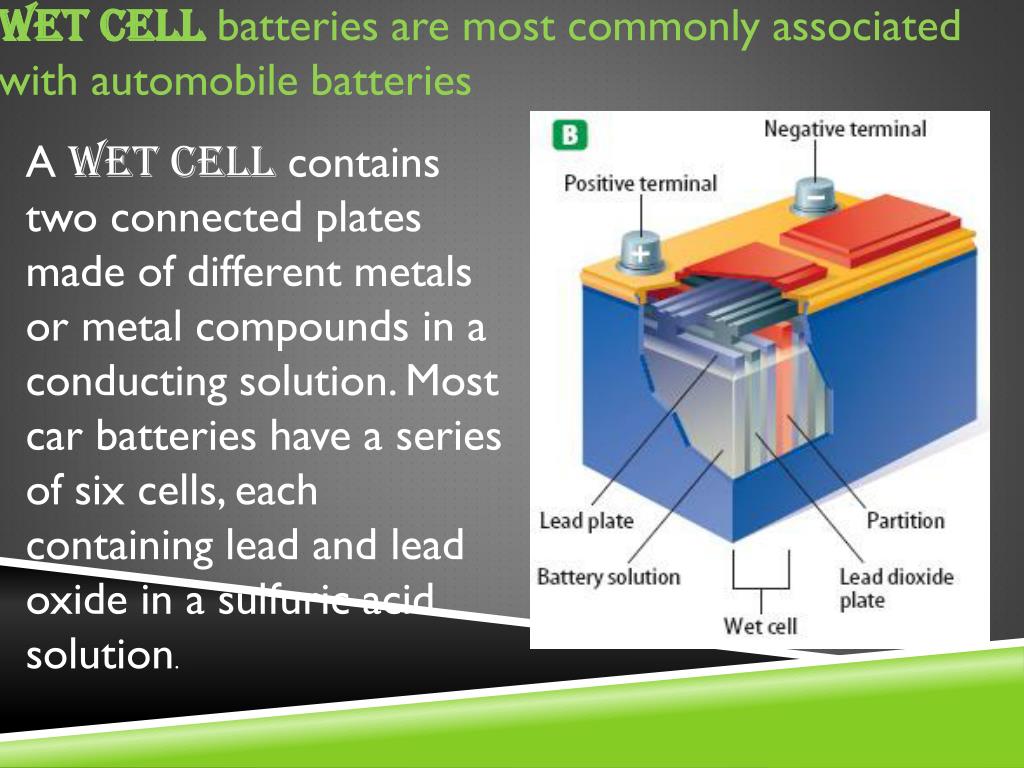
So, what are these marvels of chemical engineering doing for us? Essentially, wet cell batteries, often referred to as lead-acid batteries, are rechargeable batteries that use a liquid electrolyte to facilitate the flow of ions, generating electricity. Their primary purpose is to provide a reliable source of electrical power to start engines and operate electrical systems in vehicles, boats, and other equipment. Think of it as the heart of your car's electrical system. Without it, you're going nowhere!
The benefits are numerous. They offer a high surge current, meaning they can deliver a large burst of power needed to crank an engine. They are also relatively inexpensive compared to other battery technologies, making them a cost-effective solution for many applications. Plus, they are rechargeable, allowing you to replenish the battery's energy through the vehicle's alternator. This is far more efficient than constantly replacing single-use batteries.
Must Read
Where do you typically find these lead-acid powerhouses? The most common example is, without a doubt, in your car's starting, lighting, and ignition (SLI) system. They are also frequently used in boats, motorcycles, ATVs, and even backup power systems like those used in hospitals and telecommunication centers. In short, anywhere a reliable, high-current source of power is needed, you'll likely find a lead-acid battery lurking nearby.
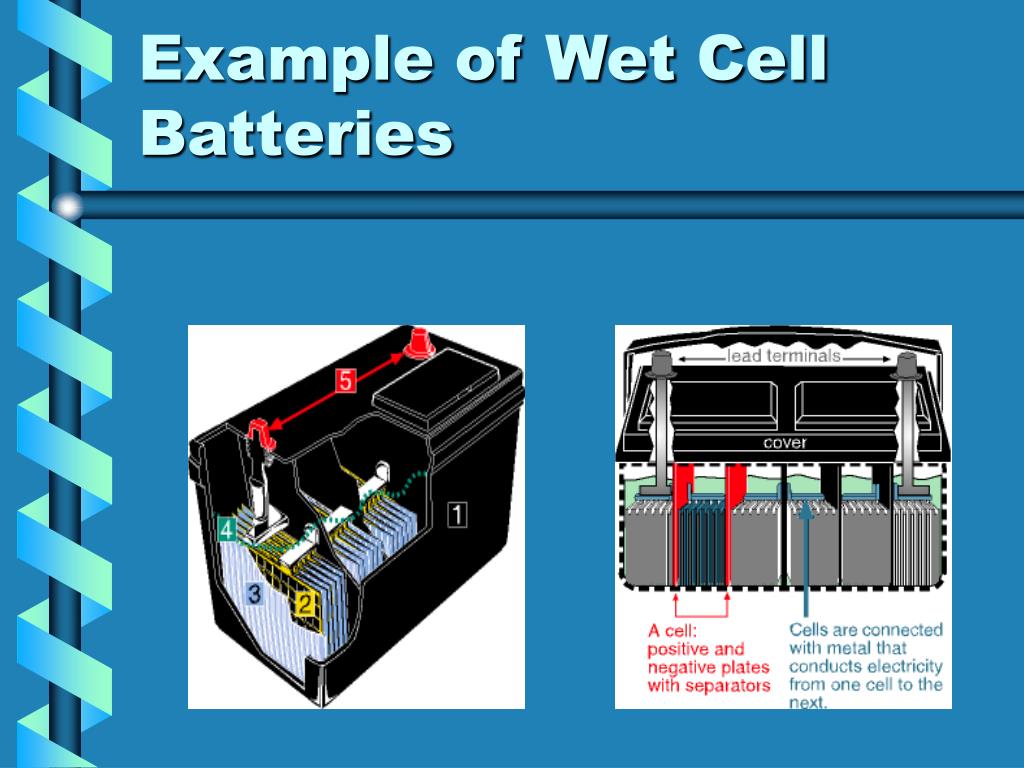
While they are generally robust, you can take steps to extend the life and performance of your lead-acid battery. First, ensure the terminals are clean and free of corrosion. Corrosion can impede the flow of electricity and shorten the battery's lifespan. A simple cleaning with baking soda and water can do the trick. Secondly, avoid deep discharging the battery. Regularly draining the battery completely can damage the internal components. Try to keep the charge above 50% whenever possible. Investing in a trickle charger, especially if you don't use your vehicle frequently, can help maintain a healthy charge. Finally, have your battery professionally tested periodically, especially as it gets older. Most auto parts stores offer free battery testing services that can identify potential problems before they leave you stranded. These simple steps will keep your vehicle, boat, or whatever device you rely on powered up and ready to go.
So, while "wet cell battery" or, more commonly, "lead-acid battery" might not be the most exciting phrase, understanding its role in our lives helps us appreciate the technology that keeps our world moving. A little preventative maintenance goes a long way in ensuring you're never left in the dark – or, more accurately, unable to start your car!