West Penn Power Cost Per Kwh
Okay, real talk for a second. You know that feeling, right? It's the end of the month, you casually open your West Penn Power bill (or maybe you brace yourself, depends on the month), and then you see it. That number. Sometimes it’s a gentle nod, other times it’s a full-on jump-scare. For me, it was last summer. The AC was practically welded to the 'on' switch, keeping my ancient dog from melting into a puddle. I fully expected a higher bill, but when it landed, it wasn't just higher; it was like it had taken a vacation to the moon and back, collecting extra zeros along the way.
I stared at it. Was the AC truly that thirsty? Or had something shifted? That’s when my inner detective kicked in. I thought, "Surely, it can't just be me. What is West Penn Power actually charging me per kilowatt-hour anyway?" Because, let's be honest, that's the real MVP on your bill, the one number that dictates so much.
West Penn Power Rates: The Nitty Gritty (But Make It Easy)
So, let's break it down without needing a degree in utility economics. When we talk about West Penn Power's cost per kWh, we're essentially asking: how much does it cost you to run, say, a 100-watt light bulb for ten hours? (That's one kWh, by the way – see, not so scary!). Your electric bill isn't just one magic number; it's a couple of different components all bundled up, like a complicated but essential gift package.
Must Read
The main thing to understand is that your West Penn Power bill is generally split into two big chunks: supply and delivery. Think of it like this: one company makes the pizza (generation), and another company drives it to your door (delivery). West Penn Power is usually the one delivering the power to your home, maintaining all those poles and wires, and reading your meter. But the electricity itself, the "supply" part, that can come from different places.
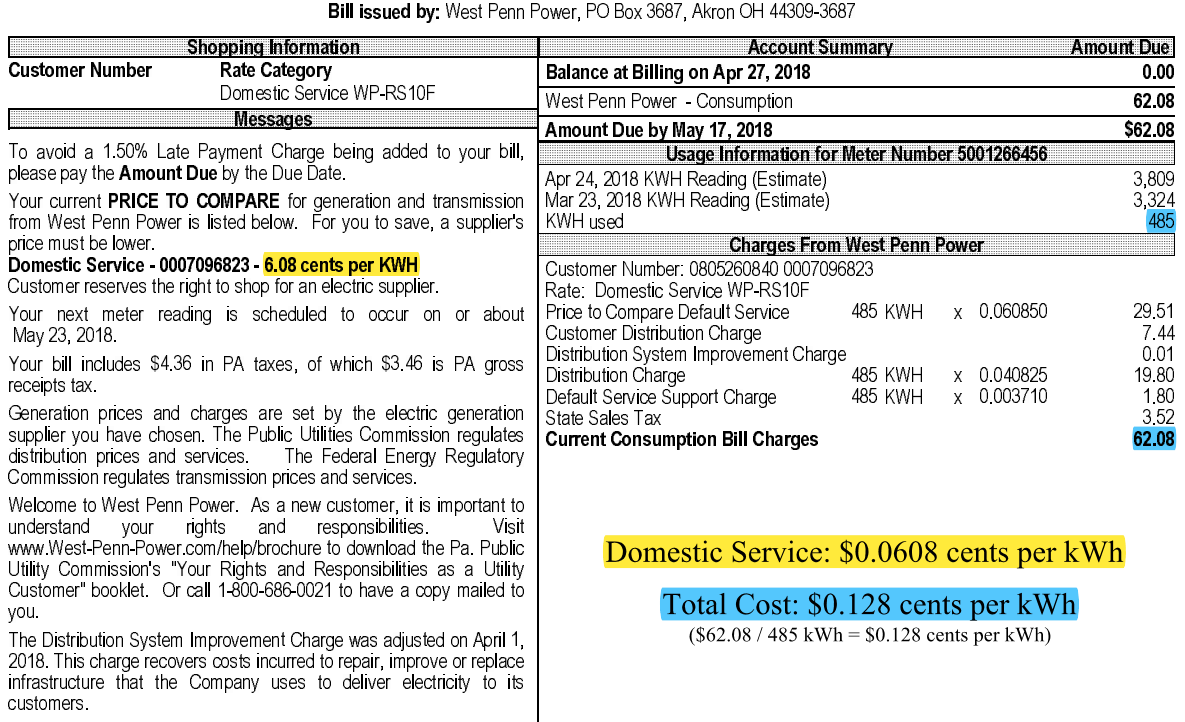
For most of us, especially if we haven't actively chosen a different supplier, West Penn Power procures the supply on our behalf. They call this their "Price to Compare" (PTC). This is a crucial number to know, my friend, because it's the benchmark. It's the rate they charge you for the actual electricity before it even thinks about getting to your house.
Decoding Your Bill: It's Not Just One Number!
So, how much is that PTC? Well, it changes. Like, it actually changes a few times a year. It's influenced by things like the cost of fuel (natural gas, coal, etc.), demand, and even the weather (remember my AC-loving dog?). You'll find your current PTC clearly listed on your West Penn Power bill, often under a section like "Generation Supply Charges" or similar. It’s usually expressed in cents per kWh, like 7.XX cents/kWh.
But wait, there's more! Besides the supply charge, you also pay for the delivery services. These are the charges for West Penn Power's infrastructure – the poles, wires, transformers, keeping the lights on, and getting the power from the grid to your outlet. These charges are regulated by the Pennsylvania Public Utility Commission (PAPUC) and are typically stable, but they're still a significant part of your overall cost per kWh.
When you add the supply rate (your PTC) to the delivery rate components (which can also be broken down into various smaller charges like transmission, distribution, and a customer charge), you get your total effective cost per kWh. This is the number you really feel in your wallet, the one that makes your bill soar when you leave those holiday lights on for a month straight (guilty as charged, sometimes!).
So, What Can You Do About It?
Knowledge is power, right? (Pun intended, you're welcome). Once you know your West Penn Power cost per kWh (or at least the main components), you have options. First off, simply being aware of your usage is huge. Those little changes add up: unplugging phantom loads, switching to LED bulbs, being mindful of thermostat settings. Every kWh you don't use is a kWh you don't pay for, simple as that.

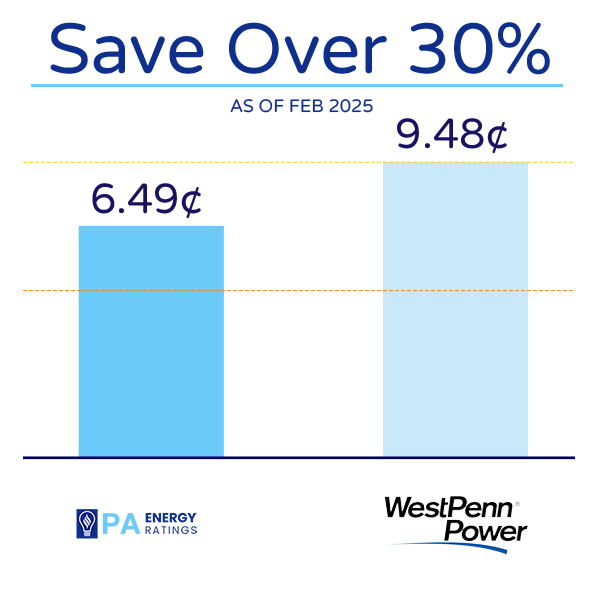
Secondly, because Pennsylvania is a deregulated state, you have the option to choose your electricity supplier for the generation portion of your bill. This means you can shop around for a better rate than West Penn Power's default PTC. Websites like PAPowerSwitch.com (run by the PAPUC) are your best friend here. You can compare offers from different suppliers and potentially lock in a lower rate for a fixed term. Just remember to compare apples to apples – look at the kWh rate, any fixed monthly fees, and contract terms!
The Bigger Picture: Why Rates Change
It's natural to wonder why these rates fluctuate. It's a complex dance of global fuel markets, local infrastructure investments, environmental regulations, and even plain old weather patterns. A cold snap drives up heating demand, a scorching summer cranks up the ACs, and all of that impacts the cost of generating and delivering electricity.
So, next time your West Penn Power bill gives you a little jolt, take a moment. Instead of just sighing, flip it over. Find that "Price to Compare." Understand the difference between supply and delivery. Because when you know what you’re paying for, you’re much better equipped to manage it. And who knows, maybe that means a little extra cash in your pocket for that next gadget (just be mindful of its power consumption, okay?). Stay savvy out there!