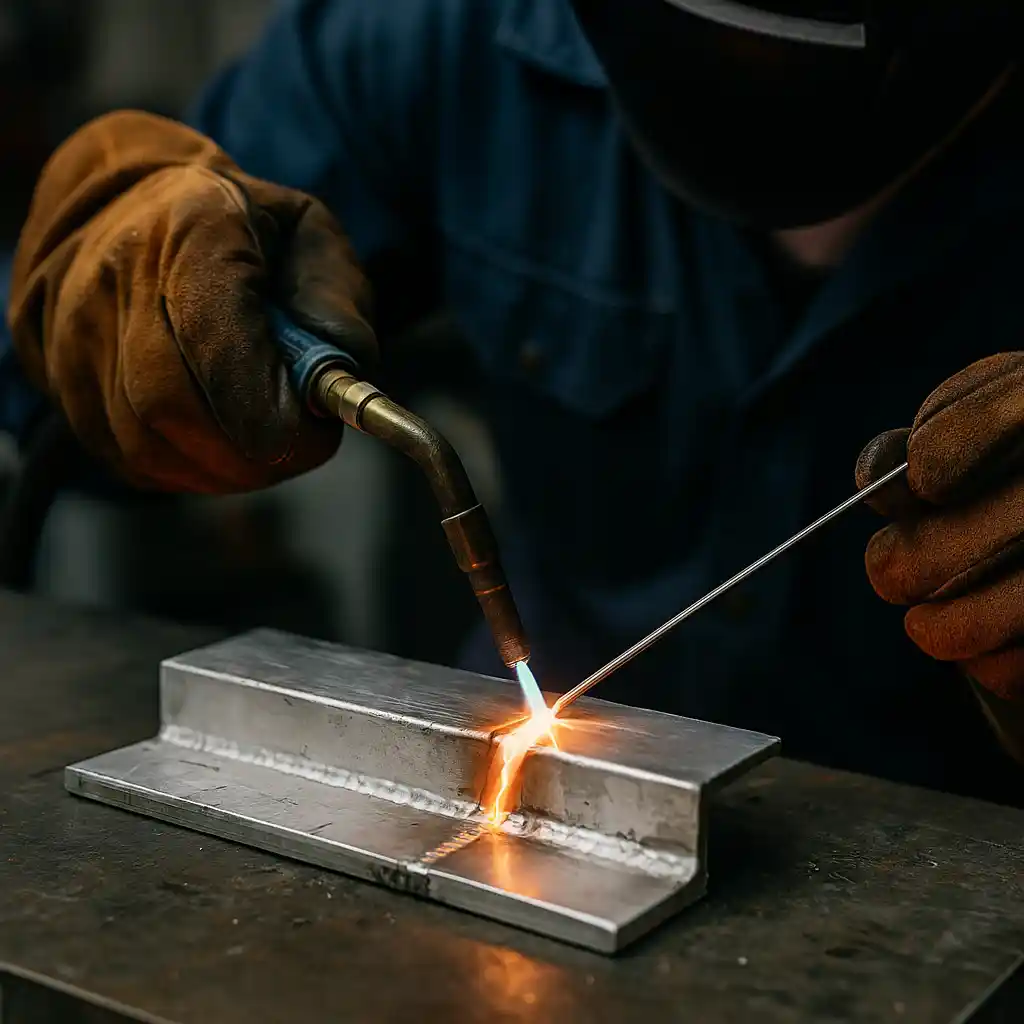
Welding Aluminum With A Torch
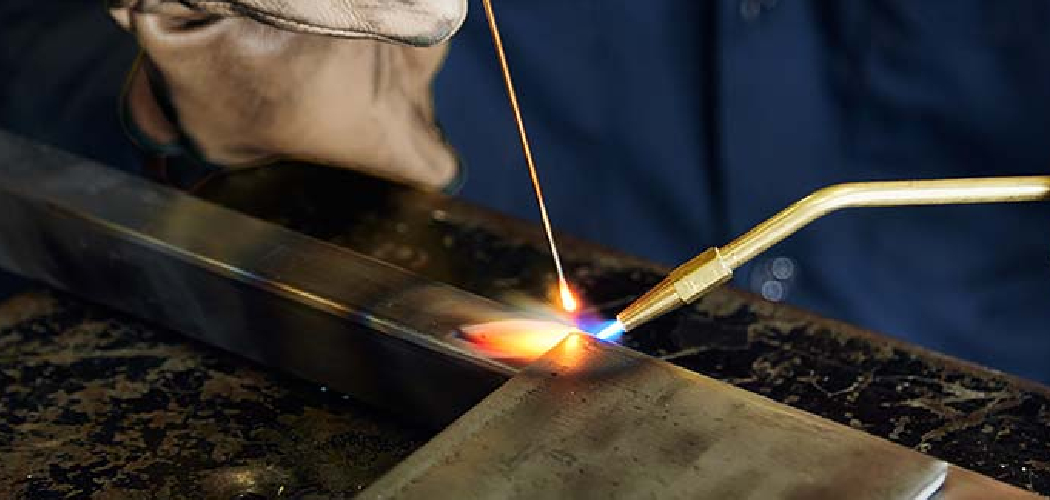
So, you wanna weld aluminum with a torch, huh? Like, a good old-fashioned flame, not one of those fancy TIG machines? Dude, you've got guts! Or maybe you're just a little bit of a glutton for punishment. Kidding! Mostly. But seriously, it's a whole different beast, and frankly, a ton of fun once you get the hang of it.
Aluminum, bless its shiny, lightweight heart, is a total diva. It's not like steel, which just kinda… sits there and takes the heat. Aluminum? Oh no, aluminum has opinions. Strong opinions. And one of them is, "I will melt from solid to puddle faster than you can blink, and then I will collapse into a spectacular, molten mess." Sound familiar? Yeah, it's a rite of passage for torch welders.
First Things First: Cleanliness is Next to Godliness (Seriously!)
Before you even think about lighting that torch, let's talk prep. This isn't just a suggestion; it's a commandment. Aluminum has this pesky little invisible layer of aluminum oxide. And that stuff has a way higher melting point than the actual aluminum underneath. So, if you don't get rid of it, you'll be sitting there, torch blasting, and the base metal will be like, "Whoosh! I'm gone!" while the oxide just smirks at you.
Must Read
So, grab your goodies: a stainless steel wire brush (dedicated to aluminum, please!), maybe some acetone or a good degreaser. Get in there! Scrub it like you're trying to win an Olympic medal. You want it sparkling. No grease, no grime, no gunk. Nada. Zip. Seriously, this step is like, 90% of your success. Don't skimp, my friend. Your future self (and your sanity) will thank you.
Choosing Your Flame: The Delicate Dance
Alright, torch time! For aluminum, you generally want an oxy-acetylene setup. And here's the kicker: you're aiming for a neutral to slightly carburizing flame. What does that even mean? Basically, not too much oxygen, not too much acetylene. You want those inner cones nice and crisp, but not too harsh. Think of it like trying to perfectly toast a marshmallow – you want that golden glow, not a charcoal briquette. Too much oxygen and you'll oxidize your aluminum even more. Too much acetylene and you'll get soot everywhere and a weak weld.
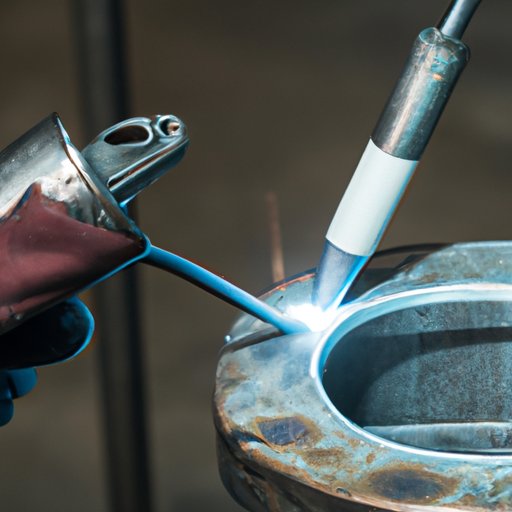
It's a delicate balance, an art form, really. You'll hear that distinct hiss, that beautiful blue flame. Feel the power! But wield it gently, Padawan.
The Heat is On (And Then Off, And Then On Again)
This is where the magic (and potential meltdowns) happens. Aluminum has incredible thermal conductivity. It sucks up heat like a sponge, spreads it around, and then… BOOM. It just melts. One second it's solid, the next it's a silver puddle, and the next it's dripping through your workbench. It’s like welding with a chocolate bar – super satisfying when it works, but a total mess if you're not careful.
So, instead of a direct, continuous blast, you'll be doing a lot of heat-and-retreat. Wave the flame over the joint, get it to that shimmering, almost-about-to-melt state, then pull back. You're trying to build a tiny, liquid puddle without blowing a hole in the universe. This is where patience and finesse come into play. It's a rhythm, a dance, a zen-like meditation. Or a frantic battle against gravity and molten metal, depending on the day!

Introducing the Filler Rod: The Lifesaver
Once you've got that tiny puddle going, it's time for the filler rod. Usually, you'd use a 4043 or 5356 aluminum rod. And guess what? This rod often comes with flux coating! Yes, flux for aluminum. It helps break down any remaining oxides and lets the metal flow beautifully. You'll bring the rod into the puddle, watch it melt and flow. It's like adding gravy to a very hot, shiny dinner plate.
The trick is to add the rod into the puddle, not directly into the flame. The flame is for heating the base metal, the puddle is for accepting the filler. You're building up that bead, moving the torch forward, pushing the puddle along, adding rod as needed. It's almost like painting with fire, but with more catastrophic consequences if you mess up. Just kidding! Mostly.

Practice, Practice, Practice (And Don't Get Frustrated!)
Let's be real: your first few attempts are probably going to look like a pigeon tried to weld something with its beak. And that's okay! Seriously, it takes time. Find some scrap aluminum, run beads, try different heat settings, practice your rod feeding. Get a feel for how the metal moves, how it changes as it heats. It’s all about muscle memory and understanding the material.
Don't get discouraged if you blow a few holes. Every single person who's ever welded aluminum with a torch has done it. Probably more than once. It's part of the learning curve, a badge of honor even! Just remember those safety basics – good ventilation, proper PPE (those shades are crucial!), and a fire extinguisher nearby. Because, well, it's fire. And molten metal. And it's fun!
So, go forth, my friend! Grab that torch, clean that aluminum, and embrace the challenge. You might just find that torch welding aluminum is one of the most rewarding (and occasionally maddening) things you've ever tried. And when you finally lay down that perfect bead? Oh, the bragging rights! You earned 'em.