
Weight Of Electric Cars Vs Gas
Ever tried to pick up a suitcase that you thought was empty, only to find it's actually packed to the brim with bricks? Or maybe you've tried to push a grocery cart overflowing with a week's worth of supplies compared to one with just a few items? There’s a noticeable difference, right?
That little everyday struggle, that subtle shift in effort, is a bit like what we’re going to chat about today: the fascinating — and sometimes surprisingly impactful — difference in weight between our trusty old gas-guzzlers and the shiny new electric vehicles (EVs) cruising silently past.
Why Are Electric Cars So… Chunky?
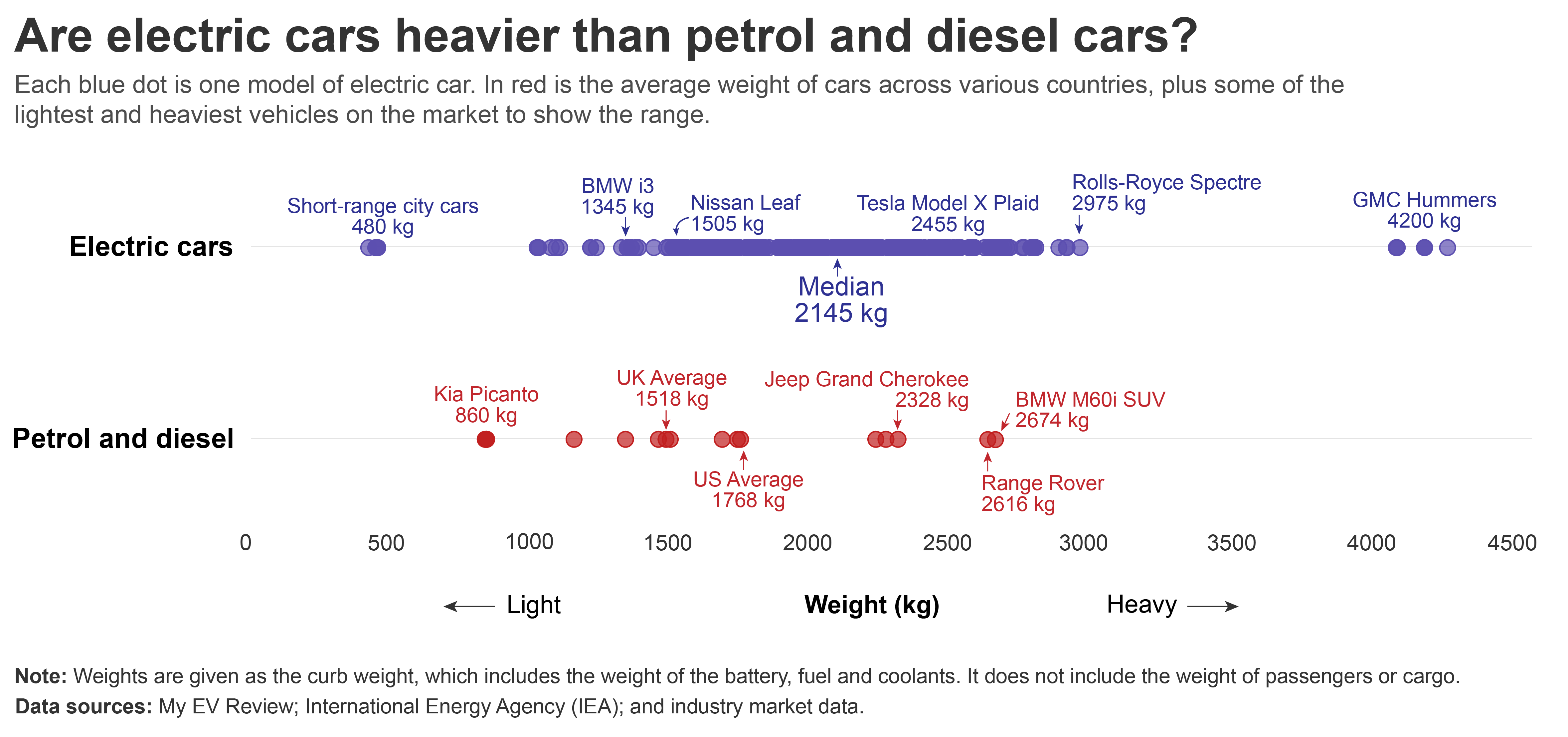
Let's get right to it. If you pop the hood (or what would be the hood) of an EV and lift the carpets, you won't find a little petrol tank. Instead, you'll find something much, much bigger: the battery. Think of it like this: a gas tank is like a small water bottle for energy storage. An EV battery? That's more like a whole bathtub full of energy, and it's made of some pretty dense stuff.
Must Read
Imagine your old smartphone. It has a battery, right? Now imagine scaling that up to power a car for hundreds of miles. You're talking about hundreds of pounds, sometimes even over a thousand pounds, just for the battery pack alone! That's like having a couple of extra adult passengers, or a fully loaded refrigerator, constantly riding along with you.
So, when you see a sleek EV, remember, there's a lot of hidden bulk keeping it moving. It’s not just a fancy shell; it’s a powerhouse of densely packed energy.
Hitting the Road: What Does This Extra Weight Mean?
Okay, so EVs are heavier. Big deal, you might think. We've had heavy SUVs and trucks for ages! And you're right, but the widespread adoption of consistently heavier passenger cars brings some fresh considerations to the table.
The Pothole Problem (and Your Wallet's Woes)
Remember that time you hit a pothole so hard you thought your car was going to lose a wheel? Not fun, right? Well, imagine a constant parade of heavier vehicles rolling over our roads. It's like the difference between a brisk jog and a heavy-footed stomp. The heavier the stomp, the faster the wear and tear.
Our roads, bridges, and infrastructure were largely designed with the average weight of gas cars in mind. More weight means more stress, potentially leading to faster degradation of our beloved tarmac. So, those seemingly endless roadworks and the rise of the dreaded pothole season? Increased vehicle weight could play a silent, contributing role.

And speaking of wear and tear, let's talk about your car. Specifically, your tires. Think of it like carrying a super heavy backpack every day. Your shoes wear out faster, don't they? Same principle for your car’s tires. They have to work harder to support and move that extra weight. This often translates to tires wearing out quicker on EVs, meaning more frequent — and let’s face it, expensive — trips to the tire shop. Your wallet might just let out a little groan!
Braking Bad (and Good, But Still Physics)
Think back to our grocery cart analogy. Trying to stop a fully loaded cart requires a lot more effort and distance than an empty one, especially if you're going a bit fast. It’s pure physics: more mass equals more inertia.

EVs are often praised for their lightning-fast acceleration, which is super fun! But that extra weight also means they need more kinetic energy to shed when stopping. While modern EVs come equipped with incredibly sophisticated braking systems and regenerative braking (which is super clever and helps put energy back into the battery), the fundamental laws of physics still apply.
In an emergency stop, or when navigating tricky conditions, a heavier vehicle simply takes more effort and potentially a bit more distance to bring to a halt. It’s not necessarily a deal-breaker, but it’s an important consideration for safety, particularly when compared to lighter vehicles.
So, Should We All Panic and Go Back to Horses?
Absolutely not! Electric cars are brilliant. They offer fantastic performance, instant torque that can pin you to your seat, and the quiet, smooth ride is often a dream. Plus, they're a huge step forward in reducing tailpipe emissions, which is a win for everyone's lungs and the planet.
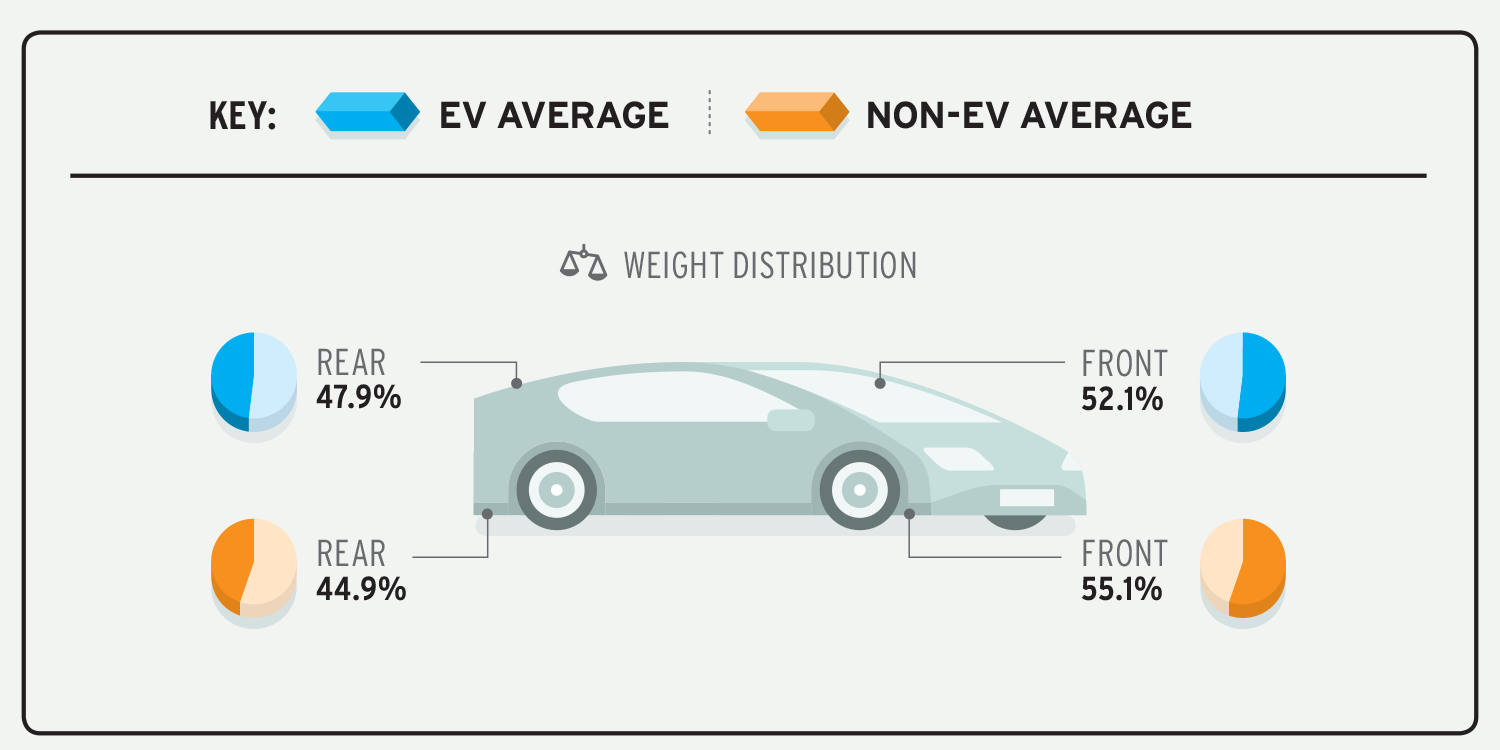
This isn't about shaming EVs or saying they're bad. It's about being aware. Just like we understand that a big truck has different handling characteristics than a small sedan, we should also understand the nuances of EV weight.
The engineering world is constantly innovating, finding ways to make batteries lighter and more efficient, and designing cars that handle their weight incredibly well. But for us everyday drivers, it's just another fun fact to chew on, a little piece of knowledge that helps us understand the world around us a bit better.
So next time you see a sleek EV glide by, give a little nod to the incredible technology beneath its skin, and perhaps a tiny thought to the surprising amount of weight it's gracefully carrying. It’s all part of the wonderful, ever-evolving journey of transportation!