
Weight Difference Between Steel And Aluminium

Let's talk about steel and aluminium! These metals are everywhere, from your car to your soda can. But have you ever wondered which one is heavier?
It's a classic showdown, a battle of the titans (well, metal titans, anyway!). We’re diving deep into the weight difference between these two materials.
The Weighty Question: Steel vs. Aluminium
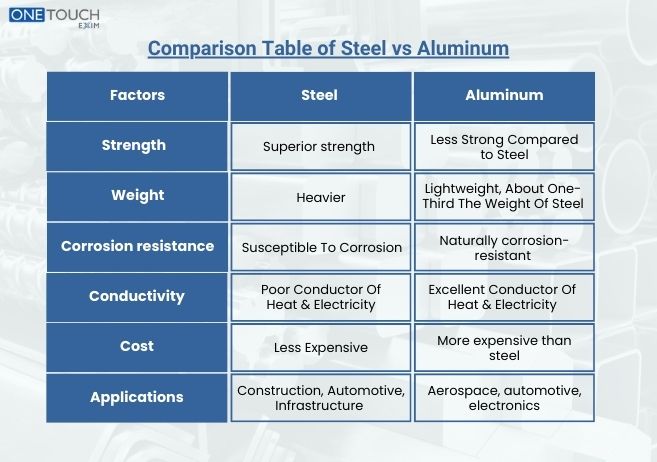
The short answer? Steel is significantly heavier than aluminium. Think of it like this: Imagine you have a brick made of steel and a brick of the exact same size made of aluminium.
Must Read
The steel brick would feel like you're trying to lift a small car! Okay, maybe not that heavy, but definitely noticeably heavier than the aluminium one.
Density: The Key to the Kingdom
The reason for this difference comes down to something called density. Density is basically how much "stuff" is packed into a certain amount of space.
Steel is much denser than aluminium. This means that in the same volume, steel has more atoms crammed together, making it heavier.
Think of it like a crowded concert versus a sparsely populated library. The concert is denser – more people per square foot!
Numbers Don't Lie: A Concrete Comparison
Let’s get a little technical (but not too much, promise!). The density of steel is around 7.85 grams per cubic centimeter (g/cm³).
Aluminium, on the other hand, clocks in at about 2.7 g/cm³. That’s a huge difference! Steel is almost three times as dense as aluminium.
To put it another way, if you had a perfect cube of steel that was 1 cm x 1 cm x 1 cm, it would weigh 7.85 grams. A similar cube of aluminium would only weigh 2.7 grams.
Real-World Examples: Where Weight Matters
This weight difference has major implications in all sorts of industries. Think about airplanes, for example.
Aircraft manufacturers love aluminium because it's strong but lightweight. Using aluminium instead of steel can drastically reduce the overall weight of the plane, saving fuel and allowing it to carry more passengers or cargo.
Imagine trying to fly a plane made entirely of steel! It would be like trying to get a brick to soar through the sky.
Cars: A Balancing Act
The automotive industry also carefully considers the weight of materials. While steel is still widely used for its strength and affordability, aluminium is becoming increasingly popular in car construction.
Lighter cars are more fuel-efficient and can accelerate faster. Plus, they often handle better. Aluminium can be found in car bodies, engine parts, and suspension components.
Some high-performance sports cars even use mostly aluminium to maximize their speed and agility.
Bicycles: The Lighter, the Better
Cyclists are obsessed with weight. A lighter bike means less effort climbing hills and faster overall speeds.

High-end bicycles often feature aluminium frames, forks, and handlebars. Some even use carbon fiber, which is even lighter than aluminium!
Every gram counts when you're trying to win a race or conquer a challenging mountain pass.
Cans: From Steel to Aluminium
Remember those old steel cans? They were tough, but heavy. Nowadays, most beverage cans are made of aluminium.
Aluminium cans are lighter to transport, easier to recycle, and don't rust. It's a win-win-win situation!
Try carrying a case of steel canned drinks versus a case of aluminium canned drinks; your back will thank you for choosing aluminium!
Advantages of Steel: It's Not Just About Weight
While aluminium has a clear weight advantage, steel has its own strengths. Steel is generally much stronger and more durable than aluminium.
This is why it's used in bridges, skyscrapers, and other structures that need to withstand immense forces. You wouldn't want to build a skyscraper out of aluminium!
Steel is also more resistant to wear and tear. It can handle scratches, dents, and impacts better than aluminium.
Steel's Affordability: A Key Factor
Another advantage of steel is its cost. Steel is typically cheaper to produce than aluminium, making it a more economical choice for many applications.
Think about large-scale construction projects. Using steel can significantly reduce the overall cost of the project.
So, while aluminium might be lighter, steel often wins out when budget is a primary concern.
Aluminium's Corrosion Resistance: A Shiny Advantage
Aluminium has excellent corrosion resistance. It naturally forms a thin layer of oxide that protects it from rusting and other forms of corrosion.
This makes it ideal for outdoor applications, such as window frames, siding, and roofing. You don't have to worry about aluminium rusting away like steel might.
This is especially important in coastal environments, where salt air can quickly corrode other metals.
The Best of Both Worlds: Hybrid Solutions
Often, the best solution involves using both steel and aluminium in the same product. This allows manufacturers to take advantage of the unique properties of each material.

For example, a car might have a steel frame for strength and safety, while the body panels are made of aluminium to reduce weight.
It's all about finding the right balance to optimize performance, cost, and durability.
So, Which is Better? It Depends!
There's no single "better" material. The best choice depends on the specific application and the desired properties.
If weight is a critical factor, aluminium is the clear winner. If strength and affordability are paramount, steel is the better choice.
Ultimately, understanding the strengths and weaknesses of each material is key to making informed decisions.
Remember, choosing between steel and aluminium is like choosing between a powerlifter and a marathon runner. Both are strong, but in different ways!
So, next time you're admiring a sleek aluminium bicycle or marveling at a towering steel skyscraper, you'll have a better understanding of the weight difference between these two essential metals.
And remember, knowledge is power (and sometimes, lighter materials!).