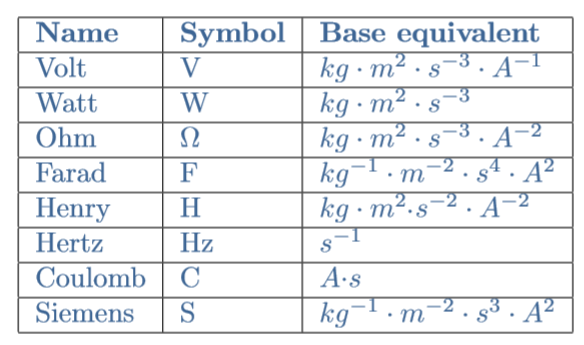
Volts Are A Unit Of Measure For
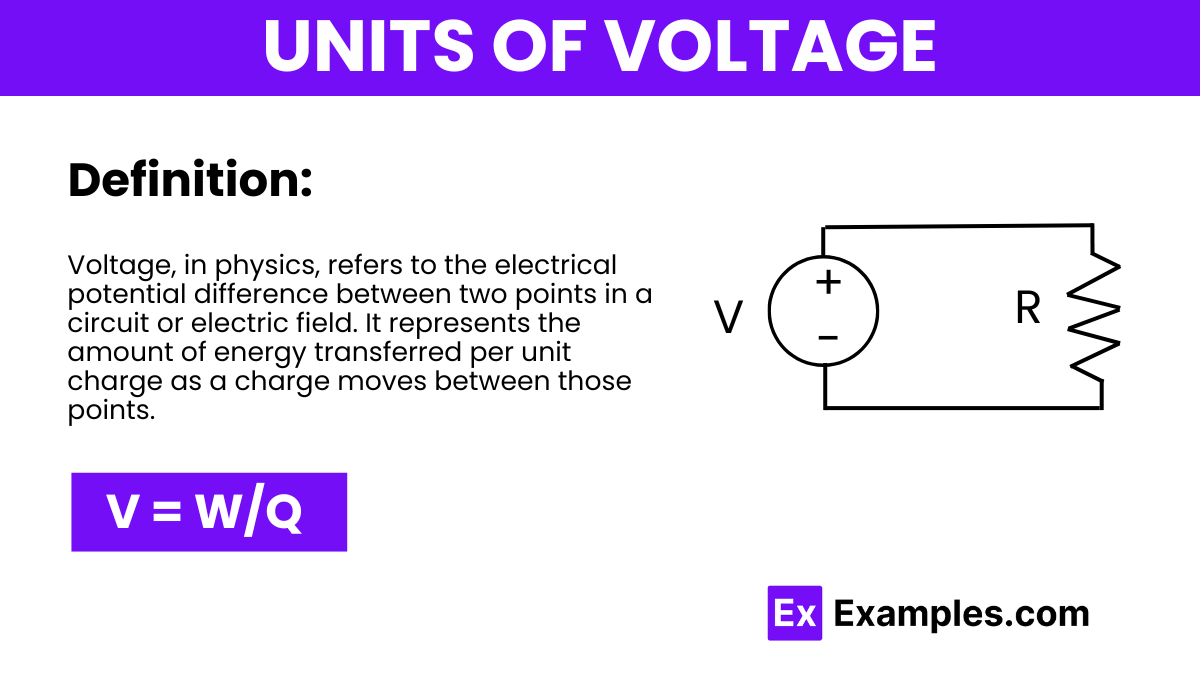
Ever plug in your phone, or flick a light switch, and not really think about what's going on behind the scenes? Most of us just expect that sweet, sweet power to flow. But lurking in the wires, making it all happen, is a fascinating character: the volt!
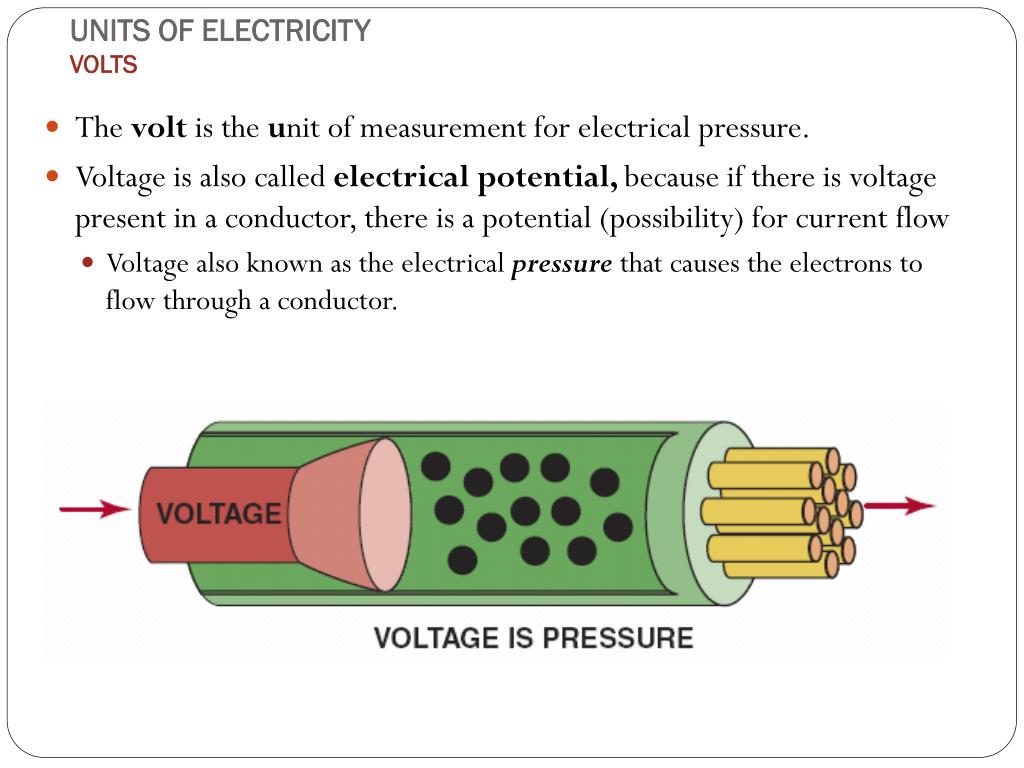
So, what exactly is a volt? It's not the electricity itself. Think of it more like the oomph, the push, the pressure behind the flow. Imagine electricity as water moving through a pipe. The volts would be how hard that water is being pushed. More volts? More pressure! Less volts? Just a gentle trickle.
This isn't some super serious physics lecture, though. Volts are actually kinda fun to talk about because they’re everywhere, in wildly different strengths! From the tiny power that makes your brain think, to the colossal zap of lightning, it’s all about volts.
Must Read
From Mild to Wild: The Voltage Scale!
Let's start small. Your average AAA battery? That's a meager 1.5 volts. Enough to power a TV remote, maybe a tiny toy car. It’s barely a whisper of electrical pressure. You could lick it (don't, it tastes metallic, not delicious) and feel absolutely nothing. It’s truly the kitten of the voltage world.
Then you step it up a notch. Your phone charger, converting wall power to something device-friendly, usually outputs around 5 to 9 volts. Still super safe, but enough to wake up your phone after a long nap. It's a slightly stronger push, a little electrical nudge.
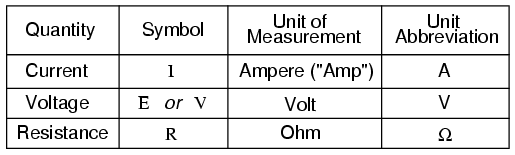
Now, let's talk about your wall outlets. In most homes, you're looking at around 120 volts (in North America) or 230-240 volts (in much of Europe and other places). This is where things get a bit more serious! It's enough to power your toaster, your fridge, your hairdryer. You definitely do not want to be messing with this. This is where the electrical 'push' is strong enough to cause a nasty shock. We've moved from a kitten to a slightly grumpy house cat.
And then there's the truly wild stuff. Ever heard of an electric eel? These incredible creatures can generate up to 600 volts! That's enough to temporarily stun a horse! Imagine having that kind of power just swimming around. It really puts your phone charger in perspective, doesn't it? The eel is basically carrying a mobile stun gun, all natural, all zappy!
And for the grand finale: lightning. We're talking millions, sometimes billions of volts! That's an incomprehensible amount of electrical pressure, causing those incredible sky-splitting flashes. That's not just a push; that's the universe itself giving a colossal, fiery shove.
A Quirky Name and Everyday Wonders
The unit "volt" itself is named after a rather clever Italian physicist, Alessandro Volta. Back in the late 1700s, this genius stacked up discs of different metals (copper and zinc, separated by brine-soaked paper) and created the very first continuous electric battery – the "voltaic pile." Imagine being the first person to figure out how to generate a steady flow of electricity! He literally invented the concept of a battery, and without him, your phone would probably still be drawing pictures in sand.
It’s also fun to think about how tiny voltages run our own bodies! Our brains communicate using electrochemical signals, essentially miniature electrical pulses measured in millivolts (thousandths of a volt). Every thought, every movement, every heartbeat is orchestrated by these minuscule electrical nudges. We are, in a very real sense, walking, talking, thinking electrical machines!
Understanding volts isn’t just about science; it’s about appreciating the hidden forces that shape our modern world. It’s realizing that the seemingly simple act of turning on a lamp involves a carefully engineered "push" of energy.
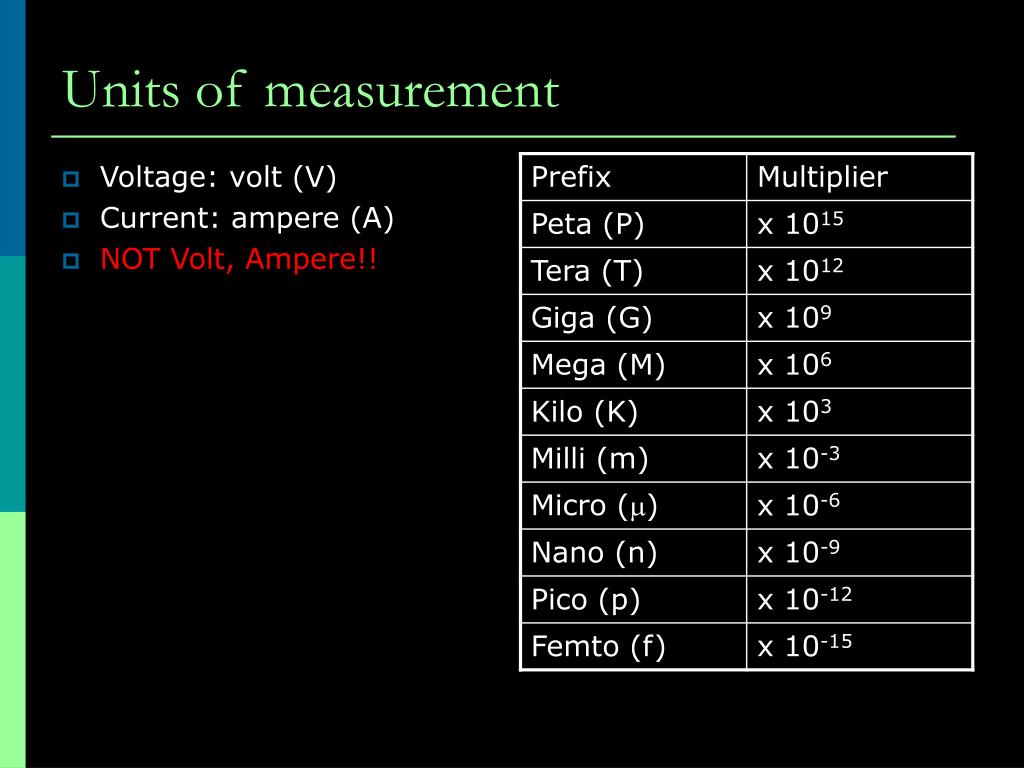
So next time you see "V" on a battery or an appliance, give a little nod to Alessandro Volta and the fascinating world of electrical pressure. It’s not just a number; it’s the invisible oomph that powers everything from your smallest gadget to the biggest thunderclap. And that, my friend, is pretty darn cool!