
Vertical Up Flux Core Welding

Alright, settle in, grab your imaginary coffee. We need to chat about something that makes even seasoned welders squint a little and maybe mutter under their breath: vertical up flux core welding. Sounds like a mouthful, right?
But stick with me. This isn't some super-secret, ancient martial art. It's just... well, it’s a bit of a challenge. Like trying to teach your cat to fetch. Possible, but you'll have some laughs (and maybe some scars) along the way.
So, What's the Big Deal with "Vertical Up"?
Picture this: you've got two pieces of metal, and you need to join them. Easy peasy on a flat table, right? Gravity is your friend, helping that molten puddle just... sit there. Nice and obedient.
Must Read
Now, imagine that joint is going straight up and down. Like a wall. And you need to weld from the bottom, upwards. Suddenly, gravity, that reliable pal, turns into a mischievous little imp, constantly trying to drag your beautiful molten metal puddle down. It’s like trying to build a sandcastle when the tide is coming in.
It wants to sag. It wants to drip. It wants to make a giant, ugly mess that looks less like a weld and more like a pigeon did its business all over your workpiece. Nobody wants pigeon poop welds, trust me.
Why Flux Core, Though?
Ah, here's where our hero steps in! We're talking about flux core welding. Not your typical solid wire MIG, which usually needs a separate gas bottle (and another bill to pay, am I right?).
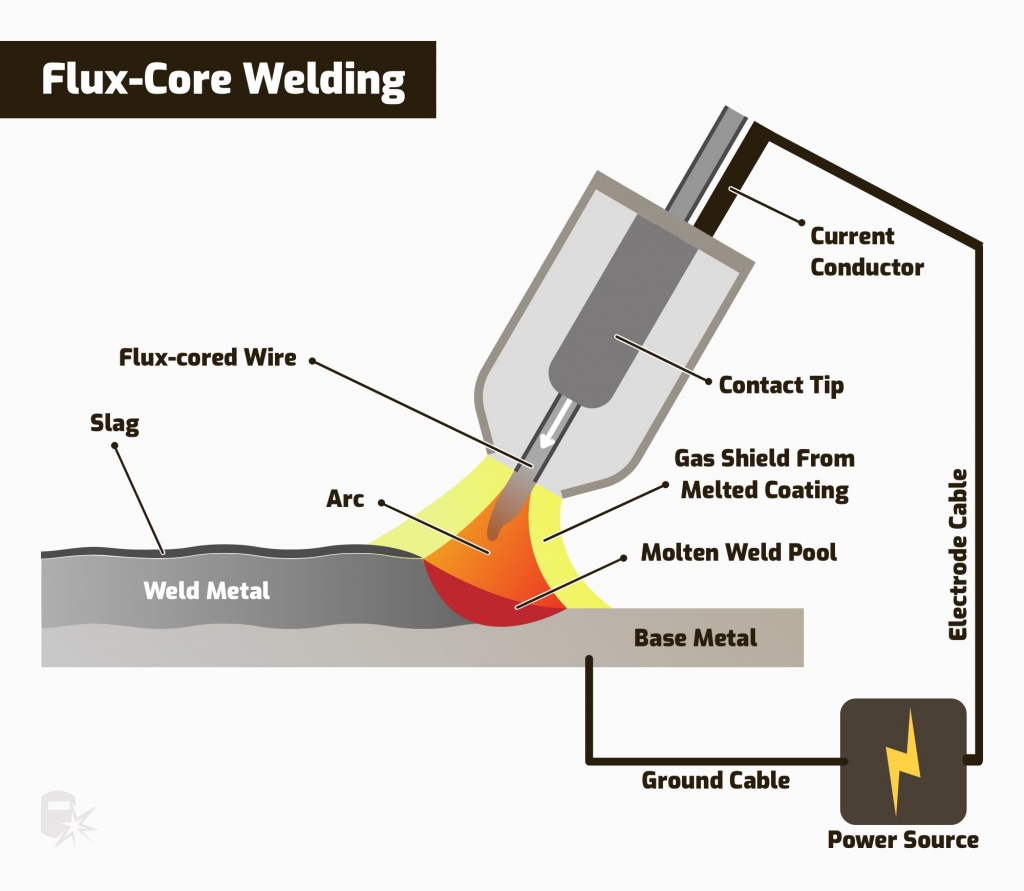
Flux core wire is awesome because it's essentially a hollow wire filled with, you guessed it, flux! This magical stuff burns off and creates its own protective gas shield around your weld puddle. It’s like carrying your own personal bodyguard wherever you go. No gas bottle needed, which is super convenient for outdoor work or when you're just too lazy to haul extra gear around (no judgment here!).
And for vertical up? That flux helps create a more viscous, or "thicker," puddle. Think of it like trying to paint a wall with water versus honey. Honey sticks better, right? That extra stickiness is your secret weapon against gravity's shenanigans.
Alright, Let's Get "Up" and Personal: The Technique
Okay, deep breaths. This isn't as scary as it sounds. But it does take practice. A lot of practice. Don't be surprised if your first few attempts look like a toddler's finger painting.
Your Stance and Angles:
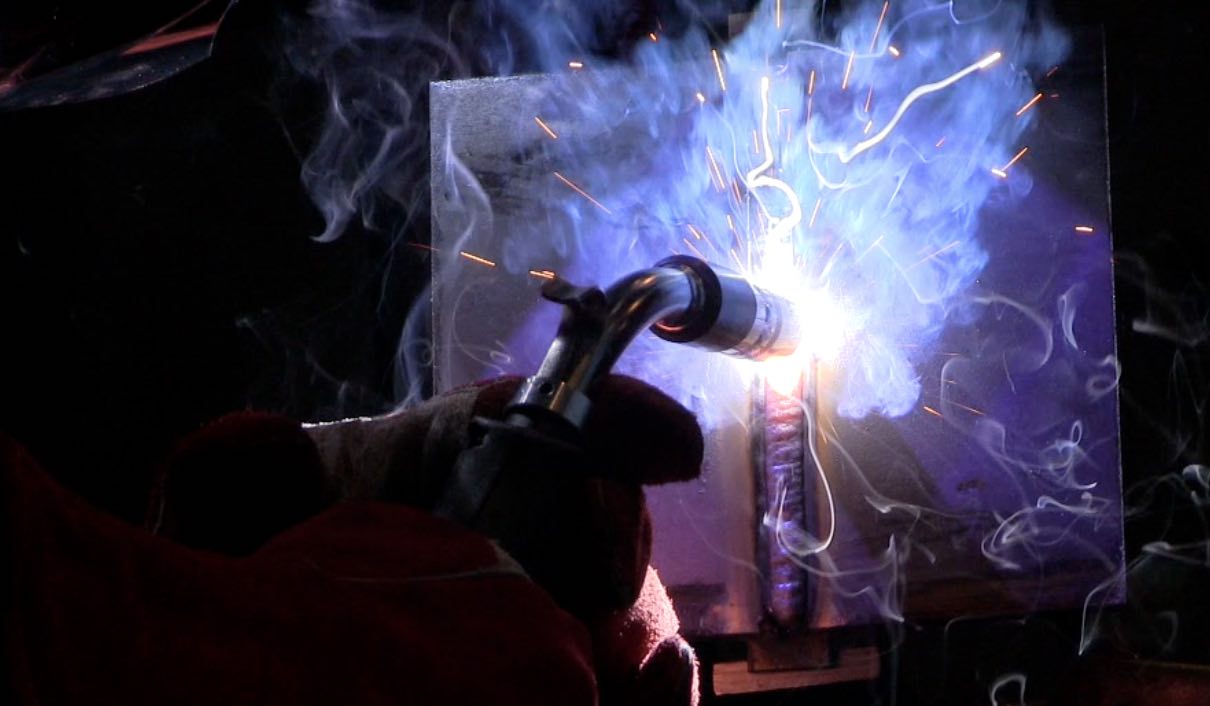
First off, get comfortable. You'll be holding your gun pointing slightly upwards. Imagine you're pushing that molten metal puddle up against gravity. You're the director of this little metallic drama, telling that puddle where to go!
Keep your gun angled slightly into the puddle, maybe 5-15 degrees up. This helps push the puddle upwards and prevents it from spilling out. It's a delicate balance, like trying to balance a teacup on your nose.
The Arc Length:
This is crucial! You want a short arc length. Not too short that it chokes out, but not so long that it becomes wild and uncontrolled. A short arc means more focused heat, which helps you control that puddle. Think of it as keeping your puppy on a short leash.
Travel Speed and Weave:
This is where the magic happens. You need to go slow enough to fill the joint, but fast enough so that the puddle doesn't get too big and sag. It's a dance!

Many folks use a slight weave pattern. Some go for a tiny Z-shape, others a small inverted V, or even just a slight crescent. You're basically building a little shelf with the molten metal, letting it solidify just enough, and then building the next shelf on top. You build a strong foundation, then build, build, build!
Think of it like laying bricks, but with molten metal. You fuse to the sides, make a little ledge, and then move up. Pause slightly on the sides to make sure you're getting good fusion, then quickly move across the middle.
The Ugly Truth (and the Humorous Side)
You're gonna get slag. Lots of slag. Because it's flux core, remember? You'll chip it off, and sometimes it'll be stuck on there like stubborn glitter. And sometimes, underneath that glorious slag, you'll find a bead that looks like a sad, lumpy caterpillar. Don't fret! That's how we learn.
You might have some "waterfall" moments where your puddle just decides, "Nope, I'm going down!" It happens. We've all been there, looking at our work with a mix of frustration and utter bewilderment.

Why Even Bother, Right?
Because when you nail it? Oh, it's a thing of beauty! A perfectly executed vertical up weld is not only strong and structurally sound, but it also screams, "I know what I'm doing!" It's a real badge of honor in the welding world. Plus, a lot of real-world fabrication requires this skill. You can't always flip a giant beam to weld downhill, can you?
It develops your hand-eye coordination, your timing, and your patience. It's like a mental workout with sparks and molten metal. Plus, it just feels good to conquer something challenging.
So, Are You Ready?
Grab some scrap metal. Get your machine set up. Dial in those settings (start with the recommendations on your wire or machine, then tweak!). And just start practicing. Don't be afraid to make mistakes – they're your best teachers.
Soon enough, you'll be laying down those vertical up beads like a pro, making gravity wonder what just hit it. And maybe, just maybe, you'll even start to enjoy the challenge. Now, where's that coffee?