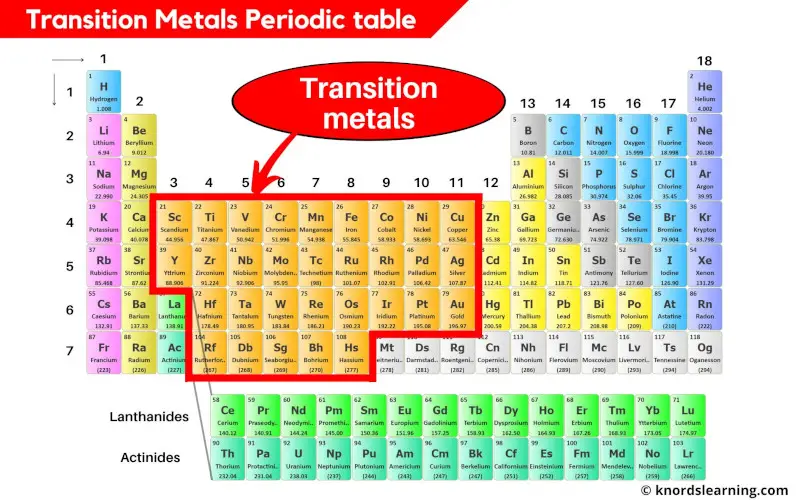
Transition Metals On Periodic Table Location
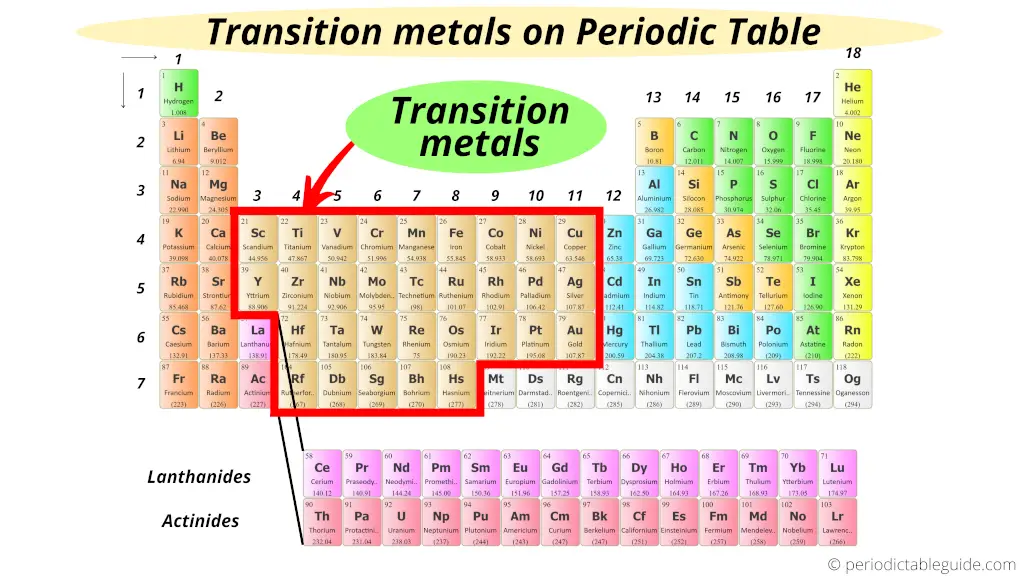
Hey there, curious minds! Ever glance at the periodic table and feel a little intimidated? It's a vast landscape of elements, each with its own quirks and personality. But don't worry, we're not diving into the whole thing today. We're zooming in on a particularly fascinating neighborhood: the transition metals! Prepare to be amazed – these guys are more interesting than you might think.
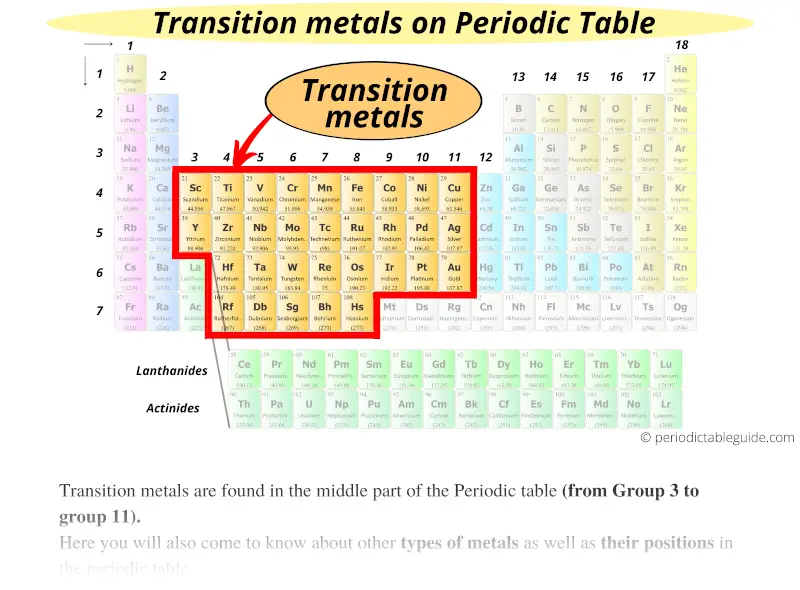
So, where do you find these transition metals hanging out on the periodic table? Well, they're right smack-dab in the middle – that big block connecting the left and right sides. Think of them as the bridge builders of the element world!
You see those two tall columns on the left, Group 1 and Group 2 (the alkali and alkaline earth metals)? And the six columns on the right, Group 13 through Group 18 (including familiar faces like oxygen and chlorine)? The transition metals are what connect them. (Isn't that neat?) They're in Groups 3 through 12.
Must Read
Why are they called "Transition" Metals?
Great question! The name "transition" comes from the fact that these elements represent a transition in electronic properties. They’re a bit of a mix between the highly reactive metals on the left and the less reactive elements on the right. They're in the middle of a personality shift, if you will. (Okay, maybe elements don't have personalities, but you get the idea!)
Think of it like this: Imagine you’re moving from a super-strict boarding school (the alkali metals, always eager to react!) to a more laid-back summer camp (the noble gases, chillin' and rarely interacting). The transition metals are the kids on the bus, gradually adapting to the new vibe. They have some of the boarding school rules still in mind, but they're also starting to feel that summer camp freedom!
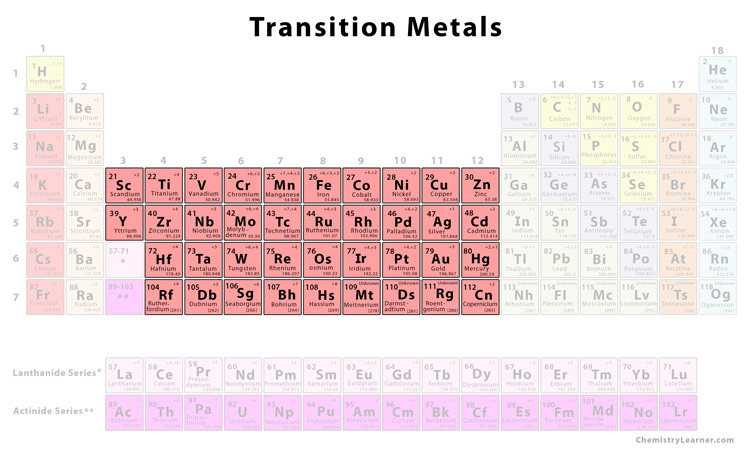
What Makes Them Special?
These aren't just any ordinary elements! Transition metals have some pretty unique characteristics that set them apart. For example, many of them can form multiple positive ions. What does that mean? Well, they can lose different numbers of electrons and still be stable. Think of it like having multiple outfits to choose from – they're versatile!
This ability to form different ions also leads to another cool thing: colorful compounds! Remember those vibrant art projects you did as a kid? Many of those colors came from transition metal compounds. Copper salts are often blue or green, chromium compounds can be yellow, orange, green, or purple – the list goes on! (Who knew the periodic table could be so artistic?)
And let's not forget their catalytic properties. Many transition metals are fantastic catalysts. What's a catalyst? It's a substance that speeds up a chemical reaction without being used up itself. Think of them as matchmakers in the chemical world, bringing other elements together to react more easily. This is super important in industrial processes and even in your own body! Enzymes, which are biological catalysts, often contain transition metals.
Everyday Heroes
You might not realize it, but you encounter transition metals every day! Iron is the main component of steel, used in buildings, cars, and appliances. Copper is in electrical wiring and plumbing. Gold and silver are used in jewelry and electronics. Even titanium, known for its strength and lightweight properties, is used in everything from airplanes to medical implants. (They're secretly superheroes in disguise!)
Consider this: the next time you see a shiny piece of jewelry or admire a towering skyscraper, remember the transition metals working hard behind the scenes. They're essential for countless technologies and industries, making our modern world possible. That's pretty amazing, right?

Transition metals are absolutely vital in our lives, and are often found everywhere, even though they may not be obvious. They can be used to create jewelry or electronics or be used to create the building you may be in!
Dive Deeper!
So, there you have it – a whirlwind tour of the transition metals and their location on the periodic table. Hopefully, this has sparked your curiosity and shown you that science can be fun and engaging. (Who needs Netflix when you have the periodic table? Okay, maybe both.)
Ready to learn more? Explore the individual properties of each transition metal, delve into the world of coordination chemistry, or investigate the role of transition metals in biological systems. The possibilities are endless! Embrace the wonder of science and keep exploring. You might just discover something amazing! So, don't be a stranger! The world of elements is waiting for you, and it's more colorful and exciting than you ever imagined.