
Transition Metals And Inner Transition Metals
Hey there, curious minds! Ever wondered what makes your jewelry shiny, your gadgets work, or even what helps your body function? Well, buckle up, because we're diving into the fascinating world of transition metals and their quirky cousins, the inner transition metals. Don't worry, it's not as intimidating as it sounds! Think of it as a treasure hunt, only the treasure is in understanding the elements around us.
Transition Metals: The Workhorses of the Periodic Table
Imagine the periodic table as a city. The transition metals? They're the busy folks in the heart of downtown, the ones building skyscrapers and keeping everything running smoothly. They occupy that big block in the middle – and they're responsible for a lot of the things we take for granted.
Think about your phone. Chances are, it contains gold (Au) for its conductivity, ensuring everything connects reliably. Or your car - iron (Fe) is the backbone of its structure. These are all transition metals in action! They're strong, they're versatile, and they love to play well with other elements.
Must Read
What makes them so special? It's all about their electrons. Transition metals have electrons in a particularly flexible configuration, meaning they can form a variety of different bonds. This allows them to be used as catalysts – substances that speed up chemical reactions without being consumed themselves. Imagine them as little matchmakers, helping other elements get together and react!
Here's a fun fact: ever seen that beautiful stained glass in old churches? The vibrant colors often come from transition metal compounds! Chromium (Cr) makes things green, cobalt (Co) gives us blue, and manganese (Mn) can create purple. Talk about adding some sparkle to history!
Inner Transition Metals: The Reclusive Relatives
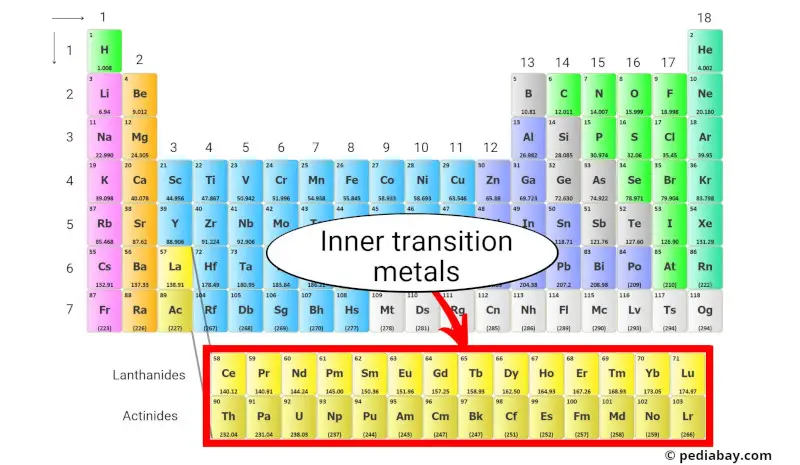
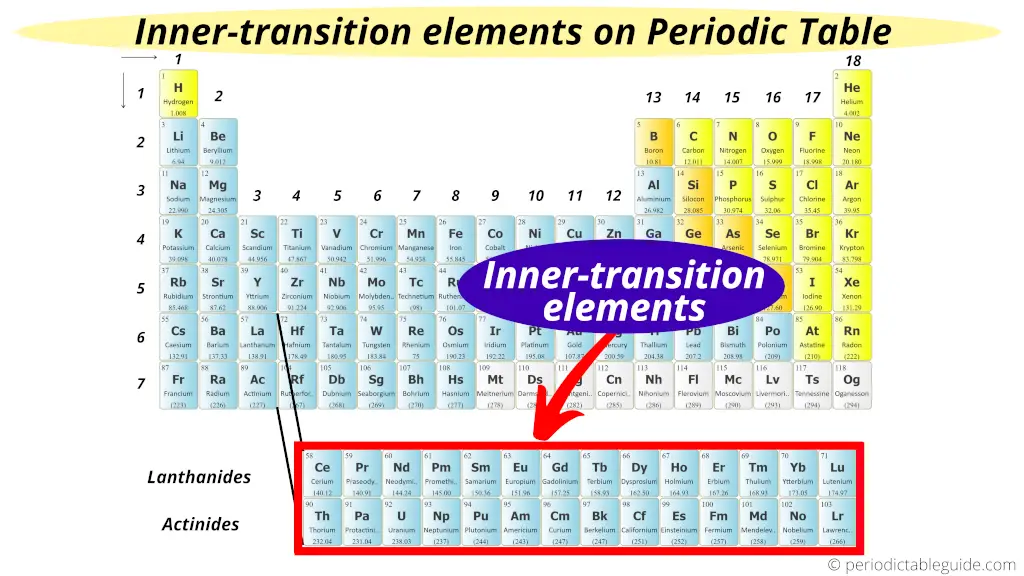
Now, let's venture out to the suburbs of our periodic table city. We're heading to the realm of the inner transition metals. These guys are a bit more reclusive, residing in two rows tucked away at the bottom of the chart. They're split into two groups: the lanthanides and the actinides.
The lanthanides, or rare earth elements, are the friendly neighbors. You might not see them all the time, but they're essential. They're hiding in your phone screen (for the vivid colors!) and in energy-efficient light bulbs. These elements are used as phosphors which glow when exposed to ultraviolet light. Imagine them as the stage crew, backstage supporting all the lead actors (transition metals).
Then we have the actinides, some of which are naturally occurring and some created in labs. This group contains familiar names like uranium (U) and plutonium (Pu), which are used in nuclear power. They're a bit more...powerful, let's say, and need to be handled with care. Some like americium (Am) are found in smoke detectors! They are the guardians of safety.
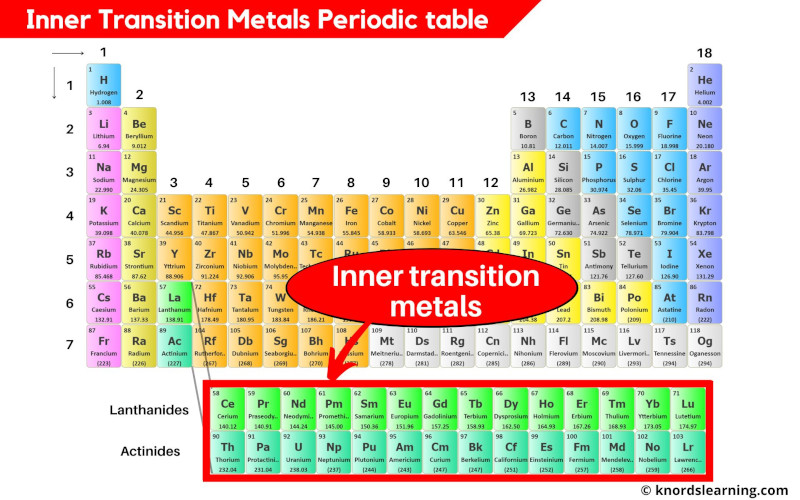
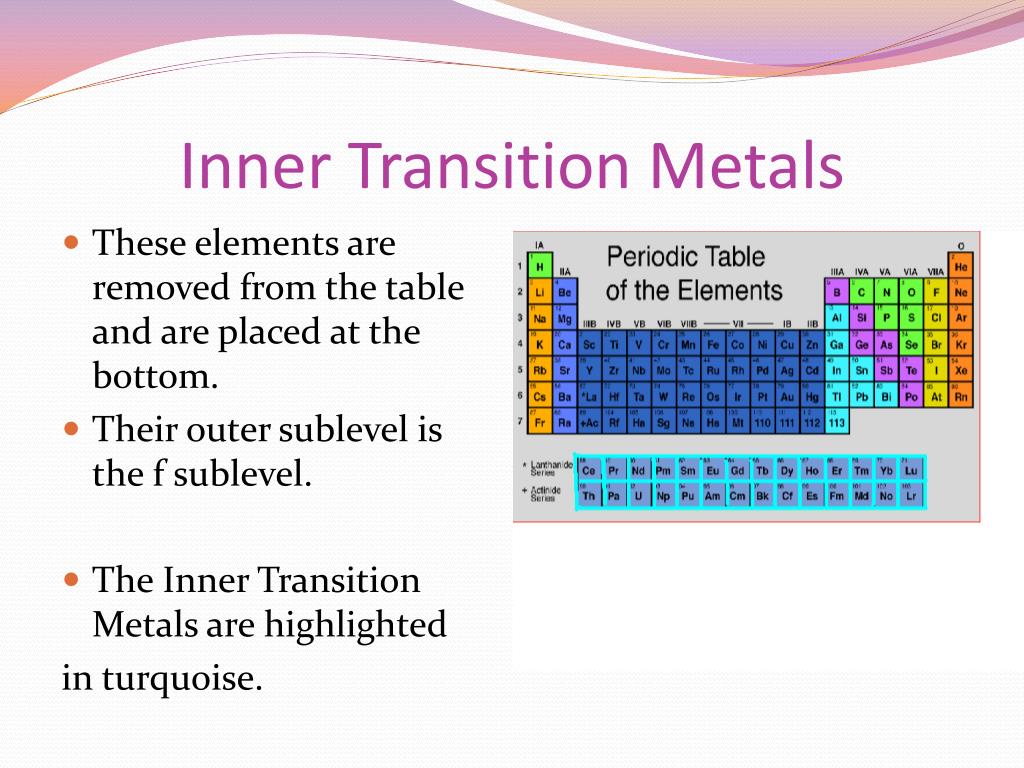
What makes the inner transition metals unique? Well, their electron configurations are even more complicated than the transition metals! This gives them some unique magnetic and optical properties. Though some of these elements are radioactive, many have very important uses in our modern world.
Why Should You Care?
Okay, so elements on a chart, electrons, and all that. Why should you even care about transition and inner transition metals? Here's the bottom line: they're everywhere! They’re the unsung heroes of modern technology, medicine, and even art. They allow us to create the gadgets we love, build strong structures, and develop life-saving medicines.
Consider MRI scans that help doctors see inside your body. Gadolinium (Gd), a lanthanide, is often used as a contrast agent to improve the image quality. Or think about the catalytic converters in cars, which rely on platinum (Pt), palladium (Pd), and rhodium (Rh) – all transition metals – to reduce pollution.
Knowing a little bit about these elements helps you appreciate the ingenuity and innovation that goes into the world around us. The next time you're holding your phone, admiring a colorful piece of jewelry, or even breathing clean air, take a moment to thank the transition and inner transition metals for their essential role.
Understanding the elements that compose the world around us enriches our perspective. Maybe you'll be inspired to become a scientist, an engineer, or simply someone who appreciates the amazing complexity of the universe. So, keep exploring, keep questioning, and keep discovering! After all, the journey of discovery is just beginning. And who knows? Perhaps you will unlock the next groundbreaking innovation with these incredible elements!
