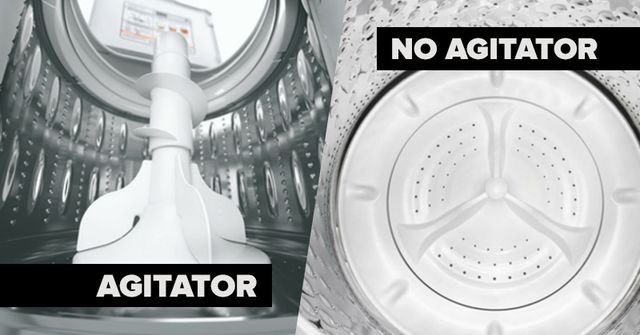
Top Load Washer With Agitator Vs No Agitator

Let's face it, laundry isn't exactly known for sparking joy. But what if I told you that even something as mundane as choosing a washing machine could be a gateway to understanding…physics! Okay, maybe that’s a stretch. But seriously, the age-old debate of top load washer with agitator vs. no agitator isn’t just about clean clothes; it's about understanding different approaches to a common problem – and that’s a skill valuable in all sorts of creative endeavors.
Think of it this way: artists and hobbyists are constantly experimenting with techniques. Whether it's a painter exploring different brushstrokes, a knitter mastering new stitch patterns, or a coder learning a new programming language, it’s all about understanding the nuances of different methods. The agitator vs. no agitator debate offers a similar, albeit laundry-centric, learning experience. An agitator washer is like a bold, direct approach – think of it as impasto in painting, where thick layers of paint are applied for texture. It's powerful and gets the job done. A no-agitator washer, on the other hand, is more subtle, like a delicate watercolor wash, relying on gentler movements and water flow to achieve the desired effect.
Consider the implications for different types of “laundry.” A painter might use an “agitator” approach – a vigorously scrubbed canvas – for a raw, textured piece. Think of Van Gogh’s brushstrokes. Conversely, a no-agitator (gentle) approach, like a meticulous glazing technique, might be ideal for achieving the luminous depth of a Renaissance masterpiece. A knitter might choose an “agitator” style, with chunky yarns and bold cables, for a rugged, textured scarf. Or, a "no-agitator" approach, using fine merino wool and delicate lace patterns, for a flowing, elegant shawl. Even in cooking, the difference is apparent. An “agitator” approach could be a hearty stew, vigorously stirred and simmered to perfection. A "no-agitator" approach could be a delicate soufflé, carefully folded and baked to achieve the perfect rise.
Must Read
So, how can you apply this "agitator vs. no-agitator" thinking at home? Start by observing. Pay attention to the different cleaning methods your current washer employs. If you have an agitator machine, note how it tackles tough stains. If you have a no-agitator machine, observe how it handles delicate fabrics. Then, experiment! Perhaps you could try pre-treating heavily soiled items before washing them in a no-agitator machine to see if it improves the outcome. You could also experiment with different water temperatures and detergent types. Keep a small notebook to record your observations – it’s like a mini science experiment in your laundry room!
Ultimately, the joy of understanding the difference between an agitator and a no-agitator washing machine lies in the appreciation of different approaches. It’s about recognizing that there’s no single “right” way to achieve a desired outcome. Just like in art, craft, or life in general, there are multiple methods, each with its own strengths and weaknesses. Embracing this perspective can make even the most mundane task, like doing laundry, a little more interesting and a lot more insightful. Plus, you'll have cleaner clothes, and that’s always a win!