
Tig Conversion For Stick Welder

Alright, let's chat about welding, shall we? You've got your trusty stick welder, maybe it's been with you through thick and thin, patching up trailers, fixing fences, or just generally making sparks fly in the garage. It's like that old, reliable pickup truck: a bit rough around the edges, gets the job done, but it's not exactly winning any beauty contests.
Stick welding, or as some affectionately call it, "SMAW" (Shielded Metal Arc Welding, if you're feeling fancy), is the grunt work of the welding world. It's robust, it's forgiving, and it's perfect for when you need to stick two pieces of metal together and don't care much about how pretty it looks, as long as it holds. Think of it as painting with a very thick, somewhat gloopy brush – effective, but not for detailed portraits.
Enter the World of TIG Welding: The Smooth Operator
Now, on the other end of the spectrum, you have TIG welding. If stick welding is that sturdy pickup truck, TIG is like a sleek, precision sports car. It's all about control, finesse, and creating welds so beautiful they look like a stack of dimes, perfectly laid one after another. TIG stands for Tungsten Inert Gas, and it uses a non-consumable tungsten electrode and a shield of inert gas (usually Argon) to protect the weld puddle. It's the go-to for really clean work, thin metals, and those "I need this to look amazing" projects.
Must Read
But here's the thing: dedicated TIG welders can be a bit of an investment. They're often pricier, and if you're just dabbling or want to try your hand at more precise work without breaking the bank, it might seem like a distant dream.
The "Aha!" Moment: TIG Conversion for Your Stick Welder
What if I told you that you don't necessarily need to buy a whole new, fancy machine to get a taste of that beautiful TIG action? That's where the idea of a TIG conversion for your stick welder comes in! It's like putting racing tires and a spoiler on your trusty pickup – it won't be a sports car, but it'll handle a lot better and look way cooler doing it.
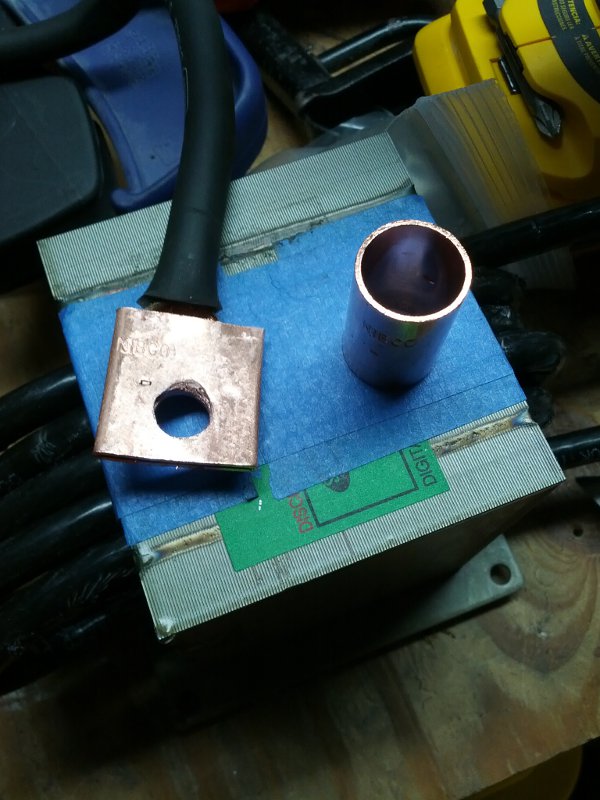
Essentially, you're taking your existing stick welder (which provides the power) and hooking up a few extra bits to make it behave more like a TIG machine for certain applications. You're giving your old workhorse a bit of a facelift and a new set of skills.
How Does This Magic Happen? (The Simple Version)
Typically, a TIG conversion involves a few key components:
- An Argon gas cylinder and regulator (because TIG needs that inert gas shield).
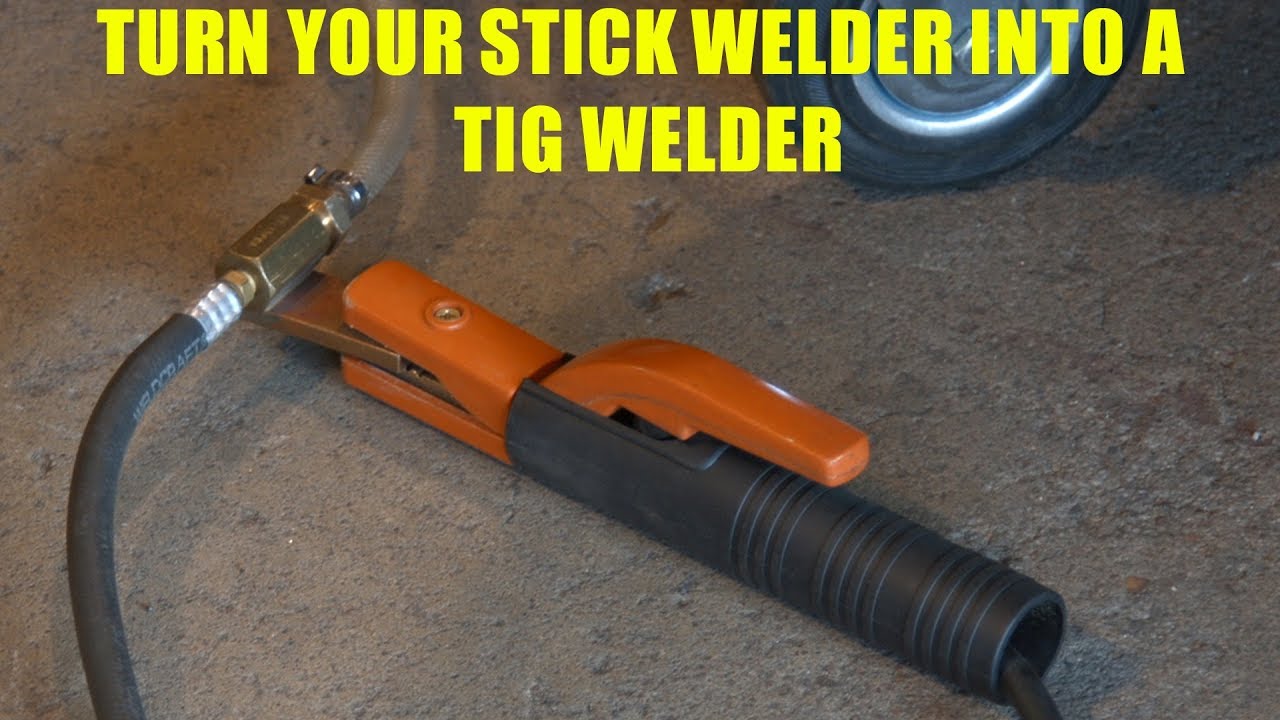
- A specialized TIG torch, often called a "scratch start" or "lift arc" torch. This torch holds your tungsten electrode.
- A gas hose and a few connectors to hook it all up.
You connect the TIG torch to your stick welder's positive or negative terminal (depending on your material and desired polarity), usually with the gas flowing separately. You then scratch or gently "lift" the tungsten to initiate an arc, just like striking a match, and you're off! Your stick welder provides the current, and your new setup gives you the gas and electrode control.

Why Should You Even Care? (Beyond Just "Cool Factor")
Okay, so it sounds neat, but what's in it for you, the everyday welder? Plenty! Here's why this conversion is a pretty sweet deal:
1. Precision, Precision, Precision!
Remember that thick paintbrush analogy? With a TIG conversion, you're swapping it out for a fine-tipped pen. Imagine needing to fix a delicate metal garden ornament, or perhaps crafting a small, intricate metal sculpture. Stick welding would just blast through it, leaving a lumpy mess. TIG, even a converted setup, gives you the control to fuse thin metals, create tiny, precise beads, and generally work with much more finesse.

2. Cleaner Welds, Less Grinding
One of the joys of TIG is the lack of spatter. No more tiny metal balls flying everywhere like enthusiastic confetti! This means less cleanup time. After a stick weld, you're often grinding away slag and spatter. With TIG, especially on stainless steel, you might just wipe it clean. It's like going from tidying up after a messy mud pie fight to simply wiping down a clean countertop after making a sandwich.
3. Tackling New Metals
While a DC stick welder converted to TIG won't let you weld aluminum (that requires AC TIG, a whole different beast), it opens up the door to beautifully welding stainless steel, chrome-moly, and other exotic metals that are tough to get a clean finish on with stick. Suddenly, you're not just fixing the old rusty gate; you're building custom stainless exhaust systems or intricate metal art.
4. Level Up Your Skills (Without Buying a New Machine)
This is probably the biggest perk for many. It's a fantastic, relatively inexpensive way to learn the fundamentals of TIG welding. You'll develop a steadier hand, a better understanding of heat input, and the coordination needed to feed filler rod with one hand while manipulating the torch with the other. It's like taking a beginner's course in gourmet cooking using your existing kitchen appliances, before deciding if you want to invest in professional-grade equipment.
5. Budget-Friendly Exploration
Let's be real, welding can be an expensive hobby or profession. A TIG conversion kit is significantly cheaper than buying a standalone TIG welder. It lets you test the waters, see if you enjoy the intricate dance of TIG welding, and decide if it's worth investing in a dedicated machine down the line. It's a low-risk way to expand your capabilities.
A Small Caveat (Because Honesty is Key)
Now, it's important to manage expectations. A TIG conversion on a stick welder (especially an older DC-only unit) won't give you all the bells and whistles of a dedicated TIG machine. You typically won't have a foot pedal for remote amperage control (you set the amps on your stick welder and stick with it), and as mentioned, no aluminum welding. But for learning, precision work on steel, and stainless steel, it's an absolute game-changer.
So, if you've been eyeing those beautiful TIG welds online, dreaming of creating something truly refined, and wondering if your old stick welder has any more tricks up its sleeve, a TIG conversion might just be your next fun project. Go on, give your old workhorse a new lease on life and discover a whole new world of welding possibilities!