Alright, let's talk about the periodic table! You know, that big, colorful chart that looks like a secret code but is actually the ultimate guest list for all the elements in the universe. Imagine it as a giant, cosmic party. Most of the elements are metals – shiny, strong, good at conducting electricity, and generally the life of the party, always eager to mingle and share their electrons. And then there's Group 1, right there on the far left. These are the Alkali Metals, the coolest, most reactive crowd you could ever meet. They're practically bursting with energy, ready to bond with anyone and everyone! Think of them as the rock stars of reactivity, always giving away an electron to make friends.
Meet the Maverick!
But wait a minute. Take a closer look at the very top of that Group 1 column. There, sitting right above all those boisterous metals, is a tiny, unassuming fellow. This is Hydrogen. And here's the kicker: it's not a metal. Not even a little bit! It's a nonmetal, chilling out with the metallic heavyweights. It’s like finding a fluffy, playful kitten at a dog show, but it’s still definitely part of the family!
Why is it in Group 1, anyway?
You might be scratching your head, thinking, "What's this rebel doing there?" Well, the periodic table organizes elements by their properties, especially how many electrons they have in their outermost shell. And guess what? Just like all the fiery Alkali Metals below it, Hydrogen also has one single electron in its outermost shell. That's its ticket into the exclusive Group 1 club! But while its metallic neighbors are eager to give away that electron and become positive ions, Hydrogen is a bit more… flexible. It can share its electron, or even sometimes gain one, making it a master of disguise and versatility. It's truly unique, a lone wolf with a heart of gold (metaphorically speaking, of course, because it’s not metal!).
It's the ultimate paradox: the tiny, nonmetal oddball sitting pretty with the loudest, proudest metals. Talk about an individualist!
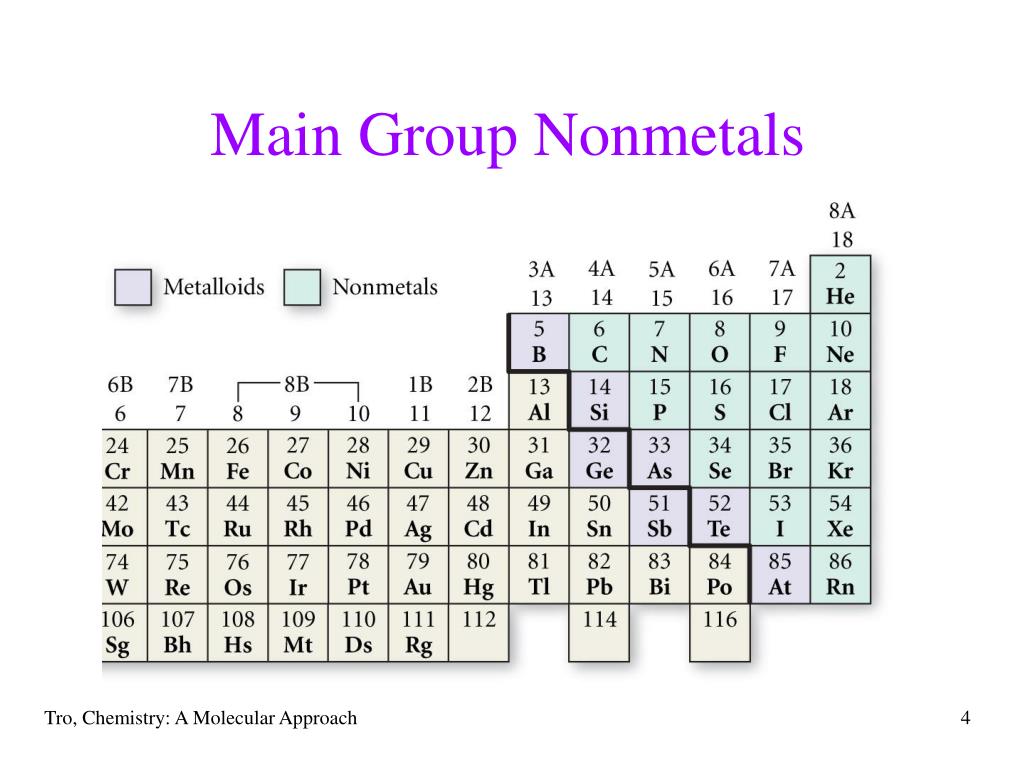
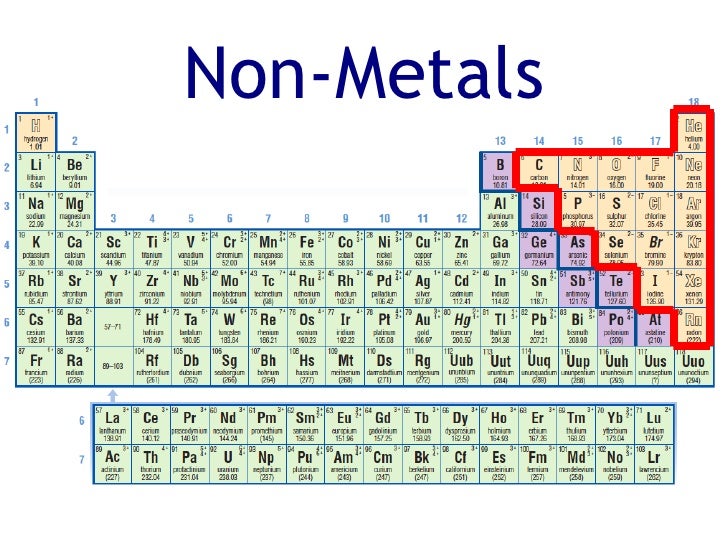
PPT - Chapter 22 Chemistry of the Nonmetals PowerPoint Presentation
The Universe's Tiny Titan
Don't let its nonmetal status or tiny size fool you. Hydrogen is the ultimate unsung hero. It might be the simplest element, just one proton and one electron, but it’s arguably the most important. Seriously! If the universe had a "firstborn," it would be Hydrogen. It was the very first element forged in the Big Bang, the OG building block of everything.
From Cosmos to Your Coffee Cup!
Think about it:
Want to sip on some water? That's H₂O, baby! Two parts Hydrogen, one part Oxygen. Without it, no life as we know it.
Ever marvel at the sun or twinkling stars? They're basically giant, cosmic furnaces running on Hydrogen fusion. Our sun is converting millions of tons of Hydrogen into helium every single second, giving us light and warmth. Pretty spectacular for such a small fry, right?
It's literally everywhere! It makes up about 75% of all the normal matter in the universe. From the vast emptiness of space to the cells in your body, Hydrogen is holding things together.
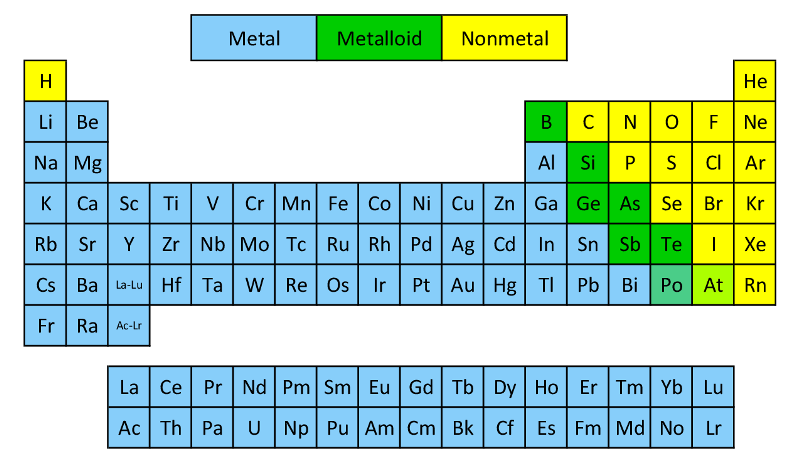
Periodic Table Of Elements Metals Nonmetals Metalloids Printable
It’s like the universe’s most reliable, versatile, and utterly indispensable friend. It might not be flashy, but without it, the whole party would simply shut down!
So next time you glance at that periodic table, give a little nod to Hydrogen. This tiny, nonmetal maverick in Group 1 isn't just an anomaly; it's a testament to how complex and wonderfully diverse our universe is. It reminds us that even the smallest, quietest members can be the most fundamental and have the biggest impact. Long live the extraordinary individuality of Hydrogen!