The Exhaust Section Of A Turbine Engine Is Designed To

Ever stood near a roaring jet engine and felt that powerful, almost primal rumble? There's something truly captivating about the sheer force being unleashed. We might not always think about the intricate details of what's making that happen, but trust me, understanding a tiny piece of it – specifically, the exhaust section – unlocks a whole new level of appreciation. After all, those powerful engines get us places, connect the world, and even play a vital role in our defense.
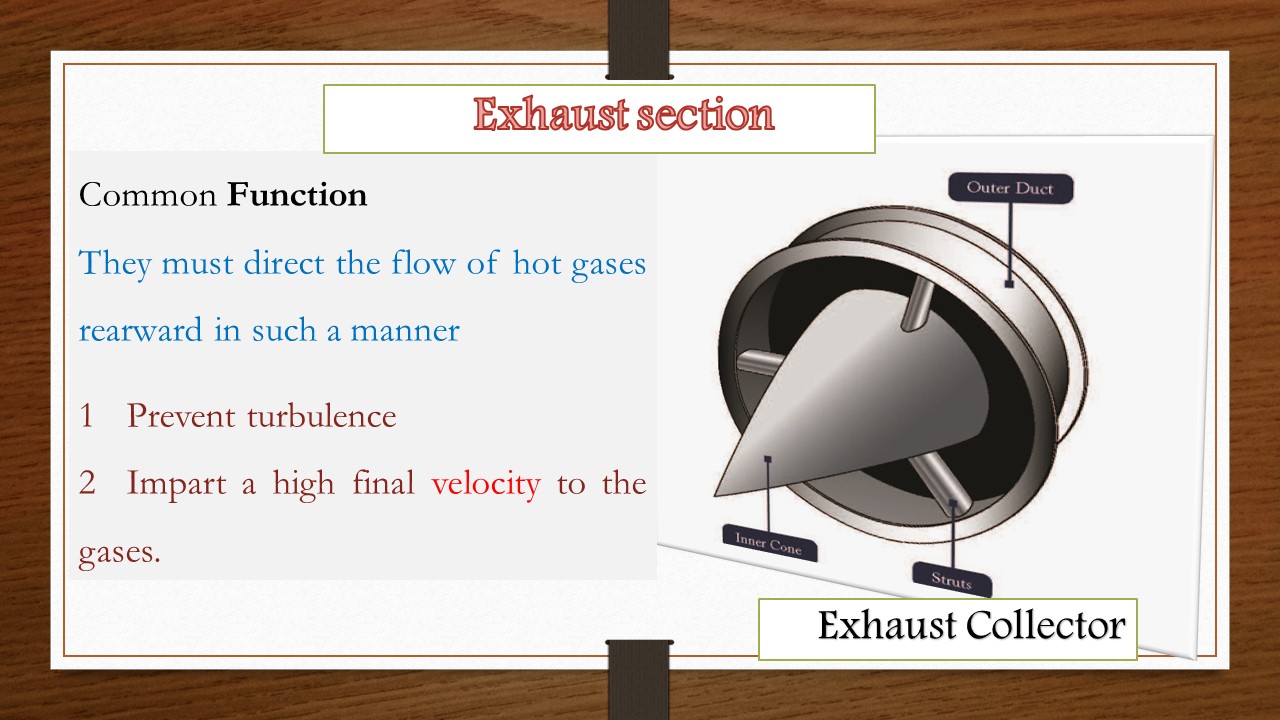
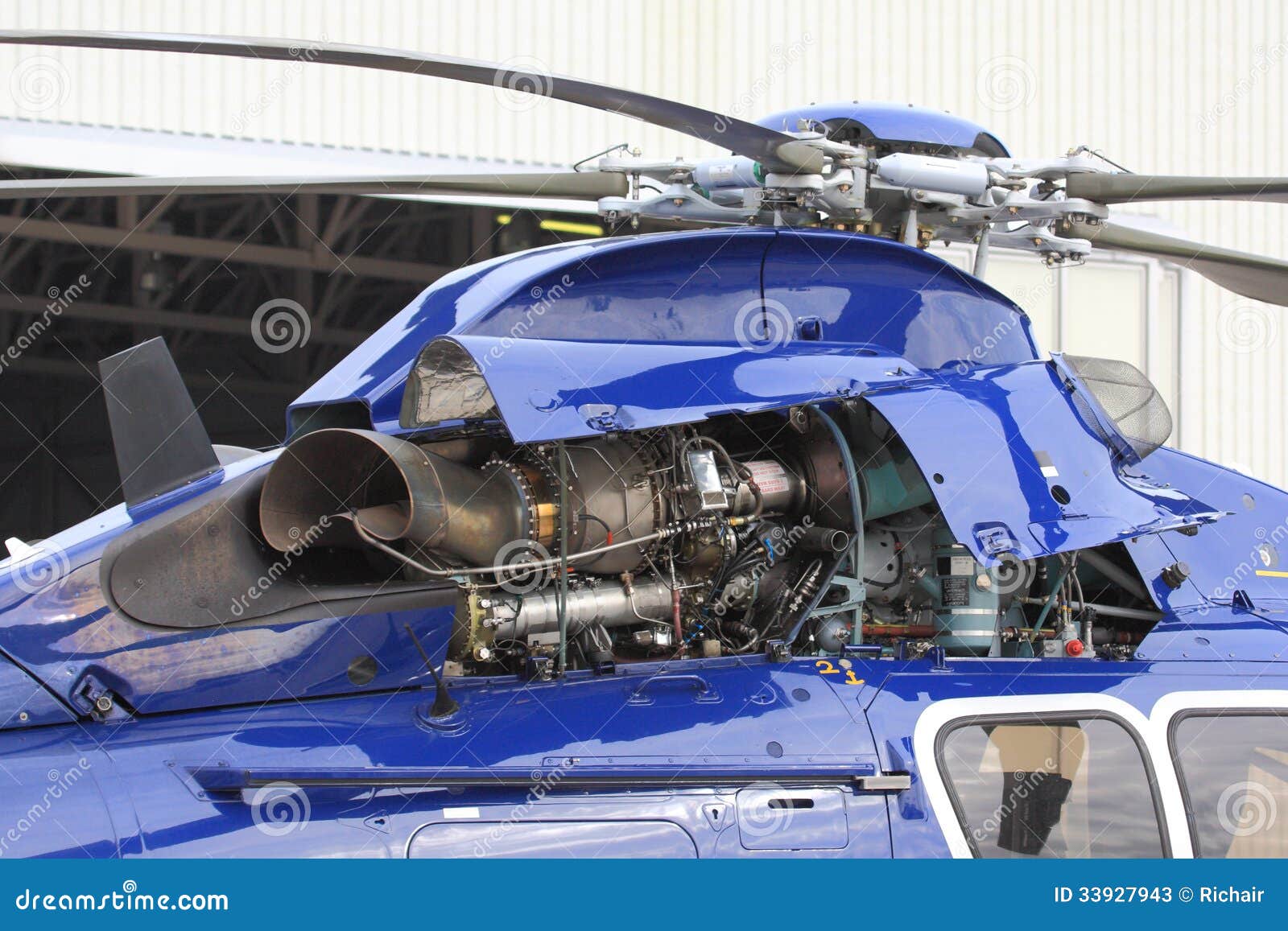
So, what exactly does the exhaust section of a turbine engine do? Simply put, it's designed to three main things: collect the hot, high-energy gas leaving the turbine, direct that gas rearward to produce thrust, and determine the exhaust velocity for optimal engine performance. Think of it like the megaphone at a football game – it gathers the sound and focuses it to project it further. In the case of a turbine engine, the "sound" is superheated gas, and the "projection" is thrust, which is what propels the aircraft forward.
But it's not just about blasting gas out the back. The exhaust section is also responsible for carefully controlling the exit velocity of the gas. A wider nozzle, for instance, will result in lower exhaust velocity and lower thrust, but may be more fuel efficient at lower speeds. A narrower nozzle, on the other hand, will produce higher exhaust velocity and greater thrust, ideal for takeoff or high-speed flight. The design of the exhaust section is a crucial balancing act, impacting everything from fuel consumption to the overall performance of the aircraft.
Must Read
We see these principles applied everywhere turbine engines are used. Commercial airliners rely on efficient exhaust sections to transport millions of passengers safely and reliably every day. Military aircraft use sophisticated exhaust designs, often incorporating afterburners, to achieve incredible speeds and maneuverability. Even power generation plants use turbine engines, and their exhaust sections play a crucial role in directing the waste heat for potential reuse or safe disposal.
So, how can you better appreciate this often-overlooked piece of engineering? Next time you're at an air show, take a moment to really look at the exhaust nozzles of the aircraft. Notice their shape, size, and any adjustable features. Search online for cutaway diagrams of turbine engines to see how the exhaust section fits into the overall system. Even a basic understanding of the principles involved can make your next flight or visit to an aviation museum much more engaging. Consider researching variable geometry nozzles, used to optimize thrust across a wide range of flight conditions. You'll be amazed at the complexity and ingenuity packed into this seemingly simple component. Understanding the exhaust section is understanding a fundamental part of how we move ourselves and goods across the globe. So embrace the roar, and appreciate the engineering that makes it all possible!