
The Control Center For Cellular Operations Is The
Ever wonder how your body manages to do, well, everything? From wiggling your toes to thinking about what you're going to have for dinner, it's a chaotic symphony of activity. And at the heart of that symphony, directing the whole show, is something truly amazing.
The Master Conductor: The Nucleus!
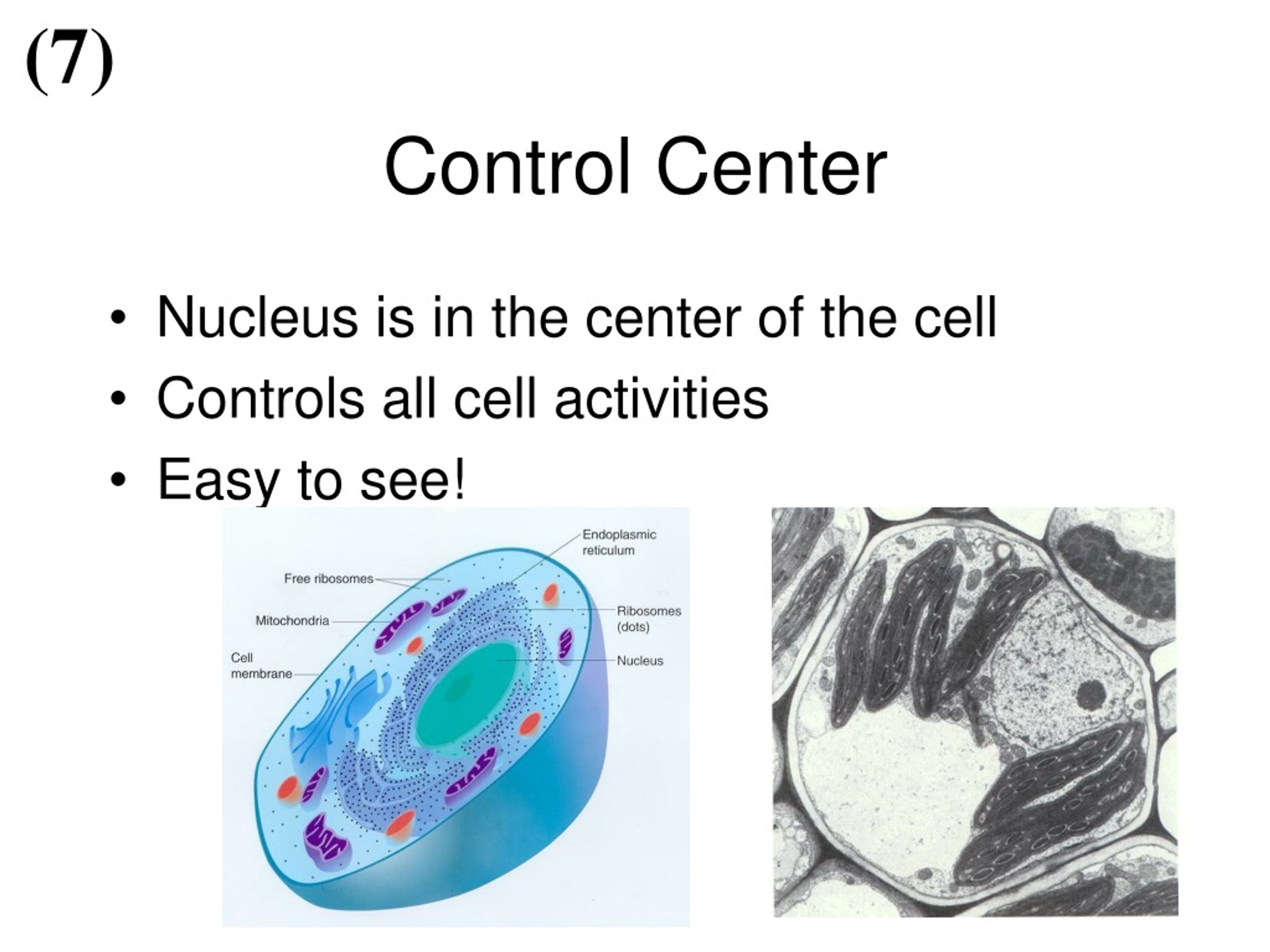
That's right! The control center for cellular operations is the Nucleus. Think of it as the brain of the cell, but even more powerful. I mean, your brain can't literally build a whole new copy of itself, can it?
Inside this microscopic command center is all the cell's genetic information. We're talking blueprints, recipes, instruction manuals – the whole shebang! It's all carefully organized within DNA, the famous double helix.
Must Read
DNA: The Ultimate Instruction Manual
Imagine trying to bake a cake without a recipe. Disaster, right? Similarly, the cell needs DNA to know exactly what to do. It's like having the world's most detailed cookbook for building and maintaining a living thing.
This DNA cookbook isn’t just a single, long list of instructions. It’s carefully divided into chapters called genes. Each gene holds the instructions for making a specific protein, and these proteins are the workhorses of the cell.
They’re the tiny construction workers, the delivery drivers, the security guards, and even the chefs! Without them, nothing gets done. No growth, no energy, no pizza digestion.
Keeping Things Organized: Chromosomes
Now, all that DNA is a LOT of information. If you just let it float around loose, it'd be like trying to read a book that's been ripped into a million pieces and scattered across the floor. Total chaos!
That's where chromosomes come in. These are like super-organized binders that neatly package up the DNA. Think of them as filing cabinets that keep everything in its place and prevent the cell from becoming a total mess.
Humans have 46 chromosomes arranged in 23 pairs. Each pair contains information for similar tasks. Like having two slightly different versions of the same cake recipe - maybe one is extra chocolatey!

The Nucleolus: Ribosome Factory
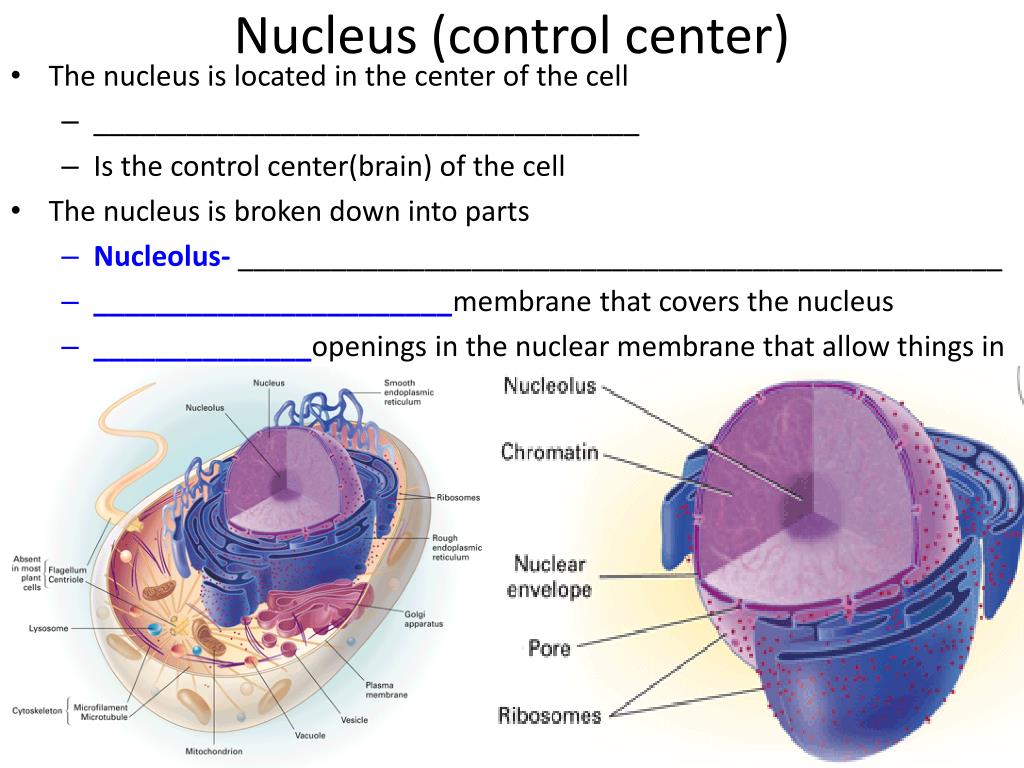
The Nucleolus is a special region within the nucleus where ribosomes are assembled. Ribosomes are like tiny factories that build proteins based on the instructions from DNA. They are essential for the survival of a cell.
It's like a workshop inside the main headquarters. The plans for proteins are brought in and the workers get to work, assembling everything exactly as needed.
Think of it as the cell's version of a high-tech manufacturing plant. Making sure the cell has all the protein it needs to function at its best!
How the Nucleus Communicates
The nucleus doesn't just sit there and hoard information. It needs to communicate with the rest of the cell to tell it what to do. It sends out messenger molecules like RNA. These carry instructions from the DNA to the ribosomes in the cytoplasm.
Imagine the RNA molecules as little couriers delivering blueprints to the construction crew outside the headquarters. They bring the specific directions the cell needs to make proteins for all its task and functions.
Without these messengers, the rest of the cell would be completely clueless. The nucleus would have all the knowledge, but no one to implement it.
The Nuclear Envelope: A Fortified Border
The nucleus is surrounded by a double membrane called the nuclear envelope. This acts as a barrier, protecting the precious DNA inside from the potentially harmful environment of the cytoplasm. It's like having a bodyguard standing guard at the door.

The nuclear envelope isn't a solid wall, though. It has tiny pores that allow molecules to pass in and out. It's like having a secret passage through the fortress.
These pores ensure only the authorized messenger molecules get to come and go. Keeping the nucleus safe and sound.
Why the Nucleus Matters
So, why is the nucleus so darn important? Well, without it, the cell simply couldn't function. It wouldn't know how to grow, how to divide, or how to perform any of its essential functions. The whole operation would collapse into a chaotic mess.
Think of it like trying to run a city without a central government. There would be no rules, no coordination, and eventually, things would fall apart.
The nucleus is the key to a healthy and functioning cell. A broken nucleus means a non-functioning cell, and a body full of non-functioning cells isn’t really functional. Which leads to…well, the end.
The Nucleus: A Tiny Miracle
The next time you think about your body, take a moment to appreciate the incredible complexity happening inside each and every cell. And remember the nucleus, the tiny but mighty control center that makes it all possible.

It's a truly amazing feat of engineering, packed into a space so small you can't even see it with the naked eye!
So, here's to the nucleus – the unsung hero of cellular operations. The tiny brain that keeps us going, day in and day out. It truly is a microscopic marvel.
The Nucleus in Action: Examples!
Let's see the nucleus in action! Imagine you're working out. Your muscles need to grow and repair themselves.
The nucleus in your muscle cells gets the signal and starts cranking out the instructions for building more muscle proteins. The ribosomes then build the proteins, making your muscles stronger and fitter. Pretty cool, right?
Or, suppose you're fighting off a cold. Your immune cells need to produce antibodies to attack the virus. The nucleus in those cells steps up and starts producing the instructions to fight. The entire process is orchestrated by the nucleus.
What if the Nucleus Goes Wrong?
Unfortunately, things don't always go according to plan. If the DNA inside the nucleus gets damaged or mutated, it can lead to serious problems. Things like cancer can happen.
That's because damaged DNA can cause cells to grow uncontrollably or produce faulty proteins. The instructions go crazy.
This highlights how important it is to protect the DNA inside the nucleus. We should live healthy lives and minimize exposure to harmful substances. Eat your greens.
Exploring the Nucleus: Ongoing Research
Scientists are constantly learning more about the nucleus and its role in health and disease. They're developing new technologies to study the structure and function of this amazing organelle.
They are finding out how different genes are turned on and off. They are also researching how problems in the nucleus can lead to diseases like cancer and aging.
This research could lead to new ways to treat and prevent these conditions. The more we know about the nucleus, the better we can protect our health!
In Conclusion
The nucleus is more than just a cell structure; it's the command center, the brain, and the architect all rolled into one. It is the vital component that keeps cells running, thriving and surviving.
It's a testament to the incredible complexity and beauty of life. So next time someone asks you a trick question about where all of a cell's operation is run, you know to confidently declare the nucleus!
So let's all give it up for the nucleus: the powerhouse, protector, and planner of our cells!