
The Advantages And Disadvantages Of Nuclear Energy
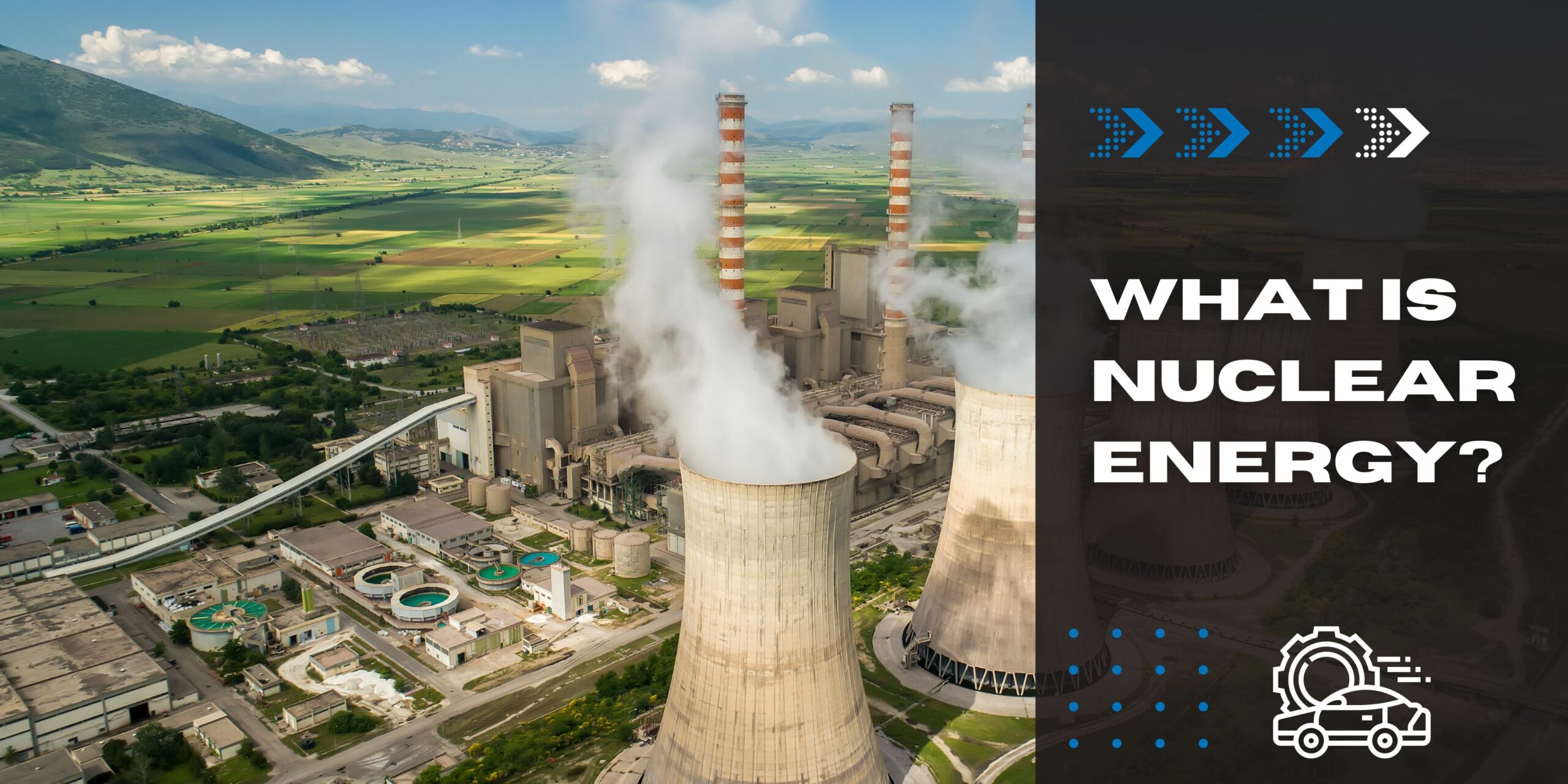
Hey there, energy explorers! Ever wonder about that whole nuclear energy thing? It sounds kinda sci-fi, right? Like something out of a movie with glowing reactors and brainy scientists. Well, it's definitely powerful, but it's also got a few quirks. Let's dive in!
The Awesome Perks of Nuclear Power
First off, nuclear power is a heavyweight when it comes to electricity generation. It's like the bodybuilder of the energy world. A small amount of uranium fuel can produce a ton of energy. We're talking serious power here!
Imagine tiny little fuel pellets, smaller than your thumb. Those little guys can light up cities! That's way more efficient than needing mountains of coal or gallons of oil. Pretty neat, huh?
Must Read
Plus, nuclear power plants are workaholics! They can run pretty much non-stop, 24/7, regardless of the weather. Think of them as the reliable friend who always shows up, unlike solar and wind that are dependent on sunshine and breezy days. No sun? No wind? No problem for nuclear! They just keep humming along, powering your phone, your lights, and your favorite shows.
Another big win? Nuclear energy doesn't produce air pollution like burning fossil fuels. So, no smog alerts or contributing to respiratory problems. That's a huge plus for cleaner air and healthier communities. It’s like the eco-friendly superhero of electricity, silently saving the day, one kilowatt-hour at a time.
And get this: nuclear power can help reduce our reliance on those pesky fossil fuels that contribute to climate change. Less fossil fuels means less greenhouse gases. Think of it as a crucial piece in the climate change puzzle.
The Not-So-Awesome Downsides
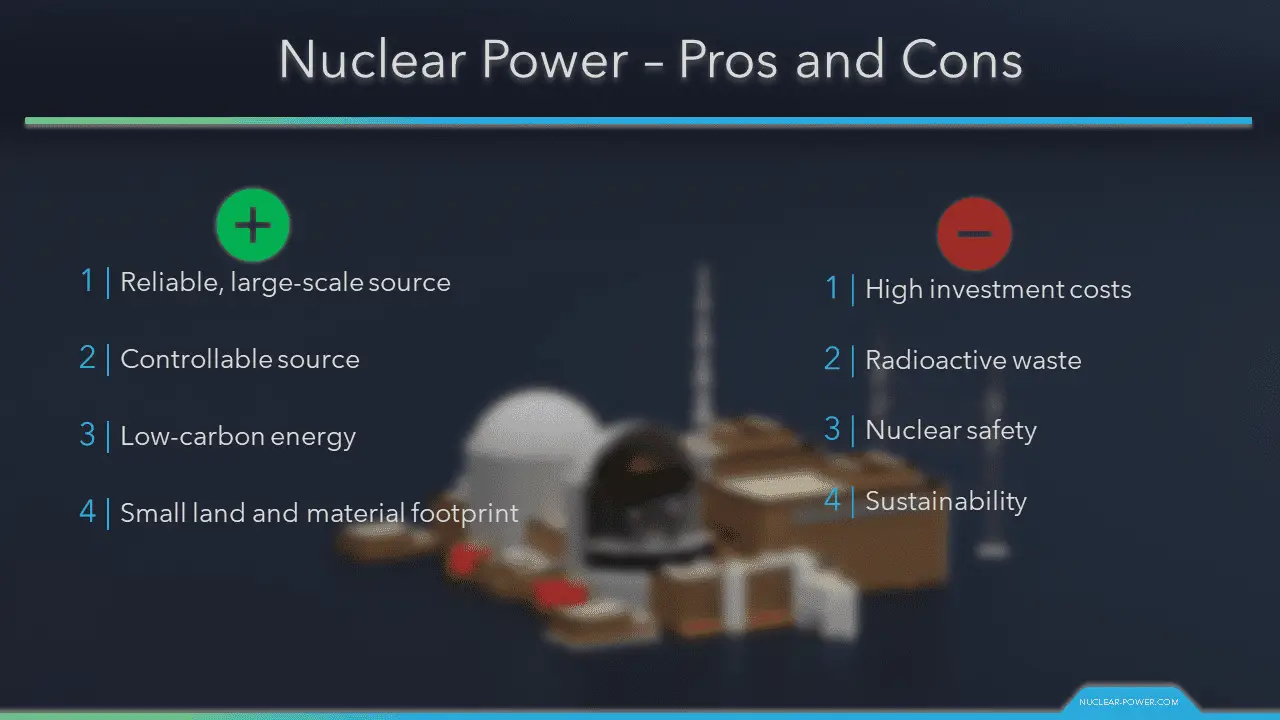
Okay, now for the less sparkly stuff. Dealing with nuclear waste is a tricky business. It's like having a powerful wizard with a lot of leftover magic dust. You have to store it carefully and make sure it doesn't cause any problems. This requires special facilities and long-term planning.
The waste stays radioactive for a super long time, which is why storing it is a major headache. Scientists are working on ways to deal with it more effectively, like recycling it, but it's still a challenge.

Building a nuclear power plant is also incredibly expensive. It's like constructing a high-tech fortress. You need lots of skilled engineers, specialized equipment, and robust safety measures. It's not something you can whip up in your backyard.
And let's not forget about safety. Even though nuclear power plants are designed with multiple layers of protection, accidents can happen. Think of Chernobyl or Fukushima. These events remind us that we need to be incredibly careful and prioritize safety above all else. It’s a powerful reminder that we need to understand the potential risks and be prepared.
There's also the issue of public perception. Some people are nervous about nuclear energy because of these accidents and the fear of radiation. Changing these perceptions requires transparency, education, and building public trust.
So, What’s the Verdict?
Nuclear energy is a complex topic with both amazing advantages and significant challenges. It’s kind of like that super talented, but slightly eccentric, friend we all have. It’s not a perfect solution, but it offers a lot of potential.
On one hand, it gives us a reliable, powerful, and relatively clean source of electricity. On the other hand, it creates radioactive waste and carries the risk of accidents.

Ultimately, deciding whether or not to embrace nuclear energy requires weighing these factors carefully and considering the alternatives. It's a discussion worth having, and it's one that will shape the future of our energy landscape.
So, what do you think? Is nuclear power the energy source of the future, or a risk we should avoid? Dive deeper, explore the facts, and form your own opinion!
“The release of atomic power has changed everything except our way of thinking... the solution to this problem lies in the heart of mankind.” - Albert Einstein