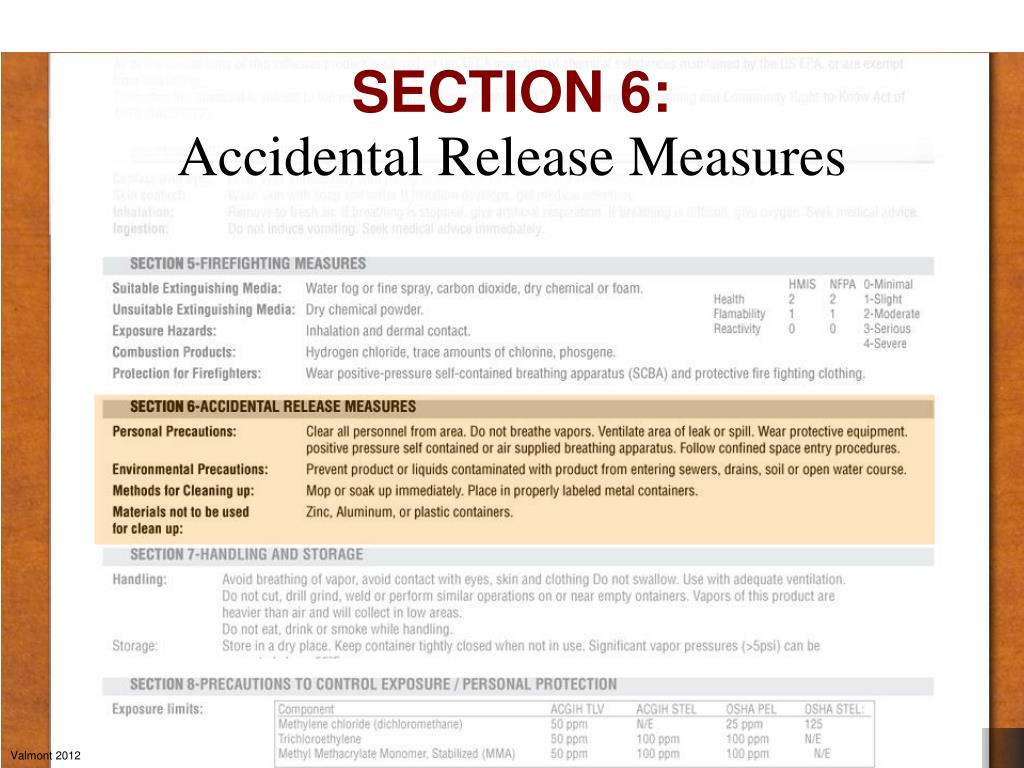
The Accidental Release Measures Section Describes
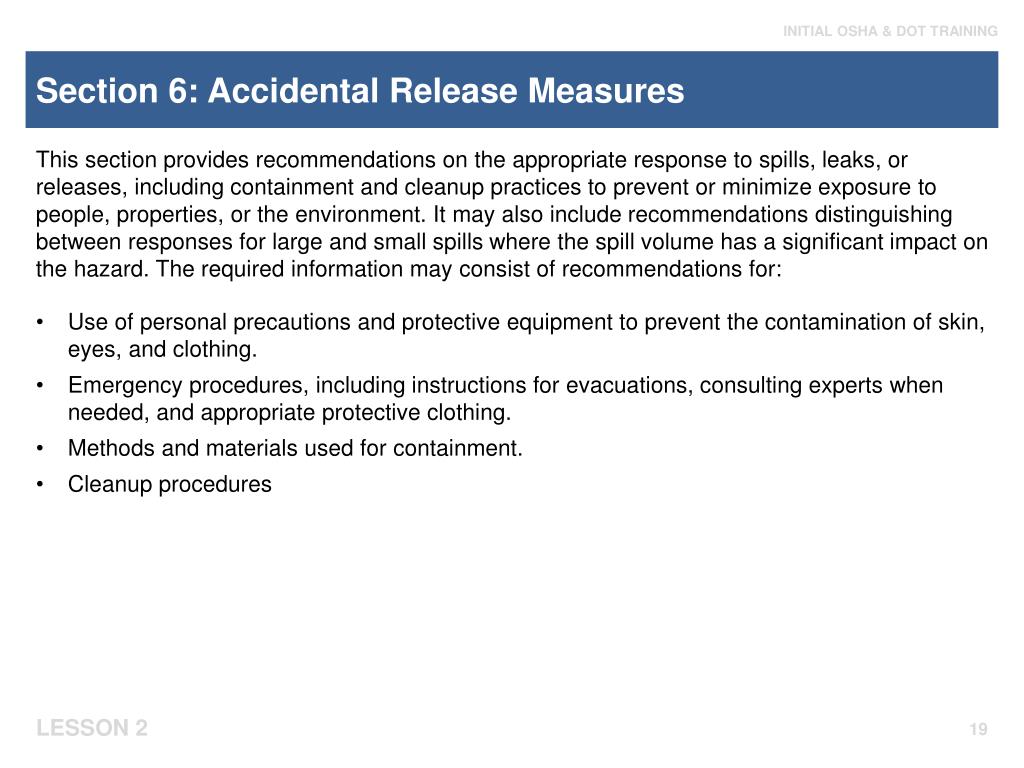
Okay, let's talk about something that might sound a little intimidating, but is actually super practical, especially if you're into DIY projects, gardening, or even just want to be a more responsible homeowner: Accidental Release Measures. No, it's not a secret government code! It's basically a fancy way of saying, "What do you do when things go wrong and something spills or leaks?" Think of it as your superhero plan for when Captain Chaos decides to visit your garage or garden shed. It's way more fun to be prepared than to panic, trust me!
So, who benefits from understanding this? Everyone! For beginners, knowing basic accidental release measures is about safety. It's understanding what to do if you spill some paint, fertilizer, or even just a bit of car oil. It's about protecting yourself and the environment. For families, it's about keeping your kids and pets safe. Imagine a cleaning product spills; knowing the immediate steps to take can prevent a serious accident. For hobbyists, whether you're a model builder, a painter, or a gardener, you're likely working with materials that, if spilled, need a proper cleanup. Understanding accidental release measures ensures you don't accidentally contaminate your workspace, your garden, or even the local water supply.
Let's dive into some examples. Imagine you're repotting a plant and a bag of fertilizer rips open. Accidental release measures might involve containing the spill with a tarp or bucket, carefully sweeping up the fertilizer, and properly disposing of it according to the instructions on the bag. Or, maybe you're changing your car's oil and a bit spills on the driveway. The accidental release measures would include using absorbent material like kitty litter or sawdust to soak up the oil, and then properly disposing of the saturated material (usually at an auto parts store or a designated hazardous waste collection site). A variation on this is for chemicals: always read the label! The manufacturer must provide information on handling spills. Some chemicals require specific neutralizers or protective gear during cleanup.
Must Read
Getting started is easier than you think. Here are a few simple tips:
- Read the labels! Seriously, that's the #1 thing. Understand the hazards of the materials you're working with.
- Keep a spill kit handy. This could include absorbent materials (like kitty litter, sawdust, or spill pads), gloves, safety glasses, a dustpan and brush, and some plastic bags for disposal.
- Know your local resources. Find out where your local hazardous waste collection site is located.
- Practice prevention. Store chemicals properly, in sealed containers, and away from children and pets.
Accidental release measures aren't about being paranoid; they're about being prepared. Knowing how to handle spills and leaks effectively protects you, your family, and the environment. And honestly, there's a certain satisfaction in knowing you've got a plan in place. It transforms a potential disaster into a manageable situation. So, embrace the "preparedness" mindset, and enjoy the peace of mind that comes with knowing you've got this!