
Table Of Elements Metals Nonmetals And Metalloids
Hey there, science buddy! Ever looked at that giant chart in your science class – you know, the Periodic Table of Elements – and thought, "Whoa, that's...a lot?" Don't worry, you're not alone! It can look intimidating, but it's actually super organized once you know the secrets. And guess what? We're about to spill those secrets!
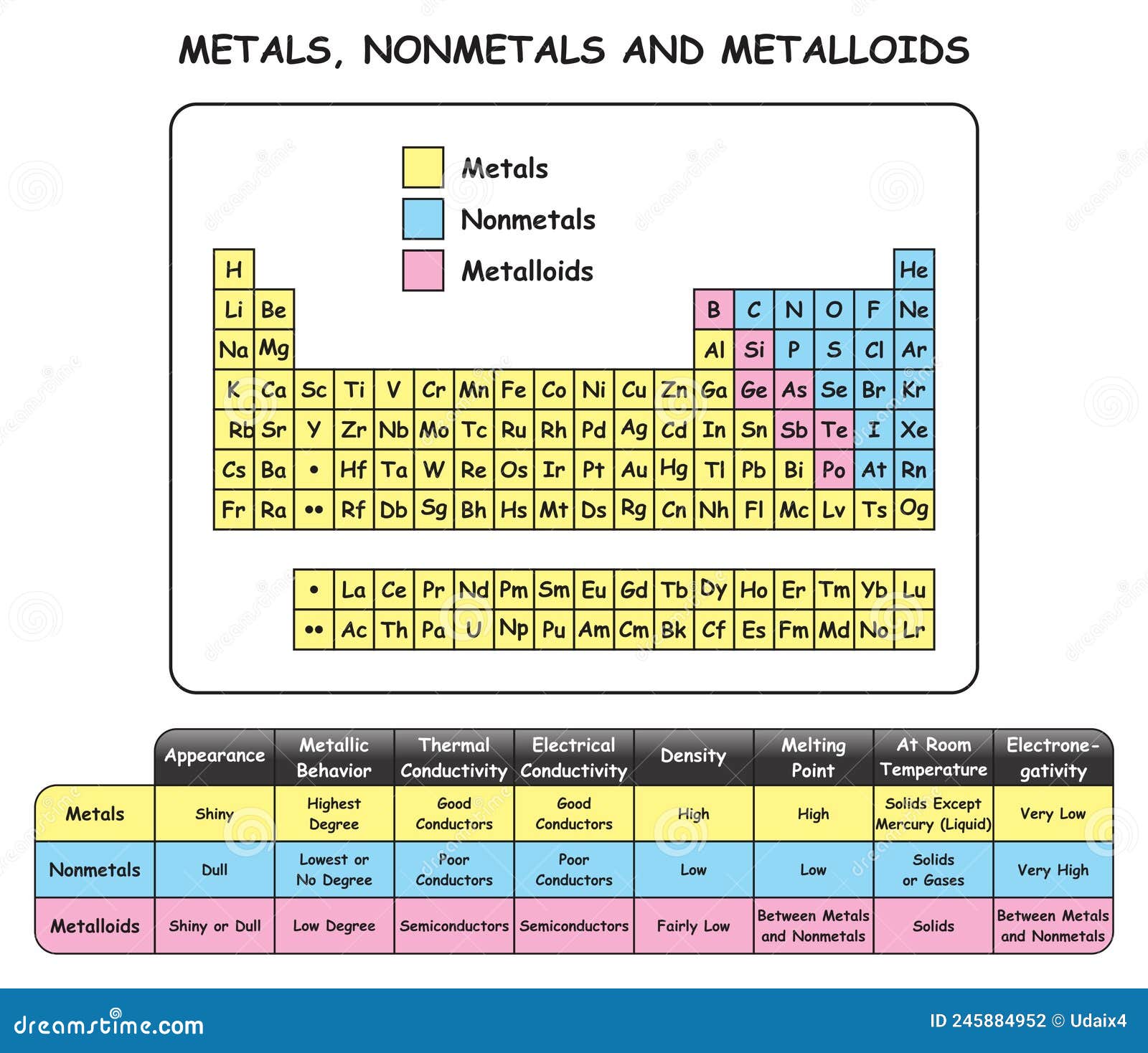
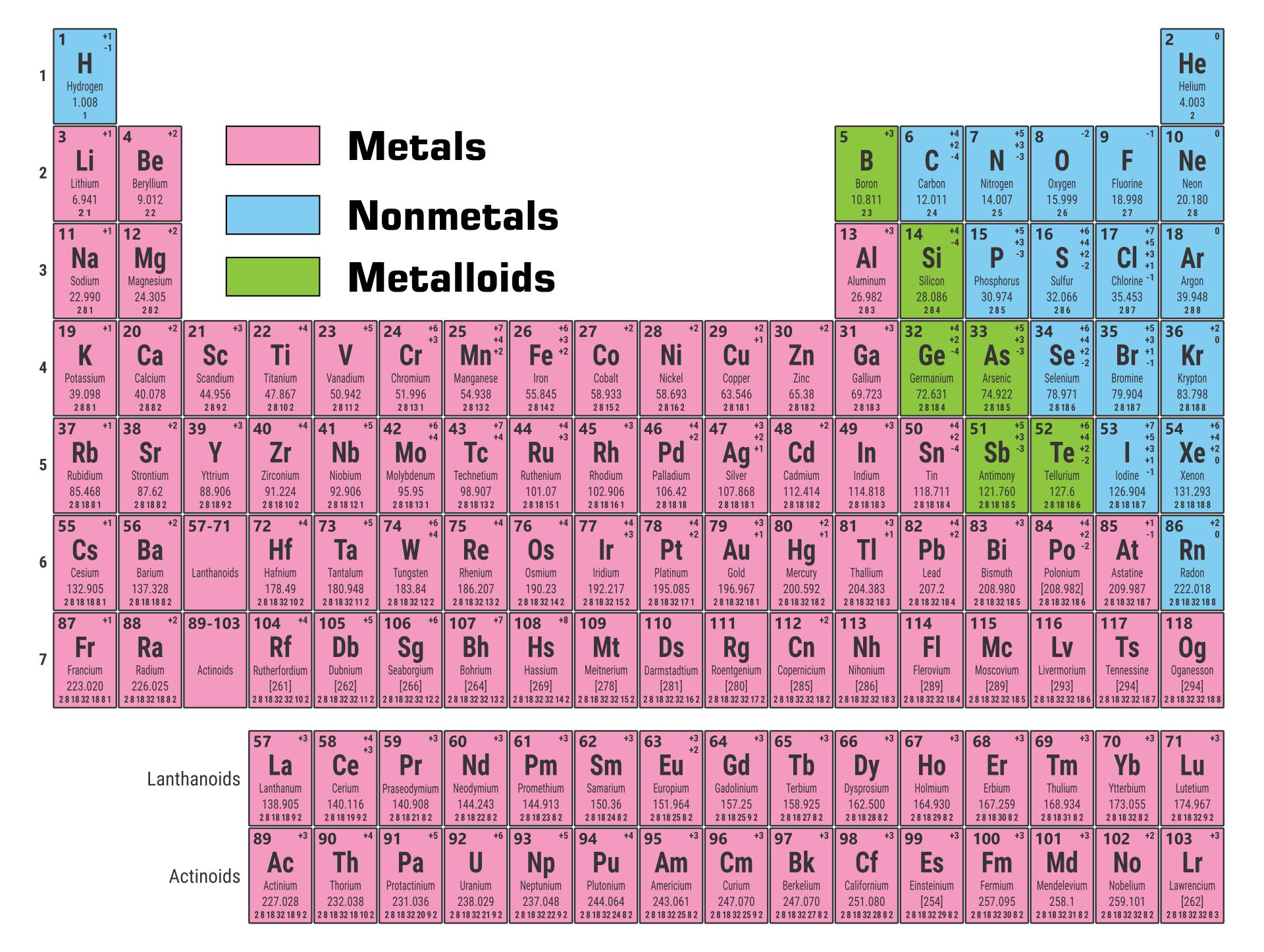
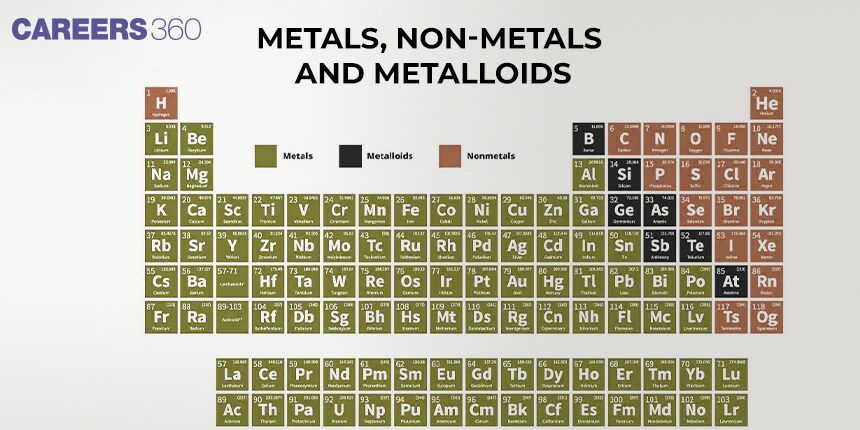
Think of the Periodic Table as a giant apartment building for elements. Each element gets its own little unit, and they're all arranged in a specific way. The building has three main types of residents: metals, nonmetals, and those tricky in-betweeners, the metalloids (also known as semi-metals). Let's meet them!
The Rock Stars: Metals!
These are the popular kids in the element world. Think of metals as the shiny, strong athletes. They're usually solid (except for mercury, which is a bit of a rebel liquid), good at conducting electricity and heat, and generally love to give away electrons. It's like they're saying, "Here, have an electron! It's yours!"
Must Read
Where do you find them? Mostly on the left side of the Periodic Table. Think of elements like Iron (Fe), Gold (Au), Silver (Ag), and Copper (Cu). Basically, anything that makes up your pots, pans, jewelry (if you're fancy), and wiring is likely a metal.
Fun Fact: Gold is so unreactive that it basically never tarnishes. Talk about low maintenance!
Key Traits of Metals:
- Shiny: Like a disco ball!
- Conductive: They let electricity and heat zoom right through.
- Malleable: You can pound them into shapes (like making foil).
- Ductile: You can stretch them into wires. Think of copper wiring.
The Recluses: Nonmetals!
Now, let's meet the nonmetals. These guys are a bit more diverse and, sometimes, a little less predictable than metals. They tend to be found on the right side of the Periodic Table (except for hydrogen, which is a bit of a nonmetal outlier). Nonmetals aren't very good conductors, they can be solids, liquids, or gases at room temperature, and they usually like to gain electrons, rather than give them away. They're like the electron hoarders of the element world!
Examples? Think Oxygen (O), Nitrogen (N), Chlorine (Cl), and Sulfur (S). The air you breathe? Mostly nonmetals! That smelly rotten egg smell? Sulfur! See, they're everywhere!
Fun Fact: Diamonds are made of carbon, which is a nonmetal. Who knew something so tough could come from the nonmetal group?
Key Traits of Nonmetals:
- Not Shiny: Usually dull-looking.
- Poor Conductors: They're not so good at letting electricity or heat pass through.
- Brittle: They tend to break easily if you try to shape them.
- Varied States: They can be solid, liquid, or gas at room temperature.
The Fence-Sitters: Metalloids!
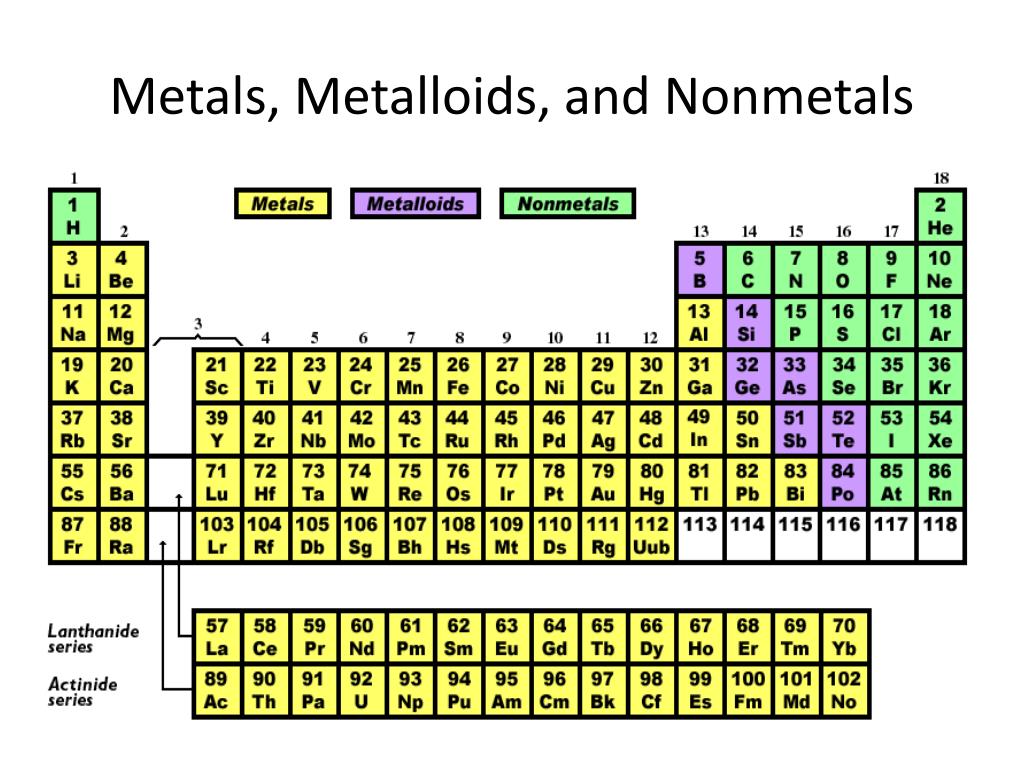
Ah, the metalloids! These are the tricksters, the in-betweeners, the sometimes metals. They have properties of both metals and nonmetals, depending on the situation. Think of them as the element equivalent of that friend who's both super outgoing and secretly loves staying home with a good book.
They are clustered along the zigzag line on the Periodic Table. Common metalloids include Silicon (Si), Germanium (Ge), Arsenic (As), and Boron (B). You'll find them in semiconductors (think your computer chips!) and some alloys.
Fun Fact: Silicon is the second most abundant element in the Earth's crust! Thank you, Silicon, for making our beaches possible!

Key Traits of Metalloids:
- Semiconductors: This is their superpower. They can conduct electricity under certain conditions, which makes them essential for electronics.
- Varied Appearance: Some are shiny, some are dull. It really depends on the element!
- Brittle: Generally more brittle than metals.
So there you have it! Metals, nonmetals, and metalloids – the three main groups of elements hanging out in the Periodic Table apartment building. Each plays a crucial role in making up the world around us, from the phones in our hands to the air we breathe. And while they all have their distinct personalities, they all contribute to the amazing chemical reactions and interactions that make our universe so interesting.
Now go forth and impress your friends with your newfound Periodic Table knowledge! And remember, even though science can sometimes seem complicated, it's just a way of understanding the amazing, interconnected world we live in. Keep exploring, keep learning, and keep being curious!