Summer Fan Setting Clockwise Or Counterclockwise

Ah, summer. The season of sunshine, barbecues, and…intense debates about ceiling fan direction? You might be surprised, but for many, tweaking that little switch on their ceiling fan is a crucial summer ritual, right up there with applying sunscreen and firing up the grill. Why? Because a correctly oriented fan can be a game-changer for comfort and energy savings. We all want to feel cooler and save a few bucks on our electricity bills, right? This simple act can help achieve both.
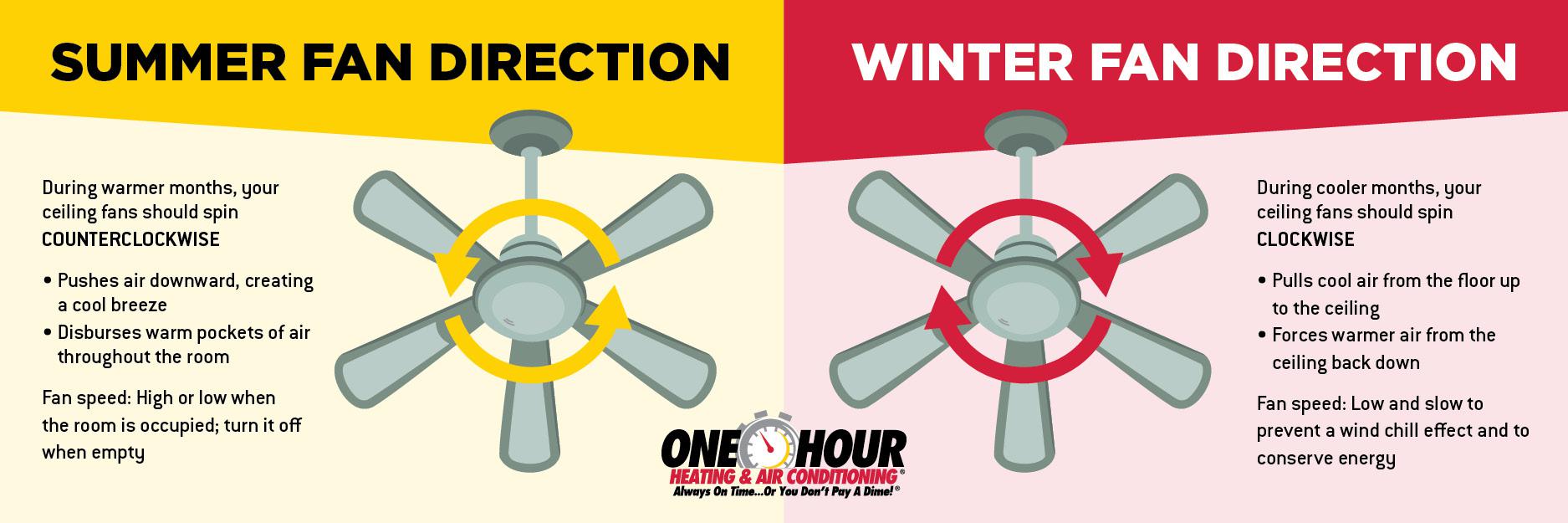
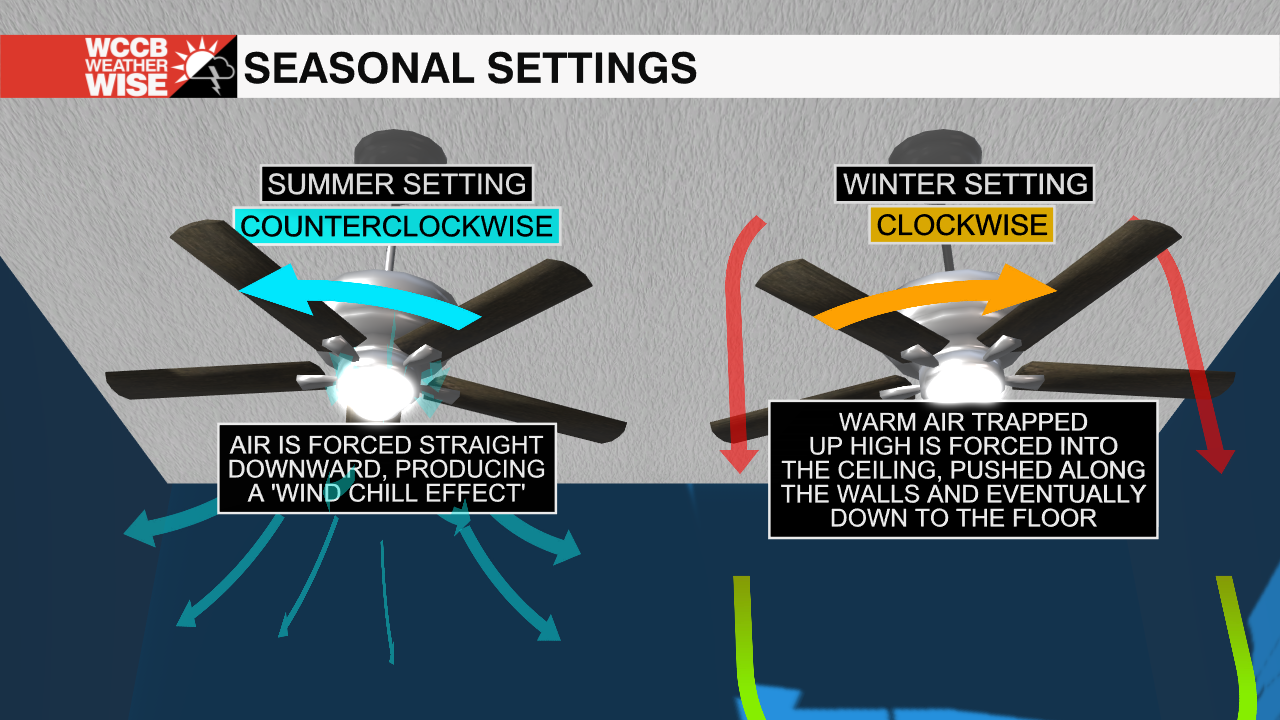
The primary benefit of adjusting your ceiling fan seasonally lies in its ability to effectively circulate air. In the summer, the goal is to create a cooling breeze. A ceiling fan set to turn counterclockwise pushes air downwards, creating a direct airflow that evaporates perspiration from your skin, making you feel cooler. Think of it as a gentle, personal air conditioner that uses far less energy than the real deal. This is especially useful in rooms that tend to get stuffy or areas where you spend a lot of time, like the living room or bedroom. Beyond comfort, this efficient air circulation can also help to reduce reliance on air conditioning, leading to significant energy savings over the summer months.
You'll find examples of this application in almost every home with ceiling fans. From sprawling suburban houses to cozy city apartments, the principle remains the same. People use the counterclockwise rotation to create a more comfortable environment, allowing them to set their thermostats a few degrees higher without sacrificing comfort. It’s a common practice employed in offices, too, creating a more bearable workspace during sweltering summer days. Furthermore, homes with high ceilings especially benefit, as the downward draft can help to distribute cool air more evenly throughout the room, preventing it from pooling at the top.
Must Read
To enjoy your ceiling fan more effectively this summer, consider these practical tips. First, ensure the fan blades are clean. Dust and grime can hinder the fan's performance and even contribute to allergies. A simple wipe-down with a damp cloth can make a noticeable difference. Secondly, optimize the fan speed. A higher speed creates a stronger breeze, but it also consumes more energy. Experiment to find the sweet spot between comfort and efficiency. A medium or low speed may be sufficient, especially when paired with air conditioning. Third, and perhaps most importantly, confirm the direction of rotation. Stand beneath the fan and observe the blades. If they are angled downwards and forward as they rotate, you're good to go. If not, flip that switch! Finally, remember that ceiling fans cool people, not rooms. So, turn them off when you leave to save energy. While the fan is on, consider opening a nearby window a crack to allow for stale air to escape the house, further promoting a naturally cool environment. By following these simple tips, you can maximize the cooling benefits of your ceiling fan and enjoy a more comfortable and energy-efficient summer.
![Ceiling Fan Directions for Summer vs Winter [Infographic]](https://airflowacademy.com/wp-content/uploads/2021/06/Ceiling-fan-directions-infographic-828x1536.jpg)