Stainless Steel Coefficient Of Thermal Expansion

Ever notice how things seem to change size, just a tiny bit, when they get hot or cold? It's not your eyes playing tricks on you! It's the magic of thermal expansion, and stainless steel, being the superstar it is, has its own special way of dancing with temperature.
What's This "Thermal Expansion" Dance All About?
Imagine a group of friends (atoms!) holding hands. When you give them energy (heat!), they start wiggling and jiggling more. They need more space to boogie, so they spread out a little. That spreading out is thermal expansion! When it gets cold, they calm down, huddle closer, and everything shrinks a tad. It's like a microscopic conga line responding to the music of temperature.
Now, different materials react differently to this temperature tango. Some are enthusiastic dancers, expanding a lot with just a little heat. Others are wallflowers, barely budging even when things get scorching.
Must Read
Stainless Steel: The Steady Eddie of Expansion
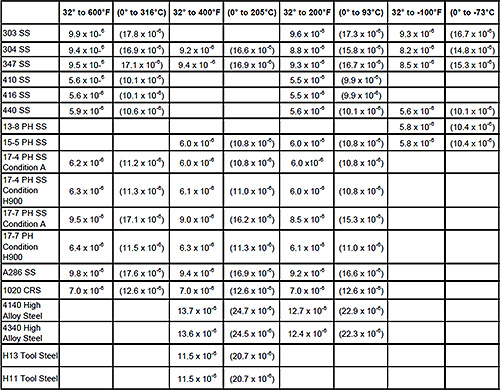
Enter stainless steel, the reliable, rust-resistant hero of our story! Stainless steel has a coefficient of thermal expansion – a fancy way of saying how much it expands or contracts for each degree Celsius (or Fahrenheit) change in temperature – that's relatively moderate. It's not going to blow up like a balloon in the summer sun, nor will it disappear into the ether when Jack Frost comes nipping.
Think of it this way: if you had a giant, say, 100-meter-long stainless steel ruler, and you heated it up by 100 degrees Celsius (that's hot!), it would only expand by about a foot or so. Not exactly Hulk-smashing levels of expansion, is it? Compare that to, say, aluminum, which would expand a bit more. Wood? Well, wood expands differently depending on the grain direction, making it a more complicated dancer.

Why Does This Even Matter?
You might be thinking, "Okay, cool, things change size a little. So what?" Well, this little dance has big implications in the real world!
Imagine building a massive bridge. If the engineers didn't account for thermal expansion and contraction, the bridge could buckle in the summer heat or crack in the winter cold! That's why you often see expansion joints – those little gaps in the road – on bridges and highways. They allow the materials to expand and contract without causing catastrophic damage. Stainless steel's relatively low thermal expansion makes it a great choice for structural components where stability is key.
Another example? Your car engine! Pistons move up and down inside cylinders. If the pistons and cylinders were made of materials with drastically different thermal expansion rates, the engine could seize up when it gets hot. Stainless steel, or other metals chosen carefully for their expansion properties, helps ensure a smooth ride.
A Touch of Exaggeration for Fun!
Let's imagine what would happen if things expanded REALLY dramatically. Picture this: you put a stainless steel spoon in your coffee, and suddenly it grows to the size of a canoe! You open your refrigerator, and all your stainless steel shelves turn into towering skyscrapers! Okay, that's a slight exaggeration. Thankfully, stainless steel is much more well-behaved than that!

"Stainless steel's moderate thermal expansion is one of the reasons it's such a versatile and reliable material." - Probably some engineer, somewhere.
The Takeaway: Stainless Steel is Your Pal
So, the next time you see something made of stainless steel, remember the tiny atomic conga line dancing inside. It's a testament to the clever engineering that goes into designing our world, and it showcases why stainless steel is such a dependable and widely used material. It expands and contracts, yes, but it does so in a predictable and manageable way, making it a true champion of stability!
And that, my friends, is the fun, (hopefully) easy-to-understand story of stainless steel and thermal expansion. Now go forth and impress your friends with your newfound knowledge!