Size Of Wire For 50 Amp Breaker
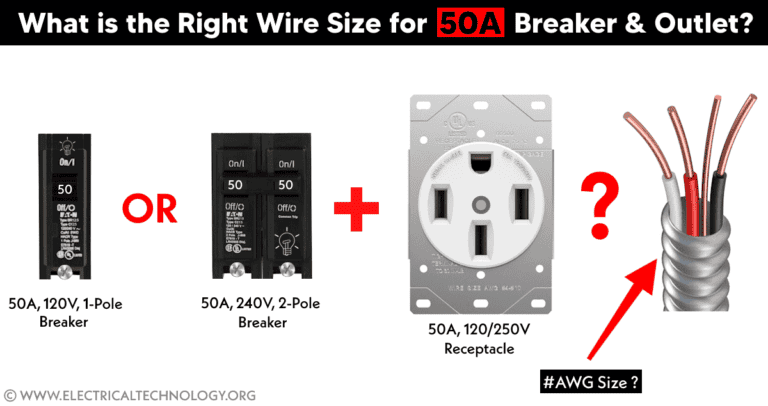
Alright, let's talk about home improvement. Specifically, that moment when you’re standing in the aisle, looking at all the wires, and your brain starts to short-circuit a little. It’s perfectly normal, truly. We’ve all been there, staring at a box of something wonderful – maybe an electric car charger, a new electric range, or that dream workshop welder – and then realizing it needs a 50-amp breaker. Suddenly, the simple joy turns into a mini-science project, complete with diagrams and the vague fear of setting something ablaze.
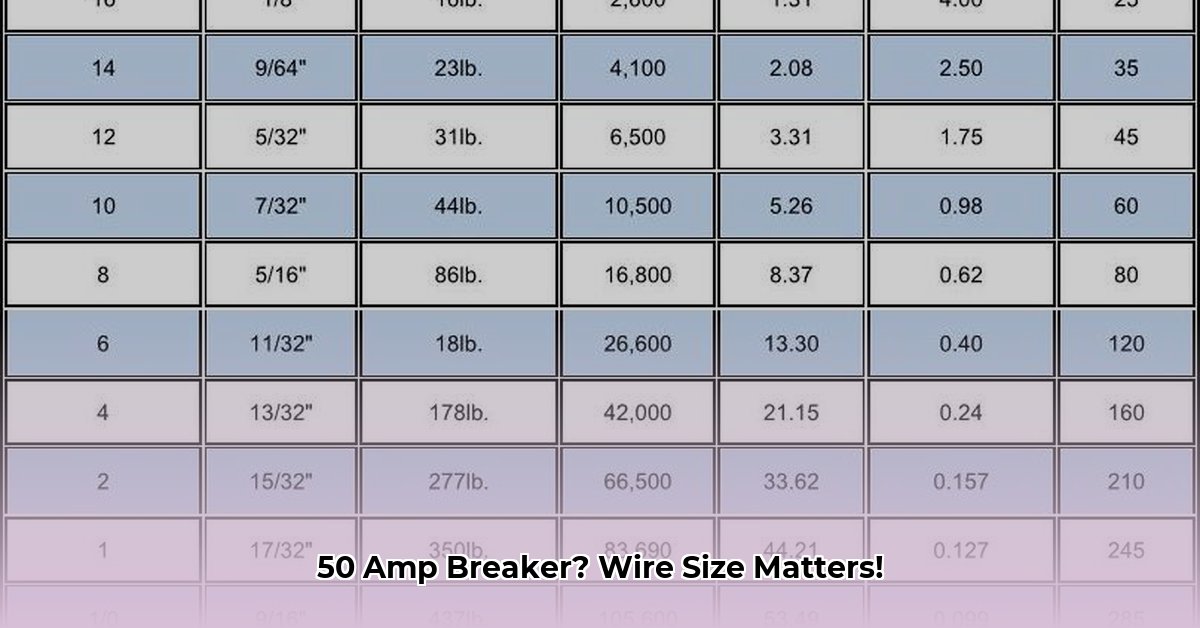
And then comes the big question, the one that makes even the most confident DIYer pause: "What size wire do I need for this beast of a breaker?" It feels like a trick question, doesn't it? Like there’s some secret handshake or a cryptic ancient text you need to consult. The internet then throws a hundred different charts at you, each one seemingly designed by an electrical wizard with a penchant for confusing decimal points and temperature ratings that make your head spin.
The Great Wire Sizing Conspiracy (or, Not Really)
Now, here’s my slightly unpopular, very playful opinion. While electricity demands respect – and absolutely, positively, one hundred percent, you should always respect it! – sometimes we make the wire sizing thing a little more complicated than it needs to be. It's like asking for directions and getting a full geological survey of the route. You just want to know if you turn left or right, right?
Must Read
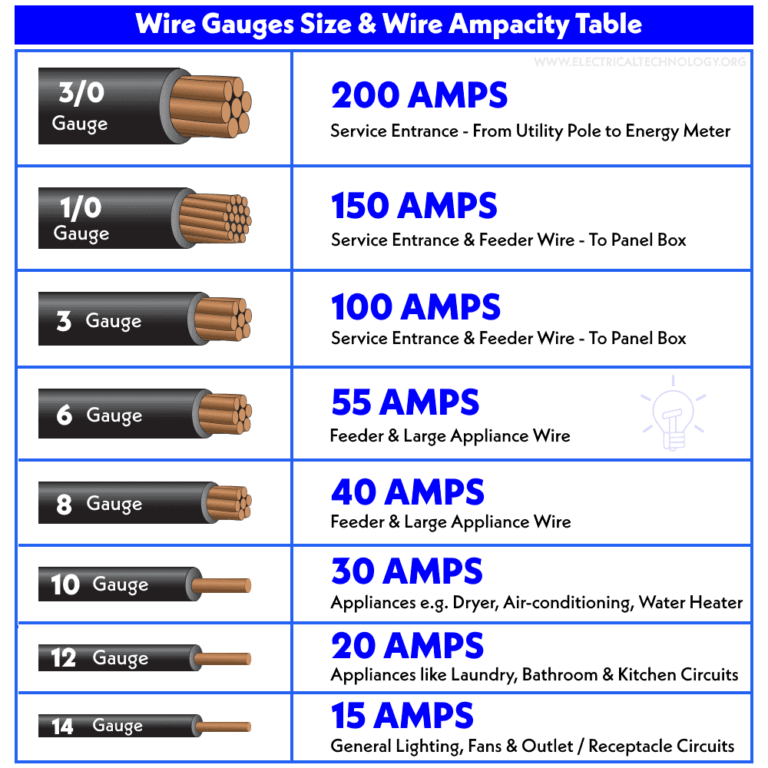
“For a 50-amp breaker, the answer isn’t a secret code. It’s a pretty well-known hero: #6 copper wire.”
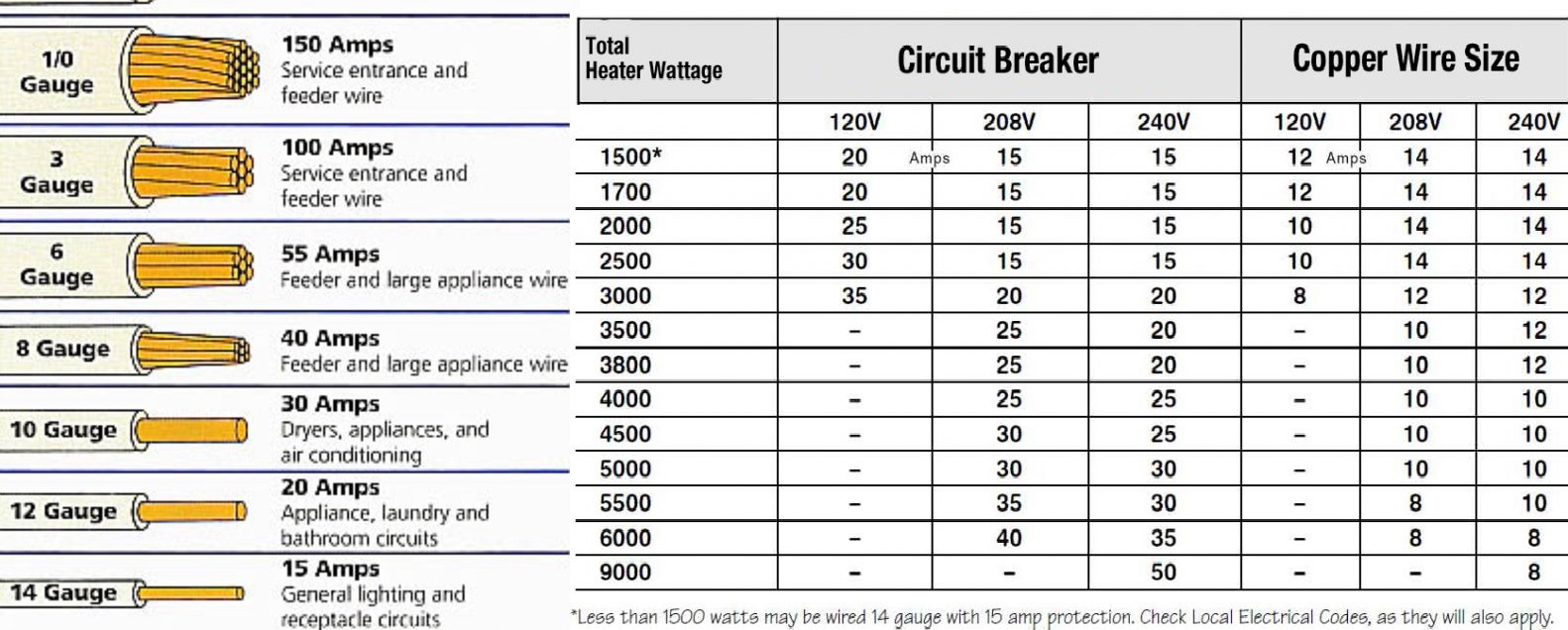
There, I said it. It’s almost too simple, isn’t it? For most folks, most of the time, in most residential settings, if you’re pulling power for a 50-amp circuit, you’re looking for that good old #6 gauge copper wire. Think of it as the sturdy, reliable workhorse of the electrical world. It’s the wire that can handle the load, keep things cool, and generally just do its job without complaining.
Copper vs. Aluminum: A Friendly Bout
Of course, nothing is ever that simple, is it? You might hear whispers of aluminum wire. And yes, technically, you can use aluminum. But here’s the thing: aluminum needs to be a bit thicker to carry the same juice as copper. So, if you go the aluminum route for your 50-amp circuit, you're generally stepping up to #4 gauge aluminum wire. It's like comparing a regular-sized cup of coffee to an extra-large one – same caffeine kick, just more volume with the aluminum.
Most experienced electricians (and frankly, most DIYers who've learned the hard way) will often lean towards copper for anything carrying significant power. It's less prone to issues over time and generally more forgiving if you're not an expert at making connections. It’s the gold standard, the reliable friend, the one you can always count on.
Why Does This Matter? (The Super Simple Version)
In the simplest terms, using the right wire size is like giving your electricity the right-sized highway. Too small a wire (a tiny country lane for a superhighway of power) and things get hot. Very hot. Like, "potential fire hazard" hot. Too big a wire (a ten-lane interstate for a single moped) and you’ve spent extra money on something you didn't really need. So, #6 copper or #4 aluminum for 50 amps is that perfect sweet spot, the well-engineered road that gets the job done safely and efficiently.
Now, a tiny disclaimer, because an article about electricity wouldn’t be complete without one: always, always, always double-check your local electrical codes. Those local rules can be quirky, and sometimes they have their own specific quirks for certain applications or regions. Think of them as the local town gossip – always has a little extra tidbit you need to know.
Victory Lap for Your Inner Electrician
So, the next time you face the mighty 50-amp breaker and its wire-sizing dilemma, take a deep breath. Remember our little chat. You’re not trying to solve a quantum physics equation. For most practical purposes, you're reaching for that sturdy, dependable #6 copper wire (or, if you must, #4 aluminum). Feel that surge of confidence? That’s the feeling of adulting successfully. Go forth and wire responsibly, my friend! Your electric car charger (or range, or welder) will thank you.