
Signs Of A Gas Leak In House
Hey there, ever wonder about the little mysteries hiding in plain sight around your home? We live in these fantastic structures, full of clever systems, but sometimes, those systems whisper to us when something's a bit off. And no, we're not talking about your smart speaker having an existential crisis. We're talking about something a little more fundamental, a bit more... gassy!
Now, before you get all worried, let's keep it chill. Thinking about something like a gas leak isn't about panicking; it's about being aware. It's like knowing the secret handshake of your house – understanding its subtle signals. It's kinda fascinating, actually, how our homes and even our own bodies can give us clues. So, let's play detective for a moment and explore the intriguing signs that might hint at a gas leak.
The Ol' Sniff Test: What's That Stink?
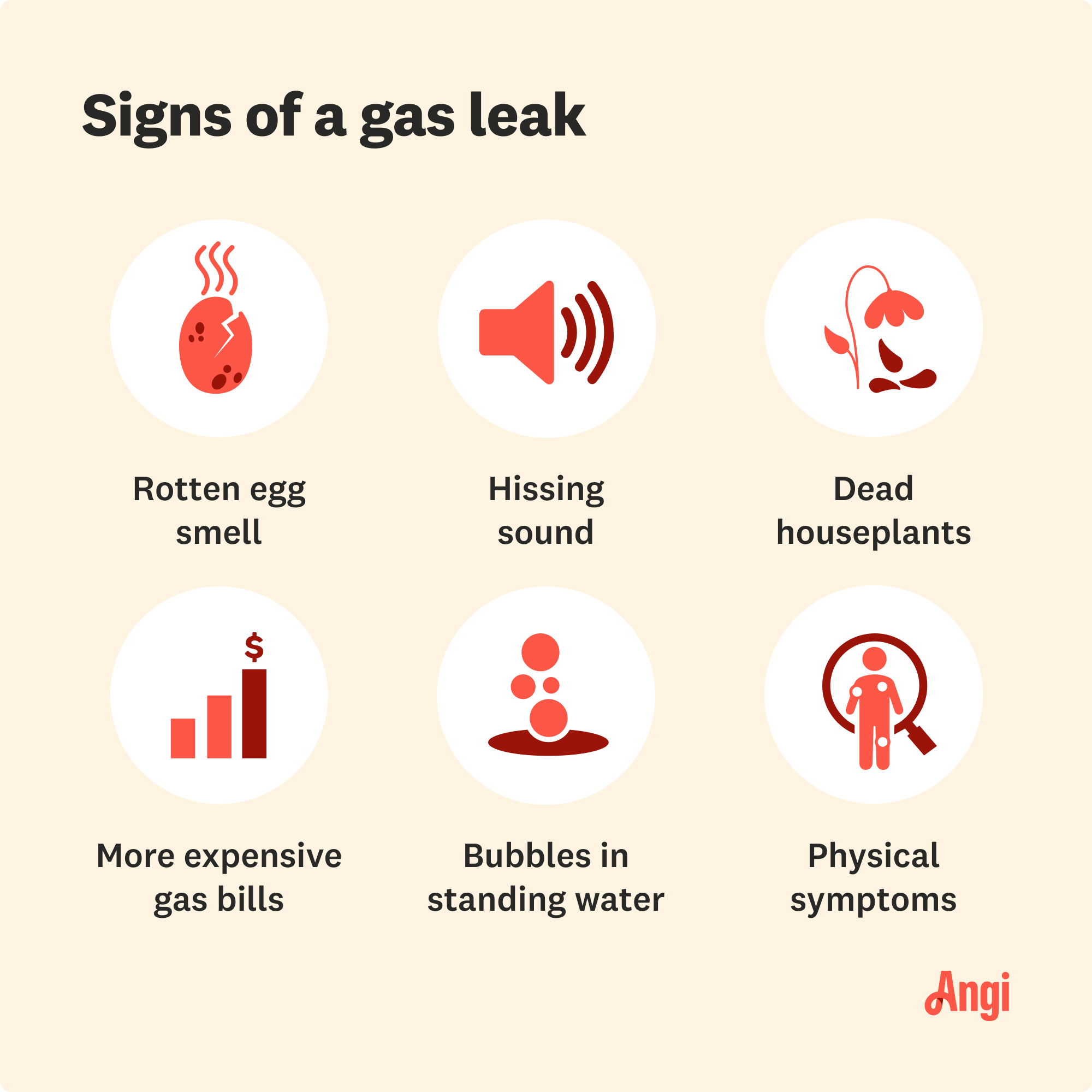
This is probably the most famous sign, right? You walk in, and suddenly, your nose goes on high alert. You might catch a whiff of something that smells suspiciously like rotten eggs. Yum! Or, well, not yum at all. It's pretty distinct, isn't it? Like a forgotten science experiment in the back of the fridge.
Must Read
Here's the cool part: natural gas, in its purest form, is actually odorless. Mind-blown, right? So, why the eggy funk? Utility companies are brilliant! They add a special chemical called mercaptan to the gas specifically so you can smell it. It’s like adding a bright, flashing warning label to something invisible. How clever is that? Your nose is basically a highly sensitive, built-in gas detector, thanks to some clever engineering. So, if you smell sulfur or rotten eggs, your nose isn't just being dramatic; it's sending you a very important, deliberately engineered message.
Hiss, Hiss, Bang! (Just Kidding About the Bang)
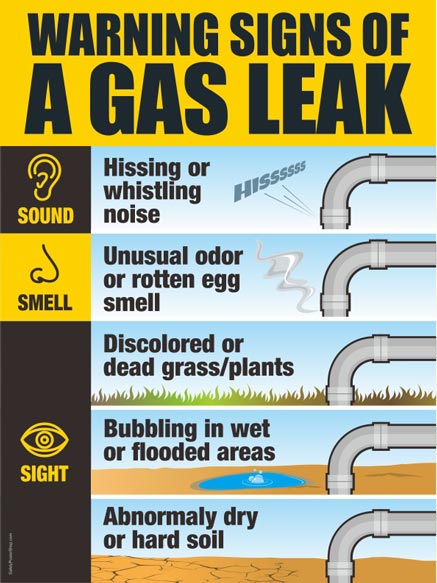
Sometimes, your house literally tries to whisper its secrets to you. If you hear a soft, continuous hissing or whistling sound near a gas appliance or a gas line, your ears might be picking up on a leak. Think of it like a tiny, invisible pressure cooker letting off steam, but instead of steam, it's gas.
:max_bytes(150000):strip_icc()/how-to-spot-signs-of-a-gas-leak-2718710_final-5bb51e9cc9e77c00513a80e5.png)
This sound is often subtle, especially if the leak is small. It might be coming from your stove, water heater, furnace, or even the pipes themselves. It's your house's way of saying, "Psst! Over here! Something's not quite sealed up." Listening carefully, especially when things are quiet, can be a real superpower. It’s like being able to hear the wind through a keyhole, but with a purpose!
Visual Clues: The Green (or Not-So-Green) Indicators
Our eyes are pretty amazing tools, too. Sometimes, a gas leak leaves visual breadcrumbs. Have you ever noticed plants around your yard that suddenly look... well, sad? We're talking about outdoor plants or even houseplants near a gas line that start to wilt, turn yellow, or die without explanation. It's like they're giving you a subtle, botanical warning sign!
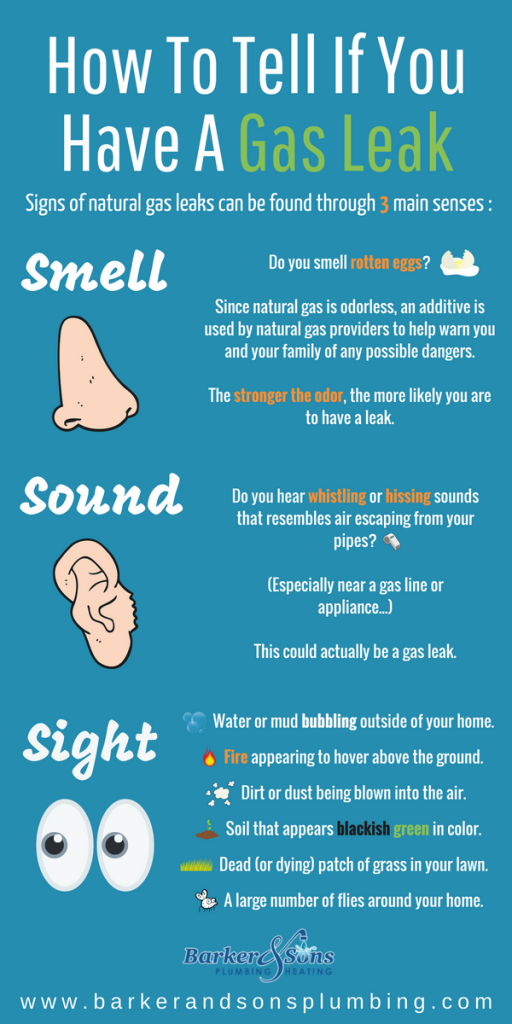
Why does this happen? Gas can displace the oxygen in the soil, suffocating the roots. It's nature's way of saying, "Hey, this isn't right!" Similarly, if you see dust or debris blowing strangely near a gas line or if you notice bubbles in puddles or wet areas over a buried gas line, those are also visual cues. Think of it like watching tiny, unexpected geysers erupting from the ground. A simple soap-and-water test on a suspected pipe (if you're being super careful and outside) can even show you tiny bubbles forming at the leak site. How cool is that – simple physics telling you a story?
Your Body's Got Your Back: Physical Symptoms
This one's a bit more personal, but equally important. Our bodies are incredibly sensitive, and they can act as an early warning system. If you or someone in your home starts experiencing unexplained symptoms like headaches, dizziness, nausea, fatigue, or even flu-like symptoms, and these symptoms seem to improve when you go outside but return when you come back in, it might be your body telling you something's up with the air quality.
These symptoms occur because gas, even in small amounts, can reduce the oxygen available in the air. It's like your body gently nudging you, saying, "Hey, buddy, this air feels a bit off, maybe let's get some fresh stuff!" It’s a remarkable testament to how finely tuned our own biological sensors are. Pay attention to these whispers from within!

Flicker, Fizzle, and Odd Flames: Appliance Alerts
Your appliances themselves can also be surprisingly chatty. Take a peek at the flames on your gas stove or furnace. Ideally, they should be a strong, steady blue color. But if you start seeing flames that are yellow, orange, or even a bit unsteady and flickering, that's a tell-tale sign that something might be amiss with the gas combustion. It's like your appliance is holding up a "check engine" light!
Another clue from your appliances? If your gas pilot light on your water heater or furnace keeps going out repeatedly, it could be struggling to get a consistent gas supply, perhaps due to a leak. These aren't just quirky appliance habits; they're subtle communications, like a Morse code message from your home's machinery, asking for attention.
So, What's the Takeaway?
Learning about these signs isn't about living in fear; it's about being a super-aware, clued-in homeowner or resident. It’s about knowing the secret language your environment speaks. If you ever notice any of these signs – that rotten egg smell, a mysterious hiss, dying plants, unexplained headaches, or weirdly colored flames – the chill, curious approach pivots to a safety-first approach.
The main thing to remember if you suspect a leak is don't try to fix it yourself. Don't turn on or off light switches, don't use your phone inside, and definitely get everyone (and pets!) out of the house immediately. Once you're safely outside and a good distance away, then you can call your gas company or emergency services. They’re the real experts with the right tools to diagnose and fix the problem.
So, next time you're just hanging out at home, take a moment to appreciate the subtle ways your world communicates with you. It's pretty cool how much we can learn just by paying a little more attention, isn't it? Stay curious, stay safe!