
Should The Fan Spin Clockwise Or Counterclockwise
Let's be honest, ceiling fans often fade into the background, silently spinning above us as we go about our lives. But have you ever stopped to consider which direction they're actually rotating, and more importantly, why? The clockwise vs. counterclockwise debate might seem trivial, but understanding the proper fan direction can actually save you money on energy bills and keep you more comfortable year-round. Intrigued? Let's dive in!
The primary purpose of a ceiling fan is to circulate air. This simple act has two major benefits: creating a cooling breeze in the summer and distributing warm air in the winter. However, achieving these benefits requires knowing which direction to set your fan.
Summer Cooling: Counterclockwise is Key!
Must Read
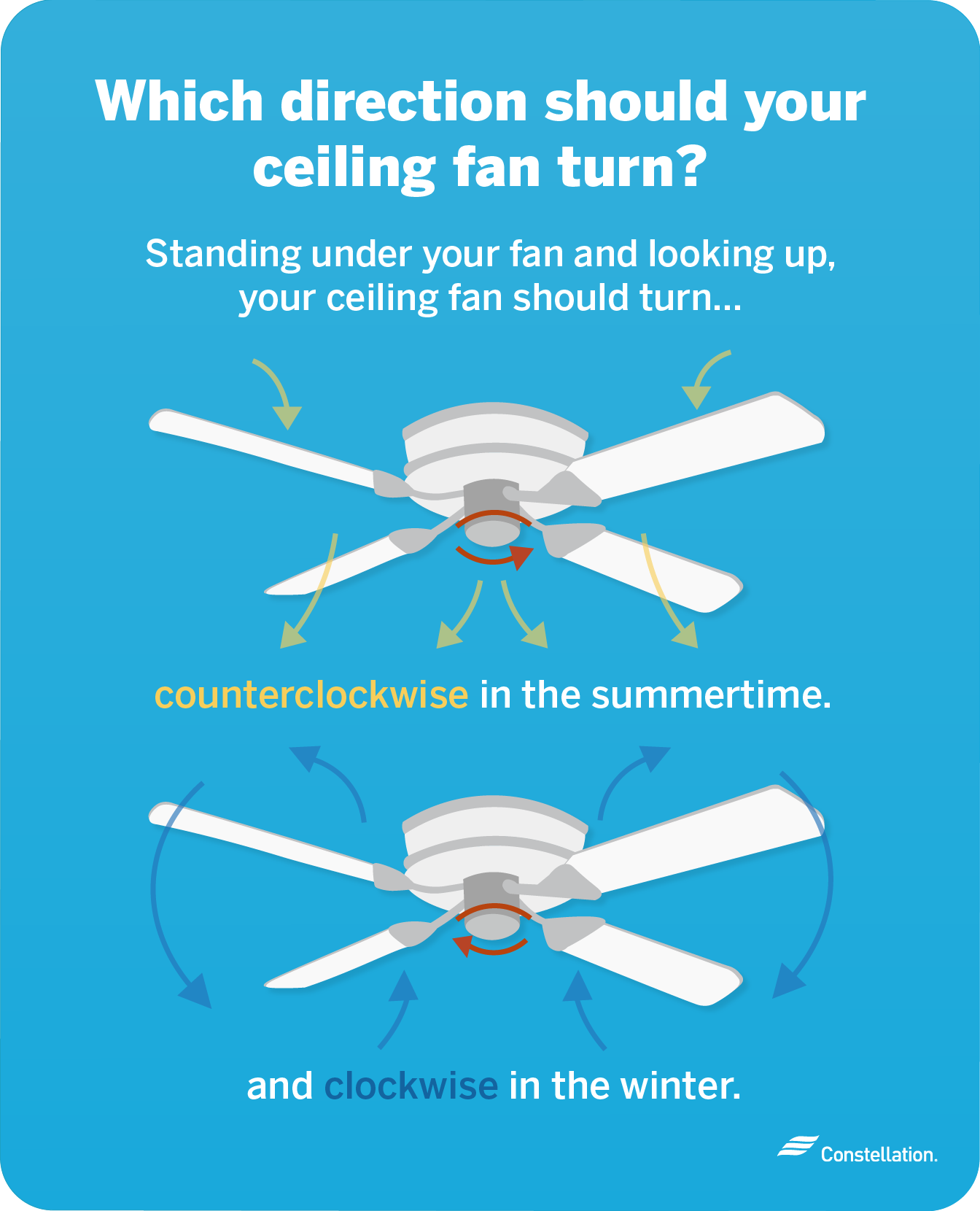
During the warmer months, your ceiling fan should be spinning in a counterclockwise direction when viewed from below. This is the setting most people are familiar with. As the blades rotate counterclockwise, they push air downward, creating a direct breeze that cools your skin. This "wind chill effect" makes you feel cooler, even if the actual temperature of the room hasn't changed. By effectively cooling you, a counterclockwise fan allows you to raise your thermostat a few degrees without sacrificing comfort. This small adjustment can lead to significant savings on your air conditioning bill. So, check that little switch on your fan motor – it’s your summer savings secret weapon!
Winter Warmth: Clockwise for Comfort!
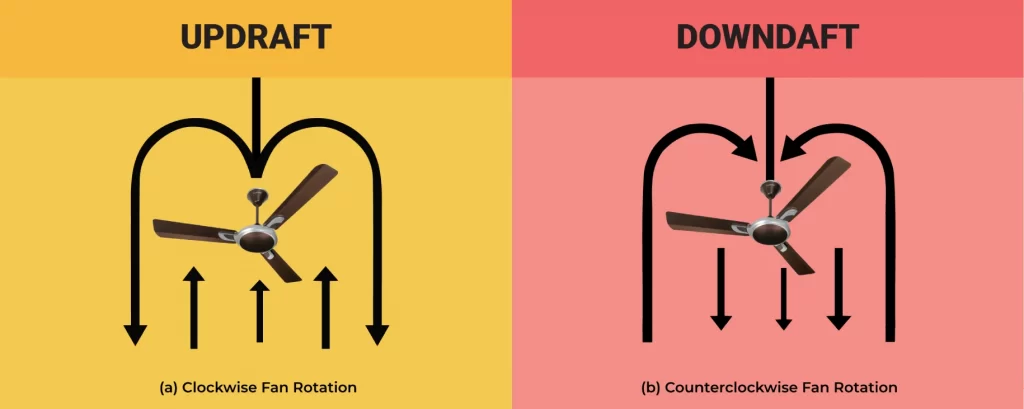
When the temperatures drop, it's time to reverse your fan's direction. In the winter, your fan should spin clockwise at a low speed. This might seem counterintuitive, but the goal here isn't to create a direct breeze. Instead, a clockwise rotation gently pulls air upward. This is crucial because warm air naturally rises and gets trapped near the ceiling. By pulling the cooler air up, the fan forces the warm air to circulate back down along the walls, warming the rest of the room. The key is to keep the speed low so you don't create a noticeable breeze. Think of it as gently redistributing the heat, making your heating system more efficient and keeping you cozy without cranking up the thermostat. This upward pull helps to even out the temperature in the room.
How to Change the Fan Direction
![Ceiling Fan Directions for Summer vs Winter [Infographic]](https://airflowacademy.com/wp-content/uploads/2021/06/Ceiling-fan-direction.jpg)
Most ceiling fans have a small switch located on the motor housing. This switch controls the direction of the fan's rotation. Simply turn off the fan completely, wait for the blades to stop spinning, and then flip the switch to the opposite position. Once the switch is flipped, turn the fan back on and observe the direction of the blades. Remember to adjust the speed setting as needed, particularly in winter.
So, the next time you look up at your ceiling fan, remember that it's not just a decorative fixture. By understanding the difference between clockwise and counterclockwise rotation, you can optimize your comfort and save money on your energy bills. It’s a simple change that makes a big difference! Happy spinning!

![Ceiling Fan Directions for Summer vs Winter [Infographic]](https://airflowacademy.com/wp-content/uploads/2021/06/Ceiling-fan-directions-infographic-828x1536.jpg)