
Should My Fan Be Clockwise Or Counterclockwise
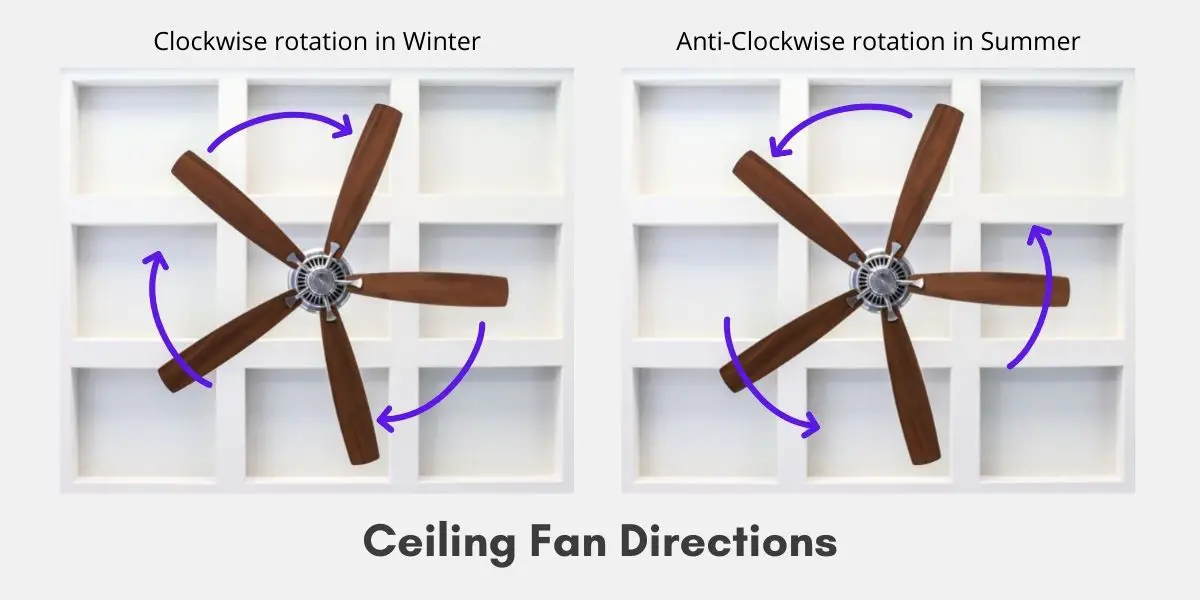
Ah, the humble ceiling fan. A whirling dervish of air, a silent sentry against summer's scorching breath. But have you ever stopped to consider its cosmic calling? Its directional destiny?
We're talking clockwise versus counterclockwise, folks! It’s not just a random spin; it's a deliberate dance, a seasonal shuffle with profound (okay, maybe slightly exaggerated) consequences.
The Summer Breeze: Counterclockwise is Your Ally
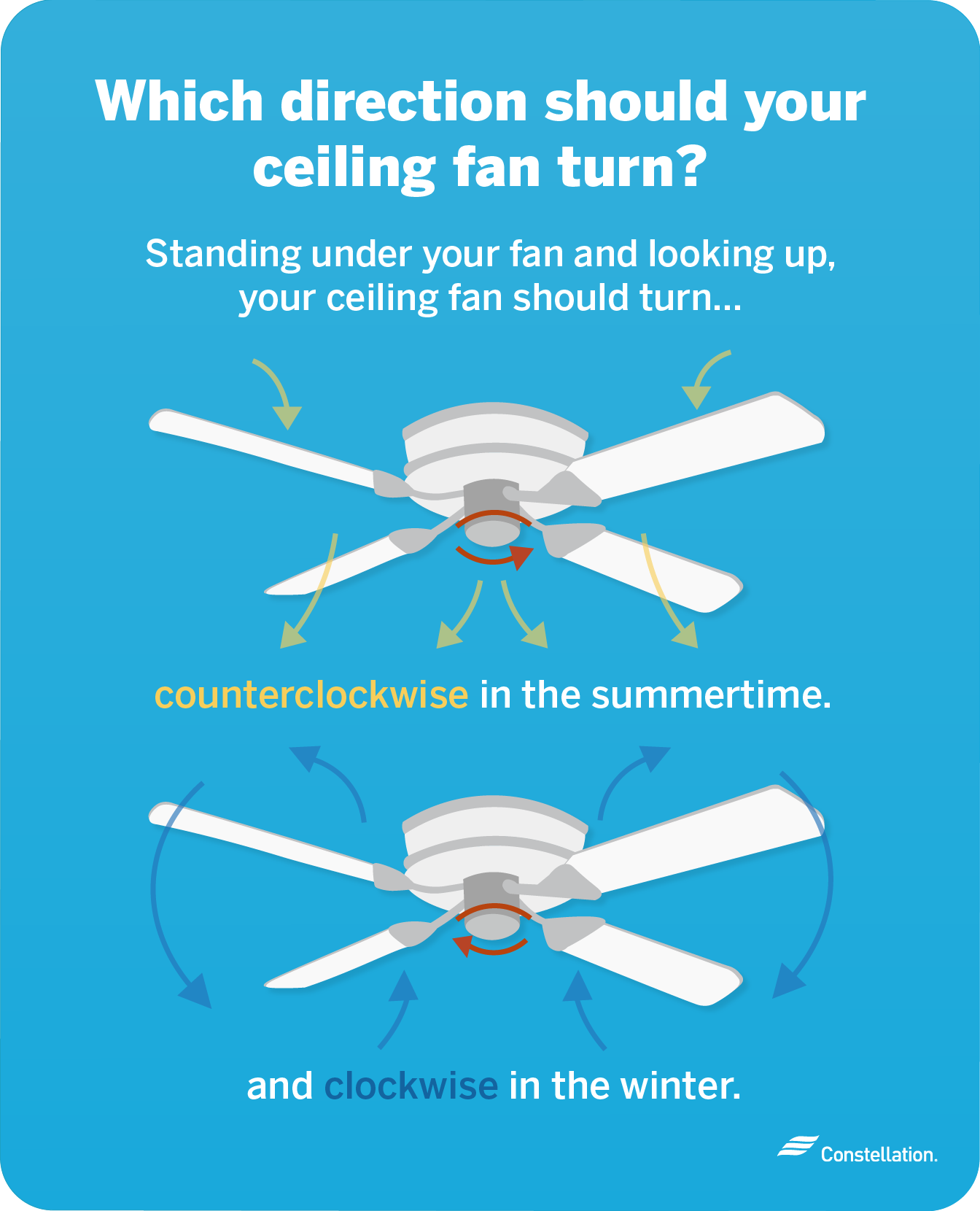
Imagine this: you're sprawled on the couch, a glass of lemonade sweating in your hand, the very air thick with humidity. The solution? Your trusty fan, spinning merrily in a counterclockwise direction.
Must Read
Think of it as a gentle giant, scooping up the air above and pushing it down, creating a delightful downdraft. This artificial breeze helps evaporate sweat, making you feel cooler. It’s like a tiny personal weather system tailored just for you!
The Science (Sort Of) Behind the Spin
Okay, I promised no technical jargon, but a tiny bit is helpful. Counterclockwise rotation directs air downwards. Simple, right?
This direct airflow is why it feels like a breeze is hitting you. It's not magic; it's just good old-fashioned air displacement at work, efficiently cooling you.
So, next time you're sweltering, double-check that your fan is spinning in the correct direction. A few seconds of adjustment can lead to hours of cool comfort.
Winter Warmth: Clockwise is King
Now, picture a different scene: snowflakes falling softly outside, a fire crackling merrily in the hearth, and... a chilly draft sneaking across the floor?
This is where the clockwise rotation enters the stage. It’s not about creating a direct breeze; it’s about gently redistributing the warm air that naturally rises to the ceiling.
Imagine the fan as a silent conductor, orchestrating an invisible ballet of warm air, pushing it down the walls, and back towards you. Cozy, right?
How Clockwise Works Its Magic
Instead of pushing air down, clockwise rotation pulls air up. This might seem counterintuitive for warmth, but remember that warm air rises.
By drawing air upwards, the fan forces the warm air trapped near the ceiling to circulate. This helps to even out the temperature in the room, making it feel warmer overall without a direct, chilling breeze.
Think of it as a gentle circulatory system for your room, ensuring that everyone gets their fair share of cozy warmth, and lowering your heating bill at the same time.
The Great Fan Flip: A Seasonal Ritual
So, how do you know which way your fan is spinning? Well, put on your detective hat! Most fans have a small switch, usually located on the motor housing, that controls the direction of rotation.
It's often a tiny, unassuming switch, but wielding it is a superpower! Flipping that switch is your seasonal duty, your contribution to indoor climate harmony.
Make it a family tradition! Gather around the fan, discuss the merits of clockwise versus counterclockwise, and let the youngest member have the honor of flipping the switch. (Just make sure the fan is off first!)
The Case of the Confused Fan
Sometimes, despite your best efforts, your fan might seem… confused. It might be spinning the wrong way, or not spinning at all. Don't panic!
First, check that the power is on. (Yes, I know it sounds obvious, but you'd be surprised!) Then, double-check that little switch. It might have gotten bumped accidentally.

If all else fails, consult the fan's manual or a qualified electrician. A malfunctioning fan can be a safety hazard, so it's best to err on the side of caution.
Beyond Temperature: Other Fan Benefits
While temperature regulation is the primary function, ceiling fans offer other benefits. They can help circulate air, reducing stuffiness and improving air quality.
They can also add a touch of style to a room, serving as a decorative element as well as a functional appliance. From sleek modern designs to rustic farmhouse styles, there's a fan to suit every taste.
And let's not forget the gentle white noise they produce, which can be soothing and help you sleep. It’s like a lullaby sung by the blades, a comforting hum that chases away the silence.
The Ultimate Fan Faux Pas: Ignoring the Seasons
The biggest mistake you can make? Leaving your fan stuck in one direction year-round! That's like wearing a winter coat in July – uncomfortable and inefficient.
![Ceiling Fan Directions for Summer vs Winter [Infographic]](https://airflowacademy.com/wp-content/uploads/2021/06/Ceiling-fan-directions-infographic-828x1536.jpg)
Take the time to adjust your fan with the changing seasons. It’s a small effort that yields big rewards in terms of comfort and energy savings. Your wallet (and your thermostat) will thank you.
So, embrace the seasonal spin! Become a master of airflow! Wield the power of the clockwise/counterclockwise switch! Your comfort awaits.
A Fan-tastic Finale
The truth is, the direction of your ceiling fan might seem like a trivial detail in the grand scheme of things. But it's the little things that make life more comfortable, more enjoyable, more… fan-tastic!
So, go forth and conquer your indoor climate! Master the art of the seasonal spin, and enjoy the refreshing breeze or cozy warmth that your trusty ceiling fan provides.
And remember, a well-adjusted fan is a happy fan. And a happy fan makes for a happy home. So spin on, my friends, spin on!