
Should Ceiling Fan Switch Be Up Or Down In Summer
Hey there, friend! Grab a coffee (or iced tea, because, you know, summer) and let's talk ceiling fans. Specifically, that age-old question: up or down for summer? It's a surprisingly controversial topic, isn't it?
Seriously, think about it. You're sweating, the AC's struggling, and you're staring at that little switch on your ceiling fan. What's the magic position that will finally bring sweet, sweet relief? Is it up? Down? Does it even matter?
Okay, deep breaths. Let’s break this down. It does matter! But the answer isn't as obvious as you might think.
Must Read
The Down Low (Literally)
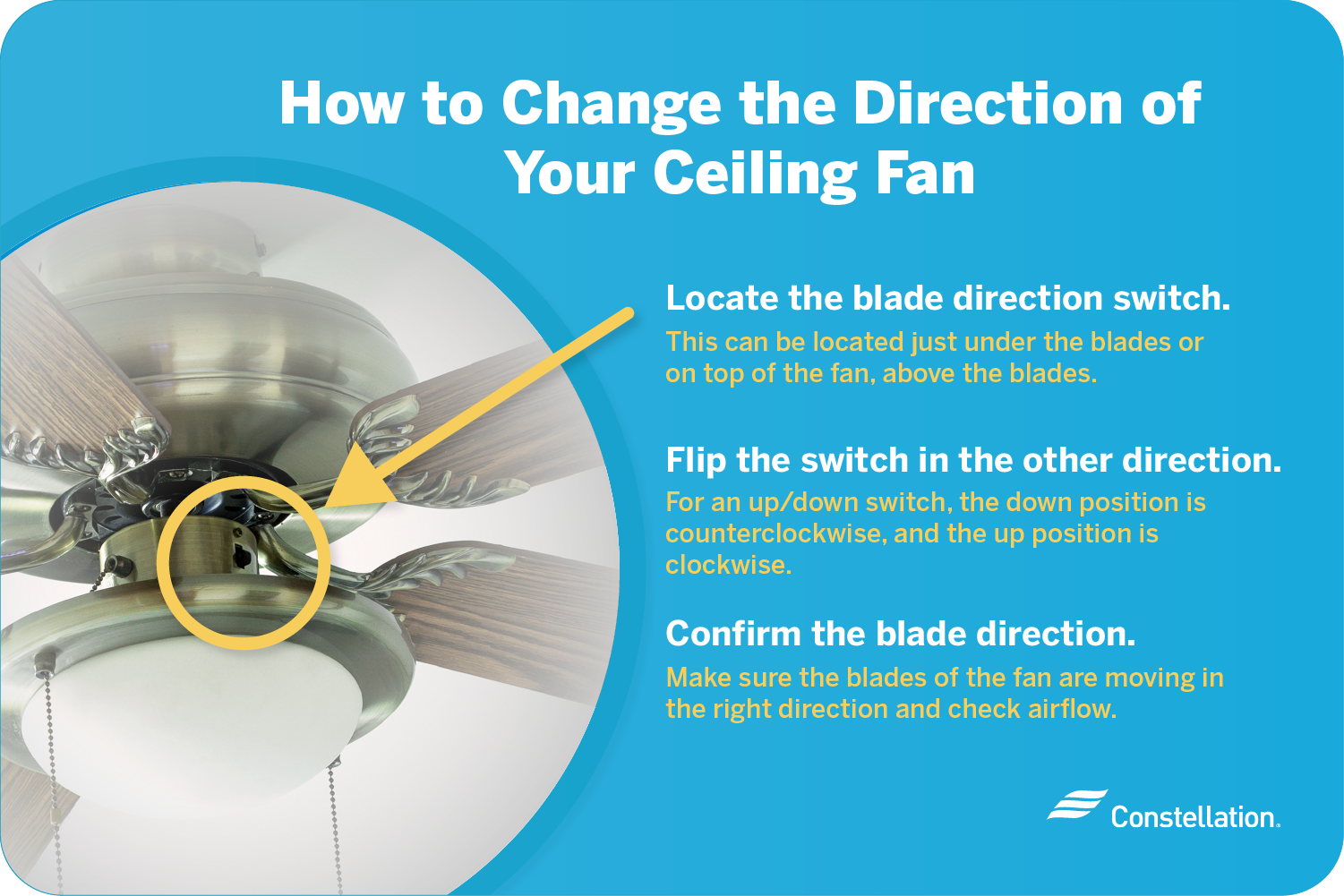
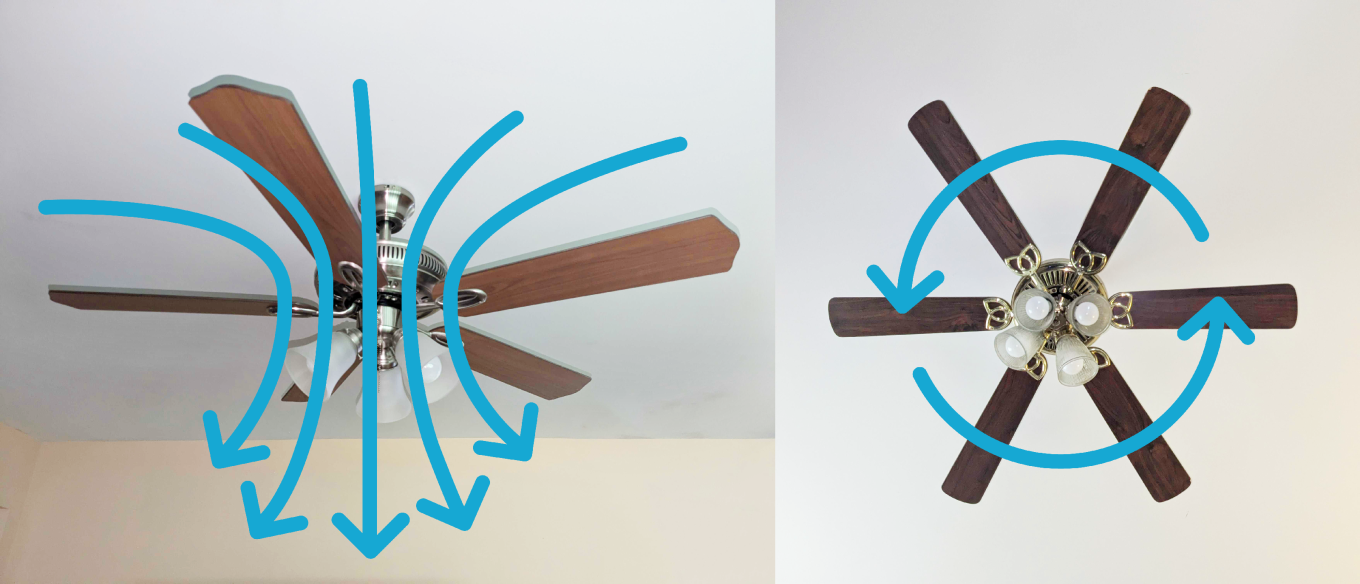
So, here's the deal. In the summer, you generally want your ceiling fan to spin counter-clockwise. Think of it as "summer mode." Why counter-clockwise? Because it pushes air downward, creating a lovely breeze.
That breeze isn't actually cooling the air. Gasp! I know! It’s creating a wind chill effect on your skin. It evaporates sweat, making you feel cooler. Tricky, right?
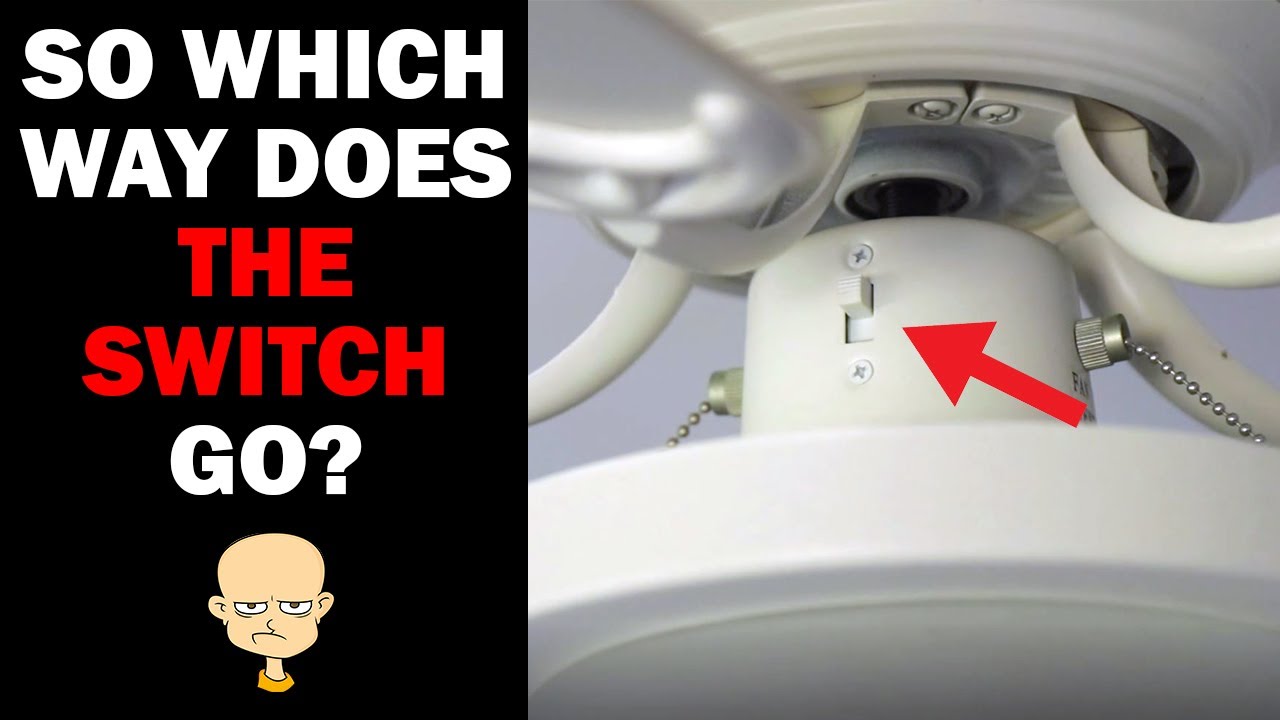
To achieve this counter-clockwise rotation (the key to summer bliss!), the switch on your fan should usually be in the down position. Usually. But… (dun, dun, duuuuun! Dramatic music!)… it depends on your fan.
Fan-tastic Exceptions
Yes, there are exceptions to every rule. Some fans are just rebels, I guess. You really need to look at your fan while it's running to be sure. Don't just blindly flip the switch and hope for the best. That's a rookie mistake.

Turn on the fan (safely, of course!), and observe which way the blades are spinning. Is it pushing air down? If yes, you're golden! If not, flip that switch! Is it up or down now? Doesn’t matter! Air is moving DOWN! You win!
Consider it a small victory in the ongoing battle against summer heat. We take those wins where we can get them, am I right?
Why Does Direction Matter, Anyway?
Okay, let’s get a little science-y for a second (but I promise to keep it brief and painless). The direction of the fan blades affects air circulation in your room. In summer, you want that direct, downward breeze for that wind chill effect.
In winter (yes, we’ll get there eventually!), you want the opposite. You want to pull cool air up and circulate the warm air that rises to the ceiling. Makes sense, doesn't it?
Think of it as a gentle push vs. a helpful assist. Summer is about pushing that air down on you, winter is about helping the warm air circulate.

But Wait, There's More! (Because There Always Is)
Before you run off and start flipping switches, a couple more things to consider:
- Ceiling Height: If you have super high ceilings, a ceiling fan might not be as effective. The breeze might dissipate before it reaches you. In that case, you might need a bigger fan, or maybe just resign yourself to living in a walk-in freezer. (Just kidding… mostly.)
- Fan Size: Bigger rooms need bigger fans. A tiny fan in a huge room is like trying to put out a forest fire with a water pistol. It’s just not going to cut it.
- Personal Preference: Some people just don't like ceiling fans. They find the breeze annoying, or they don't like the way the light flickers. If that's you, no judgment! Just crank up the AC and be done with it.
Ultimately, figuring out the "up or down" thing for your ceiling fan is a small thing that can make a big difference in your comfort during the summer. So, take a minute, check your fan, and get that breeze flowing in the right direction. Your sweaty self will thank you!
Now, if you'll excuse me, I'm going to go adjust my own fan. I have a feeling I've been doing it wrong this whole time. Wish me luck!