Should A Fan Run Clockwise Or Counterclockwise
Ever stare up at a ceiling fan, feeling a vague sense that it’s…wrong? Or maybe you've just always wondered if there’s a “right” way for it to spin? It's a surprisingly common thought! Understanding which direction a ceiling fan should rotate – clockwise or counterclockwise – isn't just about aesthetics. It's about comfort, energy efficiency, and making the most of your home's climate control. And honestly, it's just a fun little puzzle to solve!
The core purpose of a ceiling fan is to circulate air. This creates a cooling breeze in the summer and helps distribute warm air in the winter, leading to significant energy savings. By strategically directing the airflow, you can reduce the strain on your air conditioner and furnace, saving money on your utility bills and lessening your environmental impact. Think of it as a low-tech, yet highly effective, climate control assistant.
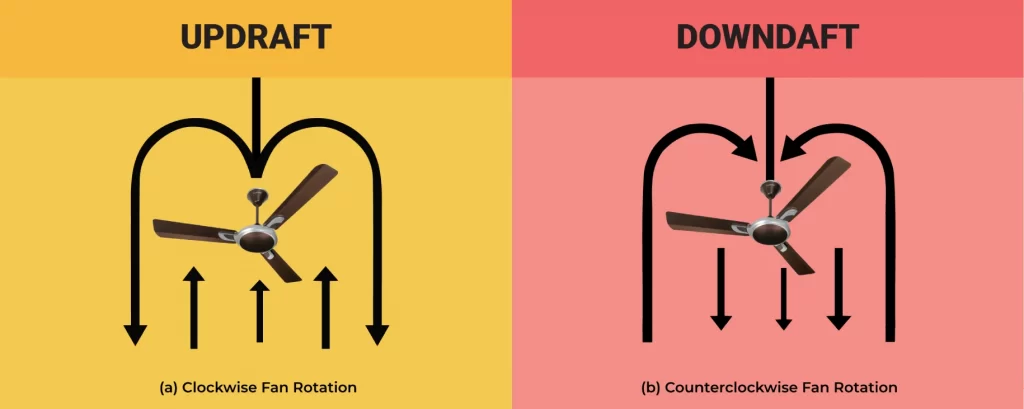
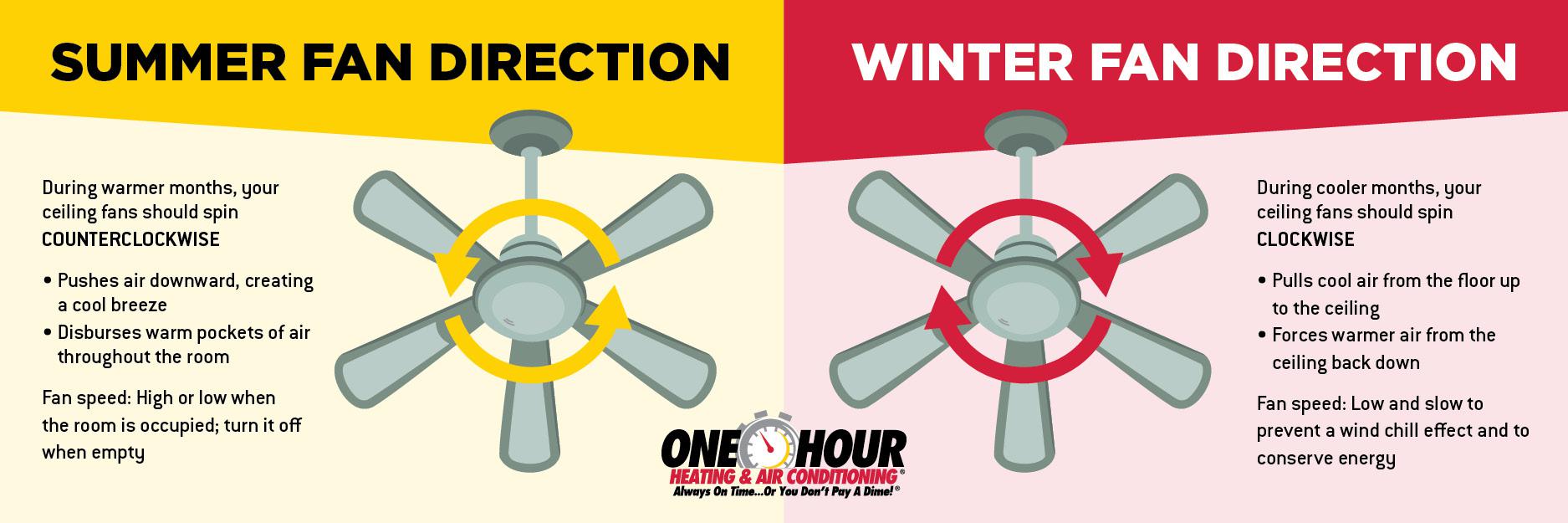
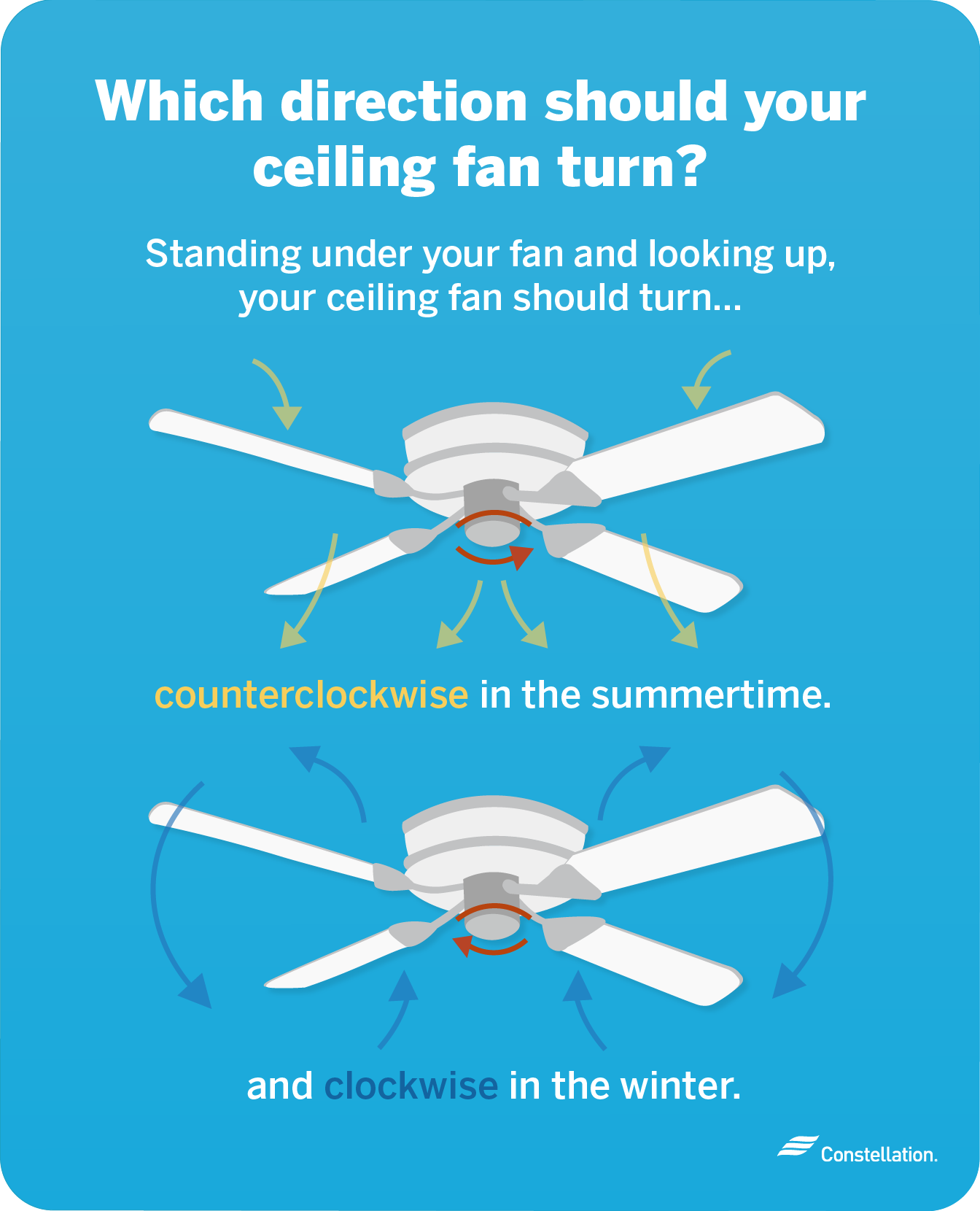
In the summer, the goal is to create a downdraft – a breeze that you feel directly. For this, your ceiling fan should be rotating counterclockwise when viewed from below. This pushes air downwards, creating a refreshing sensation of coolness. This is especially beneficial because it makes the room feel cooler than it actually is, allowing you to set your thermostat a few degrees higher without sacrificing comfort.
Must Read
In the winter, the aim is the opposite: to pull cool air up and gently push warm air down. Warm air naturally rises, so it tends to collect near the ceiling. By reversing the fan's direction to clockwise, you create an updraft that redistributes this warm air. The key here is to set the fan speed to low; you don't want to create a strong breeze that will make you feel cold. The goal is a gentle, subtle redistribution of heat, making the room feel warmer and more comfortable. This reduces the load on your heating system, again saving you money and energy.
This principle of airflow direction isn't just useful in homes. Think about large industrial spaces, warehouses, or even classrooms. Proper fan direction can make a significant difference in the comfort and productivity of the people working or learning in those environments. Some schools even incorporate simple demonstrations of airflow and fan direction into science lessons, illustrating the concepts of convection and thermodynamics in a practical, tangible way.
![Ceiling Fan Directions for Summer vs Winter [Infographic]](https://airflowacademy.com/wp-content/uploads/2021/06/Ceiling-fan-directions-infographic-828x1536.jpg)
So, how can you figure out which direction your fan is currently rotating and how to change it? Most ceiling fans have a small switch located on the motor housing. This switch controls the direction of the fan's rotation. If you’re unsure, simply watch the fan in operation. If it’s summer and you don’t feel a breeze, or if it's winter and you feel a noticeable breeze when it's set to clockwise, it’s probably rotating in the wrong direction. Always turn off the fan before flipping the switch for safety. Experiment and see what feels best for you! Pay attention to how the airflow impacts the overall comfort of the room. It’s a small change that can make a big difference.
Next time you look up at your ceiling fan, you'll not only know which way it should be spinning, but also why. It's a simple piece of everyday science that can make a real difference in your comfort and energy consumption.