
Safety Data Sheet Section 14
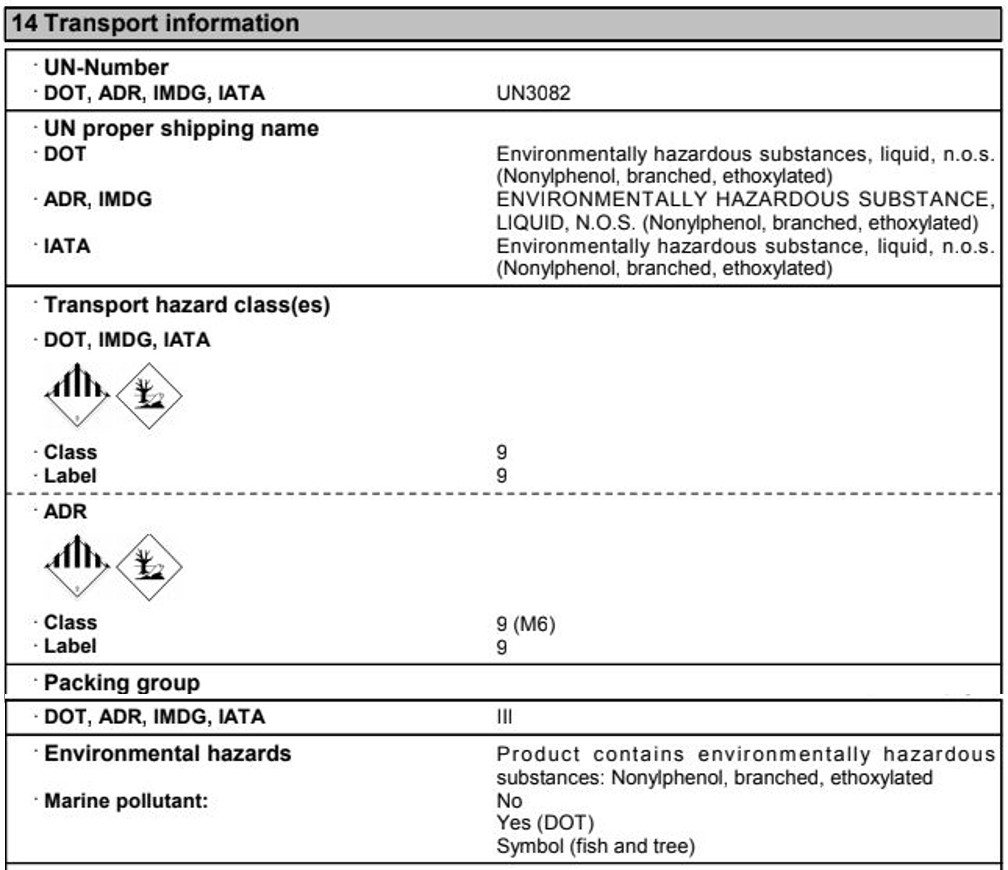
Let's talk about the unsung hero of home improvement. No, not the duct tape. Not even that trusty screwdriver. We're diving into the wonderful world of the Safety Data Sheet, or SDS. Specifically, we're taking a playful peek at its often-overlooked, yet strangely captivating, Section 14.
Picture this: you're just trying to figure out how long that new wood glue needs to dry. You grab the SDS, ready for some practical wisdom. You flip past the hazards, the first aid, the fire-fighting tips.
Then you hit it. A whole section dedicated to transport information. For your humble can of glue. The one you bought from the local hardware store. The very same can you plan to move precisely three feet from your workbench to the wobbly chair.
Must Read
The Mysterious Codes of Transport
Here's where the fun truly begins. Section 14 is usually brimming with codes and classifications. First up, the UN number. It sounds like something straight out of a spy novel. Perhaps it's the secret identity of your wood glue?
Then there’s the UN proper shipping name. It's rarely just "glue." Oh no, it's something grander, more official. "Adhesives, containing flammable liquid" might be a common sight.
For a moment, you ponder if your unassuming bottle of floor cleaner has a thrilling alter ego. Is it secretly known as "Caustic Chemical Solution, Class 8"? It feels like every household item is moonlighting as a dangerous cargo.
The Packing Group: More Than Just a Box
And who could forget the illustrious Packing Group? This little gem categorizes the degree of danger. Group I for high danger, Group III for low. Your paint thinner might be a Group II, demanding respect.

Suddenly, your garage transforms. It's not just shelves of tools and forgotten projects. It's a storage facility for meticulously categorized hazmat. You gaze at your can of spray paint with newfound reverence, a tiny, volatile hero.
"Is my household bleach really just one missed step away from requiring a Level 3 hazmat team for transport?"
Of course, it's not. But the SDS makes you wonder. It invites you to imagine a world where every trip to the recycling center is an epic journey. A journey governed by strict international shipping regulations.
The Marine Pollutant Paradox
This is often the real head-scratcher for the everyday user. You’re scanning through the list, then BAM! Environmental hazards. And often, the phrase "Marine pollutant" pops up.
Your all-purpose cleaner. That little bottle under the sink. It's not just tough on grease. It's a potential menace to the high seas. The thought of your spilled window cleaner impacting the delicate ecosystem of the Pacific Ocean is absurdly delightful.

You picture tiny whales donning even tinier life jackets. All because your fabric softener might be classified as a marine pollutant. It’s a hilarious mental image, isn't it?
This information is undeniably critical for actual cargo ships. It helps prevent ecological disasters on a grand scale. But for your kitchen counter? It feels delightfully over-the-top.
Special Precautions for the Home User (Not Really)
Then there are the Special precautions for user. "Ah," you think, "finally, something for me!" You brace yourself for advice on how to carefully carry the glue from the garage.
Perhaps a special gait? A ritualistic chant? Alas, these precautions are almost always aimed at the professional handler. They are for the people actually loading this stuff onto trucks or ships.

You won't find tips for preventing spillage on your kitchen floor here. No guidance on how to safely navigate a crowded hallway with a bucket of paint. It’s all about professional transport, not domestic journeys.
"Do I need a special license to transport this floor wax in my own car?"
The answer is, of course, a resounding no. Unless you're moving commercial quantities, your personal vehicle is generally exempt. But the SDS, in its thoroughness, doesn't always make that distinction easy.
My Playfully "Unpopular" Opinion
Here's my unpopular opinion, delivered with a wink and a smile: Section 14 of the SDS is the ultimate example of overkill for the average consumer. It's like getting a detailed flight plan for walking to the corner store.
Is it important for industry, for bulk transport, for professional shippers? Absolutely. These rules protect workers, communities, and the environment. They prevent catastrophes. But for me, the casual DIYer, it's an amusing, often confusing, footnote.
It’s a charming mystery, a tiny piece of international shipping law in your hands. It's a reminder that even your carpet cleaner has a surprisingly complex life beyond your living room. We appreciate the thoroughness, truly. But our brains are tired trying to decode its global implications.
A Lighthearted Farewell to Section 14
So, next time you encounter Section 14 in an SDS, give it a nod. A respectful tip of the hat to its bureaucratic brilliance. Imagine the brave souls who deal with bulk transport and IBC Code on a daily basis.
We'll stick to our wobbly chairs and squeaky doors. We'll leave the precise UN numbers and hazard classes to the experts. But we'll always wonder what incredible, globe-trotting journey our bottle of window cleaner is secretly prepared for.
Perhaps it dreams of crossing oceans. Maybe it yearns for a life beyond simply cleaning glass. Thanks to Section 14, we know it's always ready for adventure. And that, dear reader, is a truly entertaining thought.