
Running A Rv Air Conditioner On A Generator

Alright, gather 'round, folks! Let's talk about a subject near and dear to my heart: surviving the summer heat in an RV, specifically, how to wrestle your RV's air conditioner into submission with a generator. Because, let's be honest, nature is beautiful... until it's 95 degrees and you're sweating through your shirt just sitting still. At that point, nature can take a hike!
So, picture this: You're out in the middle of nowhere, surrounded by breathtaking scenery. Birds are chirping, the sun is shining...directly into your RV, turning it into a mobile sauna. You flip the switch to your AC with the hopeful expectation of sweet, sweet relief. Nothing. Zip. Zilch. Nada. Why? Because you're not plugged into shore power! Enter: the generator, your portable oasis-maker.
Sizing Up Your Enemy (The AC, Not Your Spouse)
The first step in this battle against the elements is understanding your enemy, or in this case, your RV's air conditioner. Every AC unit has a running wattage – the power it needs to keep chugging along. But here's the kicker: it also has a starting wattage, which is a much higher power surge it needs to kick on initially. Think of it like trying to push a stalled minivan up a hill – it takes a lot more oomph to get it moving than it does to keep it rolling. I may or may not know about that from personal experience, but that's another story.
Must Read
You absolutely must know both of these numbers. They're usually listed on a sticker somewhere on your AC unit, or in your RV's manual. If you can't find them, Google is your friend! (Unless, of course, you're in the middle of nowhere with no cell service. In that case, consult the wise old owl down the road… or just guess and potentially blow a fuse. Your call.)
Generator Gladiator: Choosing Your Weapon
Now that you know your AC's power demands, you need to choose a generator that can handle them. The general rule of thumb is to get a generator with a peak wattage that's at least twice the starting wattage of your AC unit. Why? Because generators, like us after a large pizza, don't always perform at 100% efficiency. Plus, you'll likely want to run other things besides just the AC, like a refrigerator, lights, or your all-important margarita blender.
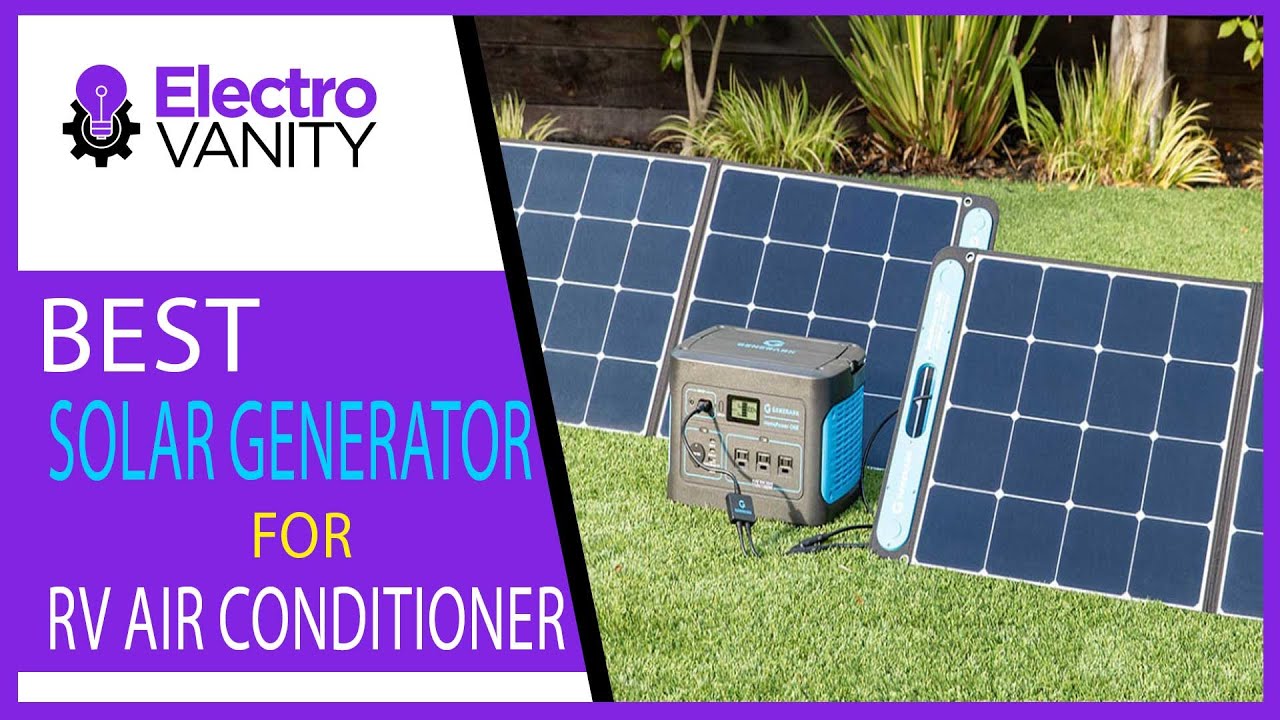
Inverter generators are usually recommended for RVs because they produce cleaner power. Think of it like this: a regular generator is like drinking cheap gas station coffee – it gets the job done, but it's a bit rough around the edges. An inverter generator is like a fancy latte – smooth, refined, and less likely to cause a system crash (in either your RV or your digestive system). Plus, inverter generators are usually quieter, which your neighbors will thank you for (unless you want to become infamous as the RV park's resident noise polluter).
The Starting Line: Getting Everything Connected
Connecting your generator to your RV is usually pretty straightforward. Most RVs have a standard 30-amp or 50-amp shore power inlet. You'll need to get the appropriate adapter to connect your generator to this inlet. Think of it like using a foreign plug adapter – you wouldn't try to shove a European plug into an American outlet, would you? (Okay, maybe you would...but I'm not responsible for the consequences!).

Safety first! Always make sure your generator is properly grounded. This prevents electrical shocks, which are generally frowned upon. And, of course, never run your generator inside your RV. Carbon monoxide is a silent killer, and you don't want your camping trip to turn into a real-life horror movie.
The Moment of Truth: Firing Up the AC
Alright, the generator is humming, the cables are connected, and the anticipation is building. Now, before you flip that AC switch, here's a pro tip: turn off everything else in your RV that draws power. This gives your AC the best chance of starting up without overloading the generator. It's like clearing the runway for a jumbo jet – you want to make sure there are no other planes trying to take off at the same time.

Now, take a deep breath, flip the switch, and cross your fingers! If all goes well, you should hear the AC unit kick on and start pumping out that sweet, sweet cool air. If nothing happens, don't panic! Check your generator's overload protection. It might have tripped. If so, reset it and try again, making sure you've turned off any unnecessary appliances.
Troubleshooting: When Things Go Wrong (And They Will)
Let's face it, things don't always go according to plan. Your generator might be too small, your AC unit might be finicky, or you might just have bad luck. Here are a few common problems and solutions:
* Generator Overload: This is the most common problem. Try reducing the load by turning off other appliances. If that doesn't work, you might need a bigger generator. Or consider upgrading your AC unit to a more efficient model. * AC Won't Start: Could be a faulty capacitor in the AC unit (a common problem, like squirrels in the attic). This might require a professional repair. It also can be the surge when starting AC that trips the generator. * Generator Runs Rough: Make sure your generator has fresh fuel and a clean air filter. A poorly maintained generator is like a grumpy old man – it's not going to perform well.So there you have it! Running an RV air conditioner on a generator isn't rocket science, but it does require a little planning and preparation. With the right equipment and a bit of know-how, you can stay cool and comfortable no matter where your adventures take you. Now, if you'll excuse me, I'm going to go crank up the AC and enjoy a nice, cold beverage. Cheers!
