Alright, let's chat about a little guardian that deserves a prime spot in your home: the carbon monoxide alarm. You might not think much about it, but this unassuming hero is truly a special gadget. It's not flashy, it doesn't sing you lullabies, but it offers a kind of quiet entertainment – the pure, unadulterated peace of mind that lets you truly enjoy your space.
Imagine this: you're cozying up on the couch, fireplace crackling, furnace humming. Everything feels perfectly safe and sound. And that's exactly what your CO alarm is designed to protect. It’s like having a secret agent on constant patrol, a silent sentinel watching over your precious moments. The real entertainment here isn't a loud show; it's the blissful absence of one, knowing all is well.
Where Does This Super-Sleuth Go?
Now, finding the perfect hideout for your carbon monoxide alarm isn't like playing hide-and-seek. It's more like setting up the best surveillance spot for your silent protector. You want it where it can do its best work, keeping an ear out (or rather, a sensor out) for that sneaky, invisible gas known as carbon monoxide. This gas is a real trickster – you can't see it, smell it, or taste it. Spooky, right? That's why your alarm is so vital!
First up, think about where the magic happens – where you dream your sweetest dreams. That’s right, near your sleeping areas! Having an alarm close to where you (and your loved ones) hit the hay is a no-brainer. If something starts to go wrong while you’re off in dreamland, you want a prompt wake-up call. It's like having a diligent night watchman, ready to tap you on the shoulder if there's any trouble.
Think of your CO alarm as your home's personal bodyguard, always alert, always on duty, ensuring your peace and quiet.
Do You Need A Carbon Monoxide Detector On Every Floor | Viewfloor.co

But don't stop there! Your home has multiple levels, doesn't it? Well, your carbon monoxide alarm needs to be on every level of your home. Yes, that means the basement, the main floor, and upstairs. Carbon monoxide mixes with air, so it doesn’t necessarily float "up" or sink "down" in a predictable way. A good rule of thumb is to treat each floor as its own little kingdom that needs protecting. This multi-level approach is what makes your home truly secure, a real fort of safety.
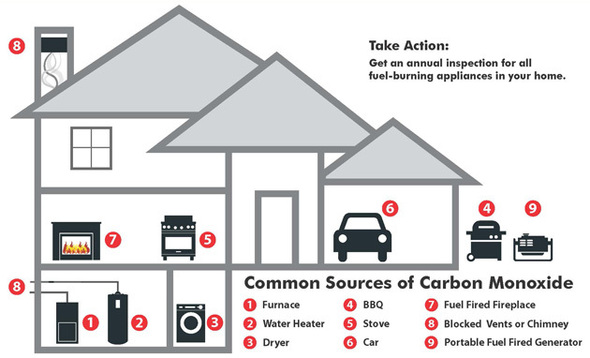
Next, let's consider the usual suspects – the appliances that work hard to keep you warm and cozy. We’re talking about your furnace, water heater, and that lovely fireplace. These are all sources that could potentially produce CO if they aren't working perfectly. So, putting an alarm in the vicinity of these fuel-burning appliances is a smart move. It's like having a detective near the scene of a potential "mystery."

However, there's a little twist! You don't want to place your alarm right next to these appliances. Think of it like this: you wouldn't put a microphone directly inside a roaring concert speaker, right? Too much noise, too close! The alarm could get overwhelmed or give you false readings from the initial combustion. Check the manufacturer's instructions for the exact distance, but generally, a few feet away is a good starting point. This ensures it's sensitive enough to detect issues, but not so close it gets confused.
Where Not to Put Your Star Performer
Even heroes have their limits, and your CO alarm has a few spots it'd rather avoid. Steer clear of humid places like bathrooms, or dusty, greasy areas like right near the stove. Extreme temperatures are also a no-go, so avoid placing it in unheated garages or direct sunlight. These conditions can mess with its sensitive sensors, making it less effective at its important job. You want your alarm to be at its best, always!

Also, don't hide your alarm behind curtains, drapes, or bulky furniture. It needs an open space to "breathe" and detect effectively. Imagine trying to guard a room from behind a giant sofa – not very effective, is it? Give your alarm clear sightlines, so it can do its job without obstruction.
So, what about height? Unlike smoke alarms that usually go high up, carbon monoxide alarms can often be placed at eye level or even closer to the floor. Why? Because CO mixes with the air in your home. Some models are designed to be plugged into an outlet low on the wall, while others mount higher. The golden rule here is always to follow the manufacturer’s instructions that came with your specific device. They know their product best!
Installing a carbon monoxide alarm is less about complicated wiring and more about smart placement. It's a simple act that brings immense rewards – the constant, comforting thought that a watchful eye is on duty. It truly makes your home a safer, more relaxing place to be. So go on, check out your alarms, or grab one today. It’s a small step for you, a giant leap for your home’s safety and your peace of mind. And that, dear reader, is entertainment you can truly live with!