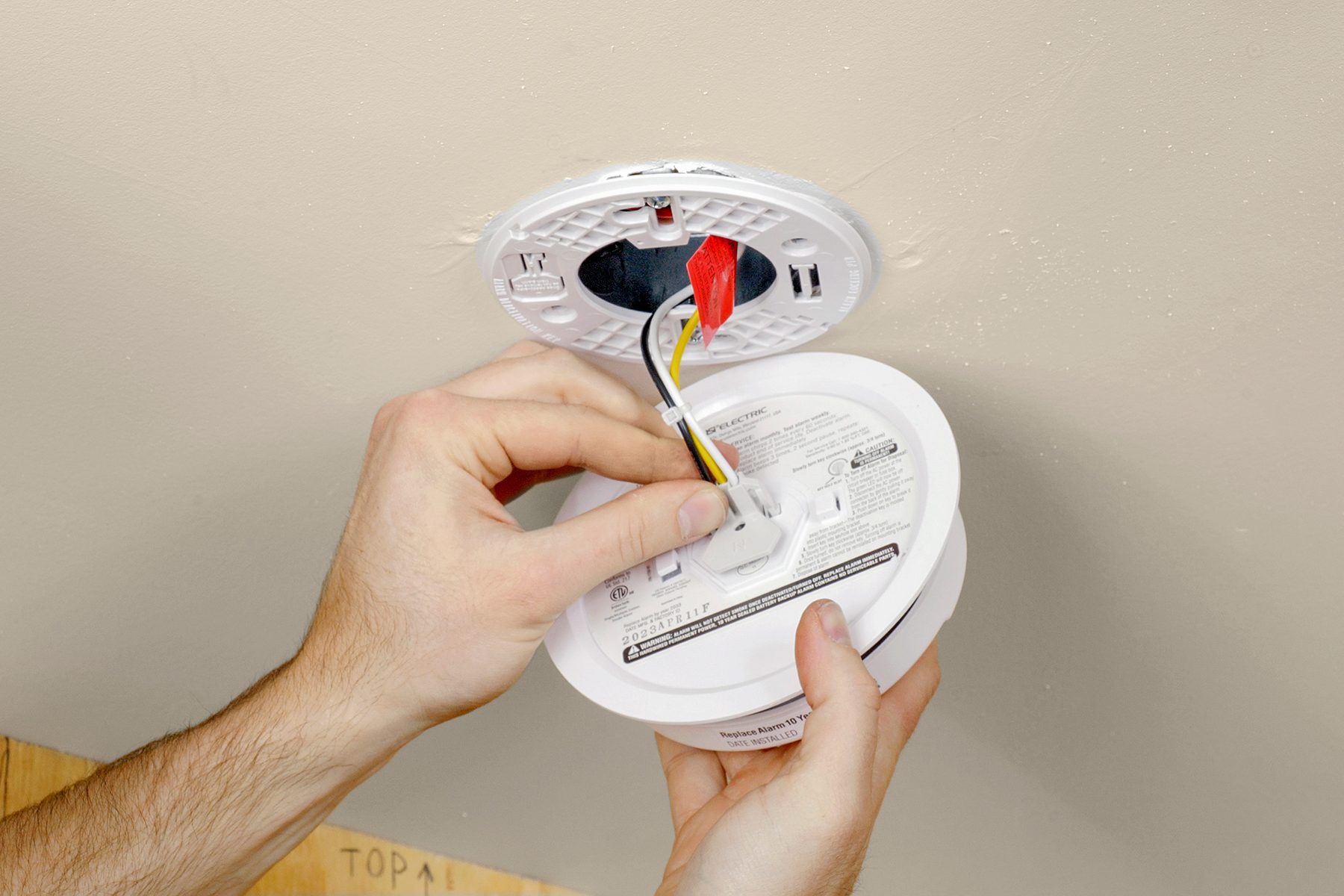
Ah, the symphony of modern life. It often includes a tiny, persistent chirp. That chirp usually means one thing: the smoke detector battery is giving up the ghost. It's a universally recognized signal for "time to get out the ladder."
We've all been there. You're settling down for a quiet evening. Suddenly, a single, piercing beep echoes from the ceiling. It's like a tiny, metallic bird trapped in your drywall, demanding attention.
Most of us just sigh. We grab a fresh 9-volt battery. We climb precariously onto a chair or stool. Then we wrestle with that plastic disc, trying to make the offending noise stop.
But then, a question whispers in the back of your mind. Especially if you have the fancy kind. The kind that looks like it's part of the house itself. The kind with wires.
The Great Hard-Wired Mystery
You see, not all smoke detectors are created equal. Some are simply battery-powered nomads. They roam the ceilings, relying solely on that little rectangle of power.
Then there are the others. The more established residents of your home. These are your hard-wired smoke detectors. They're connected directly to your home's electrical system.
This is where my "unpopular" opinion often sparks a puzzled glance. If it's connected to the house power, why on earth does it still beep for a low battery?
"If it's plugged in, why does it need a battery at all?"
It's a valid question, isn't it? We plug in our TVs. Our lamps. Our blenders. None of them demand a battery backup just to function day-to-day. They just, well, work.
Yet, the hard-wired smoke detector. The one drawing power straight from the grid. It still insists on having its little 9-volt friend tucked inside. And if that friend gets tired, oh boy, does it let you know.
The Backup Battery: A True Hero, or Just a Drama Queen?
Now, I know what the experts say. The battery in a hard-wired detector is for backup. It's there in case of a power outage. A noble purpose, indeed.

Imagine the lights go out. A real blackout. Your house is suddenly plunged into darkness. This is when the hard-wired detector's battery is supposed to kick in. It's supposed to keep you safe when all else fails.
And yes, that's a comforting thought. It's a safety net. A guardian angel in a power cut. But let's be honest, how often do you experience a full-blown, extended power outage?
For many of us, power outages are rare events. Maybe a flicker here and there. Or a brief disruption that lasts less than an hour. During those times, are we really relying on a single 9-volt battery to save the day?
Most of us are awake during those short outages. We're probably fumbling for a flashlight. Or checking our phones. We're not usually deep in slumber, unaware of a potential fire.
This is where my playful rebellion begins. If the house power is on 99.9% of the time, is that little backup battery truly essential for everyday peace of mind?
"Is the backup really the primary source of my anxiety?"
It certainly feels that way when that incessant chirping starts. The one that wakes you up at 3 AM. The one that sends you on a scavenger hunt through the house to identify the culprit.
The Beeping Bafflement
Here's the rub. The hard-wired detector draws its primary power from your home's electricity. It uses the battery only when that primary source is gone.
So, logically, if your power is on, the battery isn't doing any heavy lifting. It's just sitting there, waiting for its moment to shine. Yet, it still dies. And it still beeps.
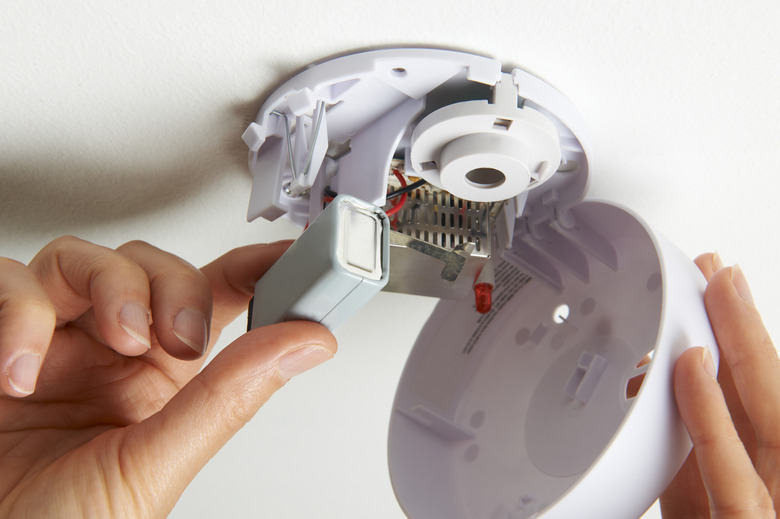
It's like a highly paid understudy in a play. Never gets to perform, but still demands a full salary. And throws a tantrum if its snacks aren't fresh.
We dutifully replace it. Every year. Sometimes twice a year if it's a particularly moody battery. We climb the ladder, we pop it in. And then we wait for the next beep.
Why can't the hard-wired detector just say, "Hey, house power is good! Battery is just for show, really." Why does it have to cause such drama?
Perhaps it's a confidence thing. Maybe the hard-wired detector feels insecure about its backup role. It wants to feel needed. To be part of the annual ritual.
Imagine if your car had a backup battery for its radio. And that backup battery beeped loudly every time it got low, even if the car's main battery was perfectly fine. You'd find it rather annoying, wouldn't you?
We're conditioned to think that all smoke detectors must have fresh batteries. And this conditioning extends even to the ones that are perfectly happy drawing power from your walls.
A Thought Experiment: The Battery-Free Hard-Wired Life
Now, this is purely for playful contemplation. Not actual safety advice, mind you. But just imagine.

What if you had a hard-wired smoke detector? And it didn't have a battery at all? Or perhaps, you just didn't replace the old one when it started chirping?
In most normal circumstances, with the power on, it would still work. It would still detect smoke. It would still scream bloody murder if there was a fire. Because it's getting its power from the house.
The only time it wouldn't work is during a power outage. During that rare moment, you'd be without smoke detection. Is that a risk you're willing to playfully ponder?
For those who live in areas with extremely reliable power grids, or who are always awake and alert during outages, the question becomes even more intriguing. Are we truly getting our money's worth out of that backup battery?
Or are we just feeding the insatiable hunger of the beeping beast? Are we sacrificing our sleep and our annual ladder routine for a contingency that rarely, if ever, materializes?
I like to think of it as the ultimate form of rebellion. A quiet, defiant refusal to replace a battery that, in my playful opinion, isn't always pulling its weight.
The hard-wired smoke detector is a marvel of engineering. It's designed for continuous protection. But its battery requirement often feels like an outdated appendix. A vestigial tail of a simpler, battery-only era.
Embracing the "Unpopular" Wisdom
So, the next time that little beep starts. The one from your clearly wired-into-the-mains smoke detector. Take a moment.

Look at the wires. Look at the wall. Then look at the 9-volt battery in your hand. And ask yourself: Is this really necessary?
You might just find a playful rebellion brewing within you. A quiet understanding that perhaps, just perhaps, some hard-wired smoke detectors are just pretending to be battery-dependent.
They're just following old habits. Or maybe they just enjoy the attention. After all, who doesn't like to be fussed over once a year?
My "unpopular" opinion is that for the hard-wired ones, during normal power conditions, the battery is largely symbolic. It's a comforting ritual, but not strictly essential for detection when the grid is humming.
It's about choosing peace over a perceived, though often unexperienced, backup. And maybe, just maybe, getting a little more sleep.
The little battery has its place. It's a hero for battery-only units. But for its hard-wired cousin, it sometimes feels like a very demanding guest who never really leaves.
So, go ahead. Give a knowing nod to your hard-wired detector. You might just be part of a quiet revolution. One sleepy, less-annoyed homeowner at a time.
Just remember, this is all in good fun. Safety first, always! But a little playful questioning never hurt anyone, right?