Picture this: you're enjoying a quiet evening, maybe grilling some burgers on the patio, or perhaps cozying up in your RV. Suddenly, you catch a whiff of something a little off, a faint smell that makes you wonder. Immediately, your mind jumps to safety, and you might think, "Is my carbon monoxide detector going to catch this?"
It's a common, perfectly understandable question. After all, both carbon monoxide (CO) and propane are gases we want to be super careful about in our homes and recreational spaces. They both represent potential dangers, lurking unseen, or so we often imagine.
But here's a little secret, a fun fact that might surprise you: when it comes to detectors, these two gases are like apples and oranges. Or, perhaps more accurately, like a secret agent and a party animal.
The Silent Stalker vs. The Social Butterfly
Let's talk about carbon monoxide first. We often call it the "silent killer" because it's truly a master of disguise. It's colorless, odorless, and tasteless. You wouldn't know it was there until its effects started to take hold, which is why a dedicated CO detector is such a crucial hero in our homes.
Think of carbon monoxide as a ninja, quiet and deadly, slipping in unnoticed. It comes from things like faulty furnaces, gas stoves, or cars left running in an enclosed space. Your CO detector is specifically trained to spot this particular invisible threat, sounding an alarm before it can do harm.
Now, let's meet propane. Propane is a different beast entirely! It's that friendly, energetic gas that powers our barbecues, our outdoor heaters, and often our RV stoves. It’s incredibly useful, a real workhorse for modern living, bringing convenience and warmth to countless situations.
However, propane, in its natural state, is also odorless. But here's where the story gets interesting and a little bit fun: gas companies actually add a special ingredient to it. They infuse propane with a chemical called ethyl mercaptan.

"Ethyl mercaptan is propane's personal alarm clock, designed to wake up your nose and let you know there's a party (or a problem!) brewing."
This added chemical is what gives propane that distinct, rotten-egg or cabbage-like smell. It’s a deliberate design feature, a built-in safety net. So, unlike the sneaky carbon monoxide, propane literally announces its presence with a stinky fanfare!
So, Do They Mix and Mingle?
The short, simple, and slightly surprising answer is: No, a carbon monoxide detector does not detect propane. They are designed to sniff out completely different things. It’s like asking a smoke detector to find a water leak – different jobs, different tools!
Your CO detector is looking for carbon monoxide molecules, which are produced by incomplete combustion. It's a specific chemical signature it's trained to identify. It's not interested in the chemical makeup of fuel gases like propane.
Propane, on the other hand, is a hydrocarbon. It's a fuel, and its primary danger isn't poisoning (like CO) but rather its flammability and explosive potential. A large leak of propane can quickly create a hazardous environment, especially if there's an ignition source nearby.
Imagine your house as a team of superheroes. Captain Carbon Monoxide Detector is there to warn you about the invisible gas villain. Meanwhile, Propane Patrol is on standby, ready to detect any leaks of the highly flammable party fuel. They have different adversaries!

The Right Tool for the Right Job
This brings us to the crucial point: you need the right detective for the right mystery. For carbon monoxide, you need a dedicated CO detector. These are usually found on walls or ceilings, often near sleeping areas, quietly doing their important work.
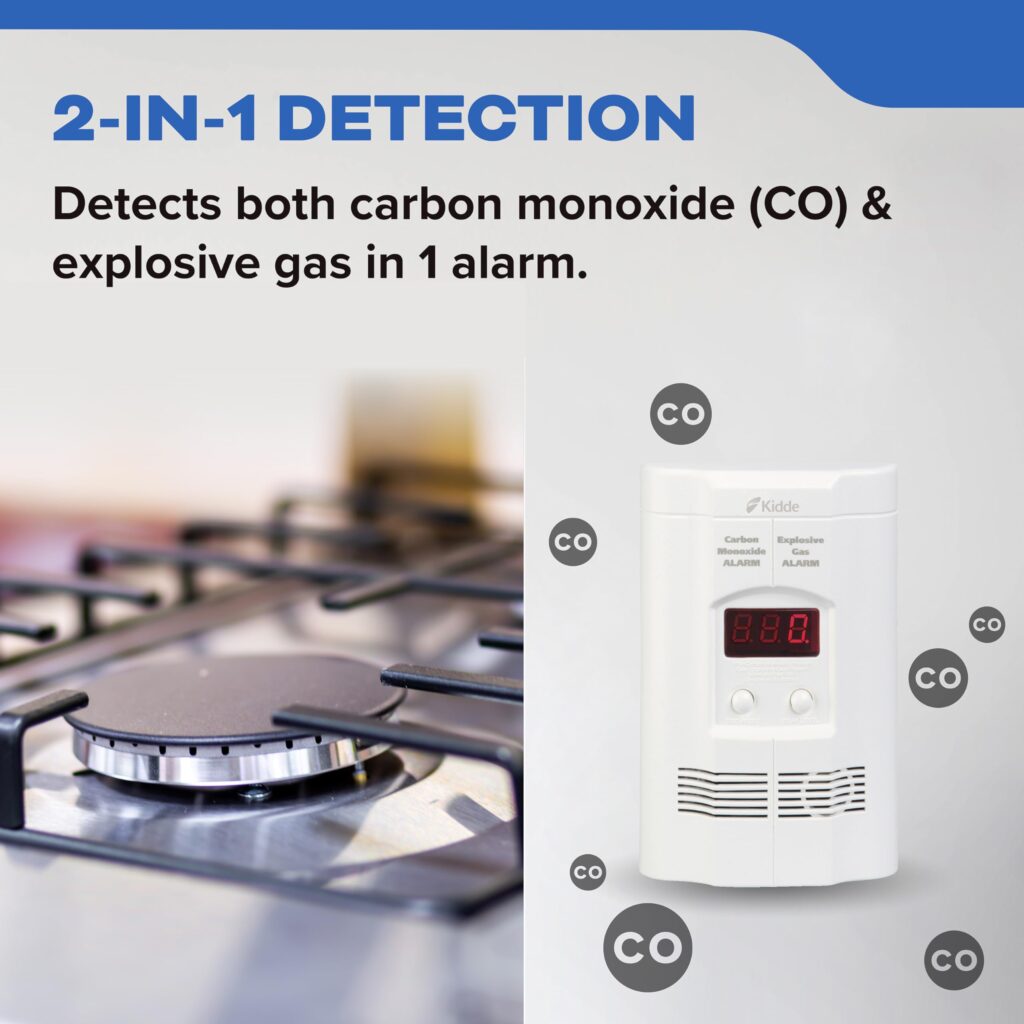
For propane and other combustible gases (like natural gas), you need a specific combustible gas detector, sometimes called a propane detector or a natural gas detector. These devices are designed to identify the presence of these particular fuel gases.
And here's a fun trick about propane detectors: because propane is heavier than air, if it leaks, it tends to sink and collect near the floor. So, you'll often find propane detectors installed closer to the ground, ready to catch those heavy gas molecules as they settle.
Natural gas, conversely, is lighter than air and rises. So a natural gas detector might be installed higher up. Isn't it fascinating how much thought goes into keeping us safe, even down to where the detectors are placed?

A Humorous Mix-Up Scenario
Let's paint a picture. Your neighbor, let's call her Brenda, is new to RV life. She smells that distinct rotten-egg smell one afternoon. Panic sets in! She dashes to her CO detector, stares at it, willing it to beep. Nothing. Silence.
Brenda, confused and a little scared, calls the gas company. They arrive, quickly pinpoint a small propane leak from a slightly loose connection on her BBQ tank. They fix it in a flash. Brenda, relieved but still puzzled, asks, "Why didn't my CO detector go off?"
The technician, with a friendly smile, explains the difference. Brenda has a moment of realization. It's not a single "gas detector" for all gases! She then promptly invests in a propane detector for her RV, feeling much smarter and safer.
It's a common misunderstanding, one that can lead to a chuckle once the initial scare is over. But it highlights just how important it is to know what each safety device in our homes is actually looking for.
The Peace of Mind Partnership
Ultimately, safety comes from understanding. Knowing that your CO detector is your invisible guardian against carbon monoxide, and a separate propane detector is your early warning system for a fuel leak, brings a genuine sense of peace.

It's like having two specialized members on your home's safety team. One is focused on the danger you can't see or smell, the other on the highly combustible fuel that powers your fun and comfort.
So, take a moment to give a little nod of appreciation to these unsung heroes of home safety. Check that your CO detector is working (test button!). And if you use propane in your home, RV, or cabin, make sure you have a proper propane detector too.
Embrace the knowledge that these different devices work in tandem, each doing their part, so you can relax and enjoy your life without worrying about unexpected gas surprises. It’s all about having the right tool for every important job, especially when it comes to keeping your loved ones safe and sound.
Next time you smell that distinctive propane odor, you'll know exactly what it means and which detector (or your own nose!) is doing the heavy lifting. And you can smile, knowing your carbon monoxide detector is still standing guard, just waiting for its own particular villain to appear.
It’s a beautiful dance of modern safety, where specialized gadgets work together to keep our lives comfortable, convenient, and most importantly, incredibly safe. So go forth, grill those burgers, light those cozy fires, and enjoy the peace of mind that comes from being well-informed!